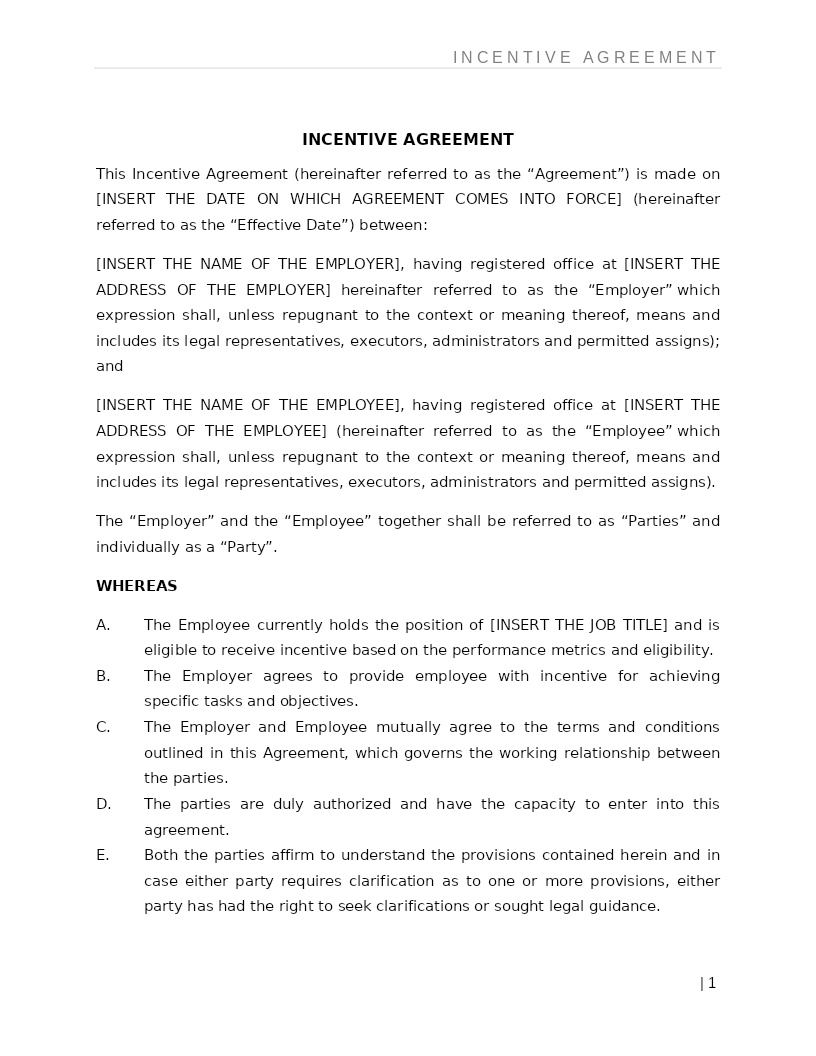
INCENTIVE AGREEMENT
How does it work?
1. Choose this template
Start by clicking on "Fill out the template"
2. Complete the document
Answer a few questions and your document is created automatically.
3. Save - Print
Your document is ready! You will receive it in Word and PDF formats. You will be able to modify it.
Understanding Incentive Agreement In U.S.
An Incentive Agreement is a legally binding contract between an employer and an employee, contractor, consultant, or business partner that outlines specific rewards tied to measurable performance goals, milestones, or deliverables. Incentives may include monetary bonuses, commissions, equity grants, stock options, promotions, profit-sharing, or non-financial benefits such as additional paid time off or professional development opportunities. This agreement defines how incentives are earned, calculated, distributed, and governed under U.S. employment and tax regulations.
A well-structured Incentive Agreement promotes fairness, motivates strong performance, and ensures both parties understand expectations and reward criteria. By aligning incentives with business objectives, it encourages productivity, enhances retention, and minimizes the risk of disputes related to compensation or performance outcomes.
Where Incentive Agreements Are Commonly Used
Incentive Agreements are widely used in:
- Employment relationships for role-based performance bonuses
- Contractor and consultant projects tied to milestone achievements
- Sales teams with commission-based compensation structures
- Startups offering equity, stock options, or profit-sharing
- Executive compensation packages governed by U.S. labor and securities laws
- Joint ventures and business partnerships with shared financial goals
- Long-term projects requiring measurable deliverables and accountability
Any workplace or partnership where performance-based rewards are expected benefits from a clear Incentive Agreement.
Different Types of Incentive Agreements You May Encounter
- Performance-Based Bonus Agreements: Reward employees or partners for meeting defined targets, KPIs, or milestones.
- Commission Agreements: Common in sales roles, these define commission percentages, payout schedules, and qualifying sales criteria.
- Equity or Stock Option Agreements: Offer equity stakes, stock options, or restricted stock units governed by U.S. securities laws.
- Profit-Sharing Agreements: Distribute a portion of business profits based on contribution, tenure, or performance.
- Milestone-Based Project Incentives: Used for consultants or contractors completing stages of a project.
When Legal Guidance Becomes Helpful
Legal guidance is crucial when:
- Incentives involve stock, equity, or profit-sharing needing securities compliance
- Complex tax implications must be aligned with IRS regulations
- Multi-state or international workers are included in the agreement
- Businesses require confidentiality, non-compete, or IP-protection clauses
- Compensation structures include high-value bonuses, deferred payments, or vesting periods
- Performance metrics require detailed definitions to avoid misunderstandings
- Agreements must comply with labor laws like the FLSA, ERISA, and state wage statutes
Legal review ensures clarity, enforceability, and protection against disputes.
How to Work With This Incentive Agreement
- Clearly define all performance metrics and qualifying achievements
- Outline incentive types, payout terms, and timelines
- Specify eligibility requirements, vesting schedules, and conditions for loss of eligibility
- Clarify tax responsibilities and compliance with federal and state regulations
- Include confidentiality and IP clauses where relevant
- Establish procedures for disputes or disagreements over incentives
- Review the terms together and finalize via hard copy or electronic signature
Frequently Asked Questions
Q1. Why is an Incentive Agreement important in the workplace?
An Incentive Agreement ensures transparency by clearly defining how rewards are earned and distributed. It motivates employees and contractors, aligns individual performance with company goals, and reduces misunderstandings regarding compensation. A written agreement helps ensure accountability and legal protection for both parties.
Q2. Are Incentive Agreements legally enforceable in the U.S.?
Yes. Incentive Agreements are enforceable when clearly drafted and compliant with federal and state employment laws. Courts generally uphold agreements with measurable performance criteria and defined payout terms. Proper documentation helps avoid disputes related to compensation and eligibility.
Q3. What types of incentives can be included in the agreement?
Incentives may include bonuses, commissions, equity, stock options, profit-sharing, or non-financial rewards such as extra leave or training opportunities. The agreement can be customized based on job role, industry, and business priorities, ensuring it meets both motivational and operational needs.
Q4. Does offering incentives help retain top employees?
Absolutely. Incentives create a competitive and rewarding work environment, helping businesses attract and retain high-performing talent. When tied to long-term goals, such as equity or profit-sharing, they encourage employees to stay invested in the company’s success.
Q5. How are taxes handled for incentive payments?
Incentive payments such as bonuses, commissions, and stock awards are taxable under IRS guidelines. Employers may need to withhold additional taxes depending on the incentive type. Proper tax documentation ensures compliance and avoids penalties for both parties.
Q6. Can an Incentive Agreement be modified later?
Yes, agreements may be updated with mutual consent to reflect new goals, market changes, or evolving compensation strategies. Any modifications should be recorded in writing to ensure enforceability and clarity for all parties involved.
Q7. What happens if performance goals are not met?
If goals are not met, the party may not qualify for the incentive unless the agreement includes partial-achievement awards or discretionary bonuses. Clear performance metrics prevent disputes and ensure fairness when evaluating results.
Q8. Is this agreement suitable for contractors and freelancers?
Yes. Incentive Agreements work effectively for contractors whose work is milestone-based or deliverable-driven. They help establish expectations, align incentives with project goals, and protect both parties through legally defined terms of compensation.