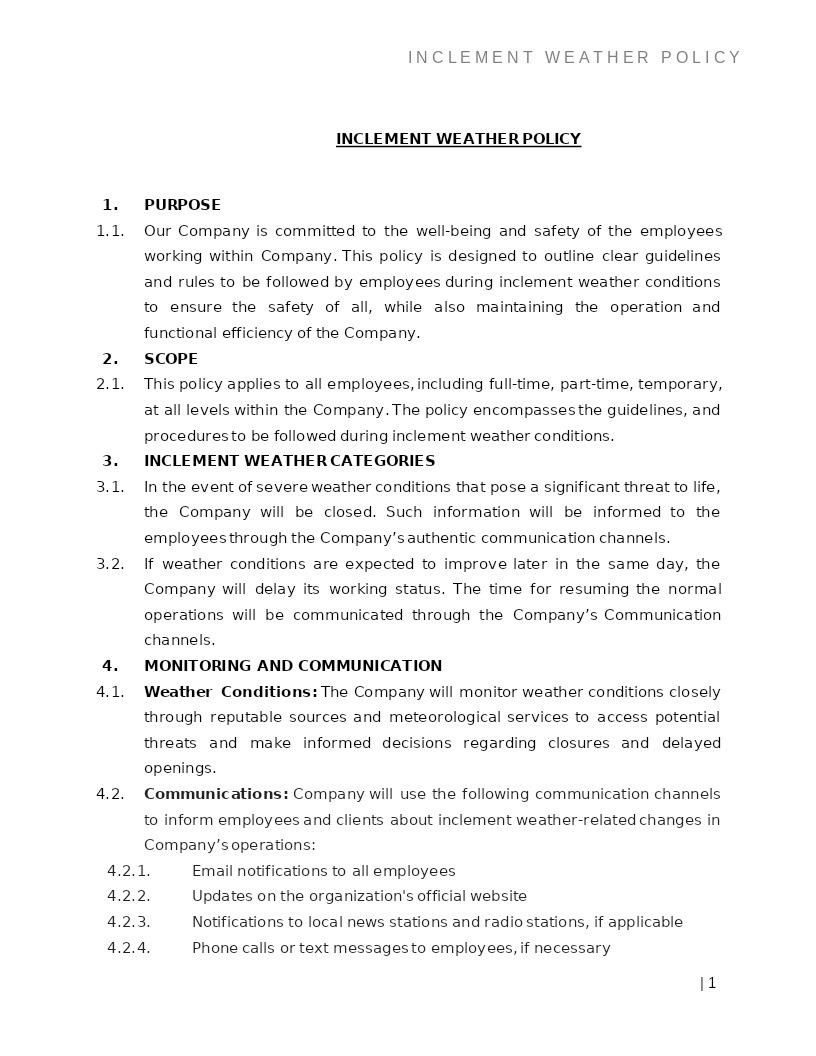
INCLEMENT WEATHER POLICY
How does it work?
1. Choose this template
Start by clicking on "Fill out the template"
2. Complete the document
Answer a few questions and your document is created automatically.
3. Save - Print
Your document is ready! You will receive it in Word and PDF formats. You will be able to modify it.
Understanding Inclement Weather Policy in U.S.
An Inclement Weather Policy provides a structured framework for how an organization responds to disruptive weather events such as snowstorms, hurricanes, extreme heat, flooding, tornadoes, and other hazardous conditions.
It outlines employee safety procedures, office closure rules, remote work guidelines, pay practices, and communication protocols to ensure clear expectations during unpredictable weather emergencies.
A well-drafted policy strengthens workplace safety, reduces operational confusion, supports legal compliance under U.S. federal and state labor laws, and helps maintain continuity with minimal interruption to business operations.
By having clear instructions in place, employers foster a sense of security and preparedness for all employees.
Where Inclement Weather Policies Are Commonly Used
Inclement Weather Policies are standard across many industries where weather disruptions may affect safety, attendance, and operational reliability. They are frequently used in:
• Corporate offices, administrative facilities, and remote-work setups
• Schools, universities, and childcare centers
• Manufacturing plants, warehouses, and distribution centers
• Healthcare institutions, clinics, and emergency service providers
• Retail stores, shopping centers, and hospitality businesses
• Construction, logistics, energy, and field-service industries
Any organization whose operations depend on employee presence, physical locations, or essential services benefits substantially from a clear weather-response framework.
Different Types of Inclement Weather Responses You May Encounter
- Full Office Closure: Triggered when severe weather makes travel unsafe or facilities inaccessible. All employees are instructed to stay home unless designated as essential personnel.
- Delayed Openings or Early Closures: Used when weather conditions are expected to improve (or worsen). These adjustments help employees avoid high-risk travel hours.
- Mandatory or Optional Remote Work: For roles compatible with telework, employees may be required or permitted to work from home during weather emergencies to sustain business operations.
- Essential Personnel Reporting Requirements: Certain teams, such as security, maintenance, emergency response, healthcare staff, or critical operations, may still need to report on-site depending on organizational necessity.
- Hazard-Pay or Special Pay Practices: Some employers offer additional compensation for essential staff reporting during severe weather, in accordance with state labor policies and internal guidelines.
When Legal Guidance Becomes Helpful
Legal advice is particularly valuable when designing or customizing Inclement Weather Policies because:
• U.S. state laws differ on employee pay, reporting time pay, and mandated safety practices.
• Federal regulations such as OSHA require employers to maintain safe working conditions, including protection from weather-related hazards.
• Wage-and-hour rules under the FLSA influence whether non-exempt employees must be paid during closures or partial-work situations.
• Multi-state employers must align policies across different jurisdictions to avoid inconsistency or non-compliance.
• Legal counsel helps clarify employer rights, employee obligations, leave usage, and protections against liability during dangerous conditions.
Real-time lawyers and in-house counsel ensure your policy is comprehensive, enforceable, and aligned with both legal standards and internal risk-management requirements.
How to Work With This Policy Template
• Identify which weather conditions are considered “inclement” for your organization.
• Establish the process for announcing closures, delays, and remote-work instructions.
• Define the responsibilities of managers, HR, essential personnel, and employees.
• Clarify compensation rules for exempt vs. non-exempt employees under federal and state law.
• Outline safety protocols for essential on-site staff.
• Review communication tools (email, SMS alerts, internal apps) to ensure timely updates.
• Customize the policy to meet local regulations, industry needs, and organizational culture.
• Have leaders and employees acknowledge the policy to ensure understanding and compliance.
Frequently Asked Questions
Q1. Why does our company need an Inclement Weather Policy?
An Inclement Weather Policy helps protect employees from unsafe travel and hazardous conditions while ensuring business operations remain structured during emergencies. It outlines what employees should do, how decisions are communicated, and how work and pay are handled. This clarity prevents confusion and supports lawful, consistent decisions across the organization.
Q2. How does the company decide when to close or delay operations?
Closures or delays are typically based on government advisories, road-safety updates, and local emergency declarations. Management evaluates whether conditions pose a safety risk and whether facilities remain functional. This ensures decisions prioritize employee safety while balancing operational needs.
Q3. Will employees still be paid if the office closes due to weather?
Under U.S. wage laws, exempt (salaried) employees are generally paid their full salary for the week if they perform any work. Non-exempt (hourly) employees must be paid only for hours worked unless state laws require reporting time pay. Your policy will specify whether additional compensation, PTO usage, or remote work applies during closures.
Q4. What are considered “essential personnel”?
Essential personnel are employees whose physical presence is required for continuity, safety, or emergency response, such as facility staff, security, operations, or healthcare teams. They receive clear instructions before weather events and may be eligible for special pay or accommodations depending on organizational policies.
Q5. How will employees be notified about closures or remote-work instructions?
Most organizations use multiple communication channels, including email, SMS alerts, internal portals, and automated phone systems, to ensure timely and consistent notifications. The policy emphasizes that employees must keep their contact information updated to receive alerts promptly.
Q6. Can employees work remotely during inclement weather?
Yes, if their role supports remote work and the company activates the remote-work provision. This helps maintain productivity while ensuring employee safety. The policy clarifies expectations regarding work hours, availability, equipment usage, and communication during weather-related telework.
Q7. What should employees do if they feel unsafe traveling even when the office is open?
The policy encourages employees to prioritize personal safety. They may contact supervisors to discuss remote-work options, delayed arrival, or appropriate leave usage. This flexible approach helps reduce risk while maintaining fairness and consistency across teams.
Q8. How does the policy handle prolonged or multi-day weather disruptions?
For extended weather emergencies, the policy outlines how work schedules, remote operations, pay practices, and safety measures will continue. Leadership may issue updated instructions daily and adjust operations based on ongoing risk assessments, infrastructure issues, or government advisories.