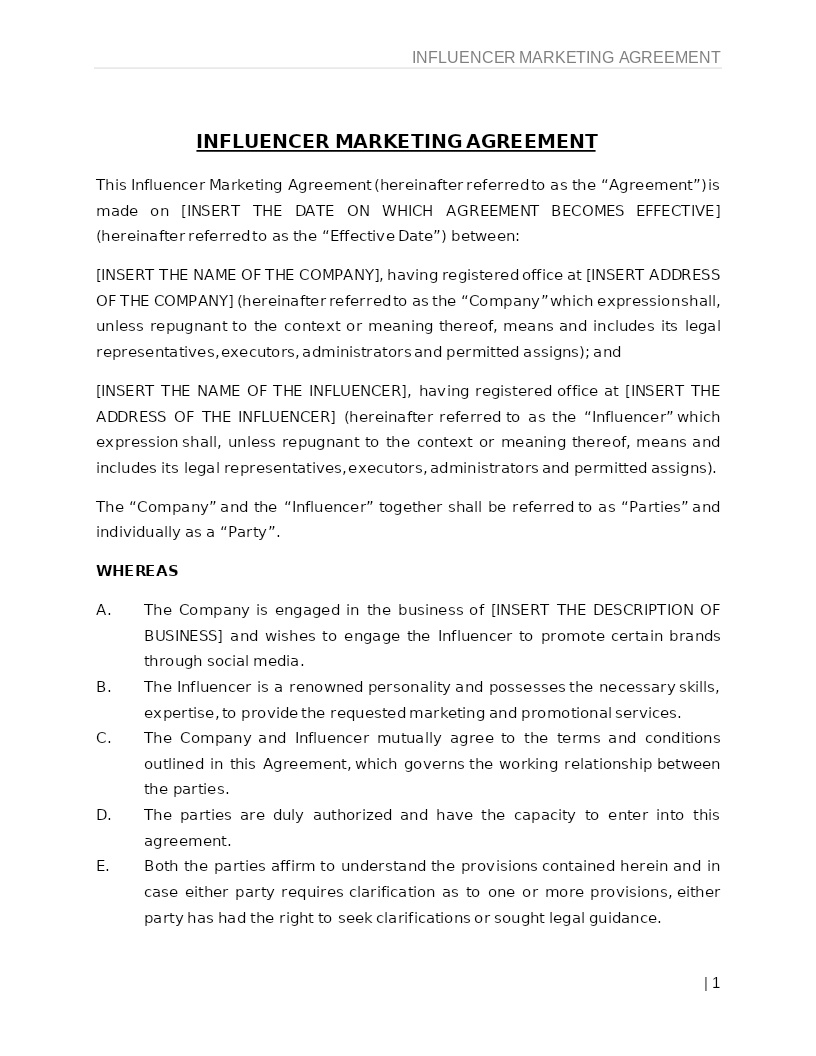
INFLUENCER MARKETING AGREEMENT
How does it work?
1. Choose this template
Start by clicking on "Fill out the template"
2. Complete the document
Answer a few questions and your document is created automatically.
3. Save - Print
Your document is ready! You will receive it in Word and PDF formats. You will be able to modify it.
Establishing Clear Expectations in Brand–Influencer Collaborations
In today’s digital ecosystem, brands increasingly rely on influencers to amplify their marketing efforts, build audience trust, and drive customer engagement. An Influencer Marketing Agreement creates the structured framework needed to guide these collaborations. It defines campaign goals, deliverables, compensation, content usage rights, disclosures, and compliance requirements.
Putting this agreement in place ensures that both the brand and the influencer understand the expectations from the start, how content will be created, when it will be published, how it will be reviewed, and how it may be used afterwards. This clarity not only protects brand reputation but also gives influencers confidence and creative direction while working within clearly defined boundaries.
Where Influencer Marketing Agreements Are Commonly Used
You’ll find influencer agreements across nearly every digital sector in the United States fashion, beauty, wellness, technology, gaming, lifestyle, finance, hospitality, and more. They’re used by brands partnering with content creators on Instagram, TikTok, YouTube, Facebook, blogs, podcasts, or any platform where promotional content is shared. Agencies also use these agreements when coordinating campaigns for multiple creators or long-term ambassador programs.
Any time a creator is producing content representing a brand, this agreement ensures clear deliverables, legal compliance, and mutual protection.
Different Types of Influencer Agreements You May Encounter
- Campaign-Specific Influencer Agreement: Used for one-time or short-term promotional campaigns with set deliverables.
- Long-Term Partnership or Ambassador Agreement: Covers ongoing collaborations, monthly deliverables, and extended brand representation.
- Affiliate or Commission-Based Agreement: Used when influencers earn compensation based on sales, leads, or tracked performance metrics.
- Sponsored Content or Product Collaboration Agreement: Covers content created in exchange for products, services, or hybrid compensation models.
When Legal Guidance Becomes Helpful
Legal advice can be valuable when campaigns involve large budgets, strict brand guidelines, exclusivity clauses, IP ownership transfers, or content used across paid advertising channels. Attorneys also help navigate Federal Trade Commission (FTC) advertising rules, multi-platform disclosure requirements, and the use of user-generated content in paid media. For high-visibility influencers or multi-brand campaigns, legal review helps reduce risks around reputation, compliance, and intellectual property.
How to Work with This Template
- Identify the brand/agency and influencer
- Define the campaign purpose and deliverables
- Clarify deadlines, compensation, approvals, and content rights
- Include disclosure, compliance, and confidentiality requirements
- Select governing state law
- Review the terms together
- Sign electronically or in hard copy
The template aligns with U.S. advertising standards and works seamlessly with popular e-signature platforms.
Frequently Asked Questions
Q1. Is an Influencer Marketing Agreement legally binding in the United States?
Yes. Once both parties sign the agreement, it becomes a legally enforceable contract under U.S. contract law. It defines each party’s responsibilities, campaign deliverables, compensation, and legal obligations. This binding structure helps prevent misunderstandings, ensures marketing activities stay within brand standards, and protects both sides if a dispute arises. For brands working with multiple creators, having a written agreement is especially important for consistency and accountability.
Q2. Who owns the content an influencer creates for a campaign?
Ownership depends on the agreement. Many campaigns allow the influencer to retain authorship while granting the brand a broad, royalty-free license to use the content for marketing. In other cases, especially paid ad campaigns or brand-controlled productions, a “work-for-hire” or full IP assignment is used, giving the brand complete ownership once payment is made. Clear IP terms help avoid confusion about how long and where the content may be used after publication.
Q3. Are influencers required to disclose paid promotions under U.S. law?
Yes. The Federal Trade Commission (FTC) requires influencers to clearly disclose any sponsored, gifted, or paid collaborations to maintain transparency with their audience. Acceptable disclosures include terms like “#ad,” “Paid Partnership,” or platform-specific tools. Failure to disclose can result in regulatory penalties for both the brand and the influencer. An Influencer Marketing Agreement reinforces these standards by requiring proper disclosure on every piece of sponsored content.
Q4. Can an Influencer Marketing Agreement include exclusivity restrictions?
Yes. Exclusivity clauses are common when brands want to prevent influencers from promoting competitor products during or shortly after the campaign. These clauses may be limited to certain product categories, regions, or timeframes to ensure they remain reasonable and compliant with fair competition laws. Exclusivity protects brand integrity while giving influencers clarity on what collaborations are restricted for the duration of the partnership.
Q5. Can the agreement be signed electronically?
Absolutely. Electronic signatures are legally valid and enforceable in the United States under the E-SIGN Act and UETA. This allows brands and influencers often located in different cities or states—to sign agreements digitally through platforms like DocuSign, Adobe Sign, or HelloSign. Electronic execution also provides time-stamped records, making the entire process secure and efficient. As most influencer work happens online, e-signing has become the industry standard.
Q6. What happens if a party breaches the terms of the agreement?
If an influencer posts unapproved content, misses deadlines, or violates disclosure rules or if a brand fails to pay on time the non-breaching party may pursue remedies outlined in the agreement. These may include termination, compensation for damages, removal of content, or legal enforcement of rights. The agreement typically includes dispute-resolution procedures such as mediation or arbitration to resolve issues quickly. Clear breach provisions help maintain professionalism and protect both parties’ reputations.
Q7. Does the agreement require the influencer to follow specific brand guidelines?
Yes. Most agreements include detailed content guidelines that define tone, style, mentions, hashtags, and visual elements to ensure brand consistency. These guidelines help creators understand the brand voice while giving them flexibility to express their authentic style. Clear content standards prevent misrepresentation, protect brand identity, and ensure the final deliverables align with campaign goals.
Q8. How does the agreement address compliance with platform policies?
Influencers must follow the rules of the platforms where content is published such as Instagram, TikTok, YouTube, or Facebook. The agreement often requires compliance with community guidelines, advertising rules, copyright restrictions, and content safety standards. Violating platform policies can lead to content removal or account penalties, so the agreement encourages careful adherence to avoid disruptions to the campaign.
Q9. Can the brand request revisions before content is posted?
Yes. Most agreements allow the brand to review and approve content before publication. This prevents inaccurate claims, off-brand messaging, or regulatory issues. The agreement typically outlines the review timeline and the number of revision rounds included. A structured approval process ensures smoother collaboration and helps maintain consistency across campaigns and creators.
Q10. How are disputes or disagreements resolved in influencer campaigns?
Influencer Marketing Agreements normally include a dispute-resolution clause specifying whether disagreements will be handled through negotiation, mediation, arbitration, or litigation. Mediation or arbitration is often preferred because it is faster, more confidential, and less costly than court proceedings. By setting a clear dispute procedure, the agreement ensures that issues can be resolved professionally without damaging long-term relationships or brand reputation.
Related Templates You May Need
• Social Media Marketing Agreement