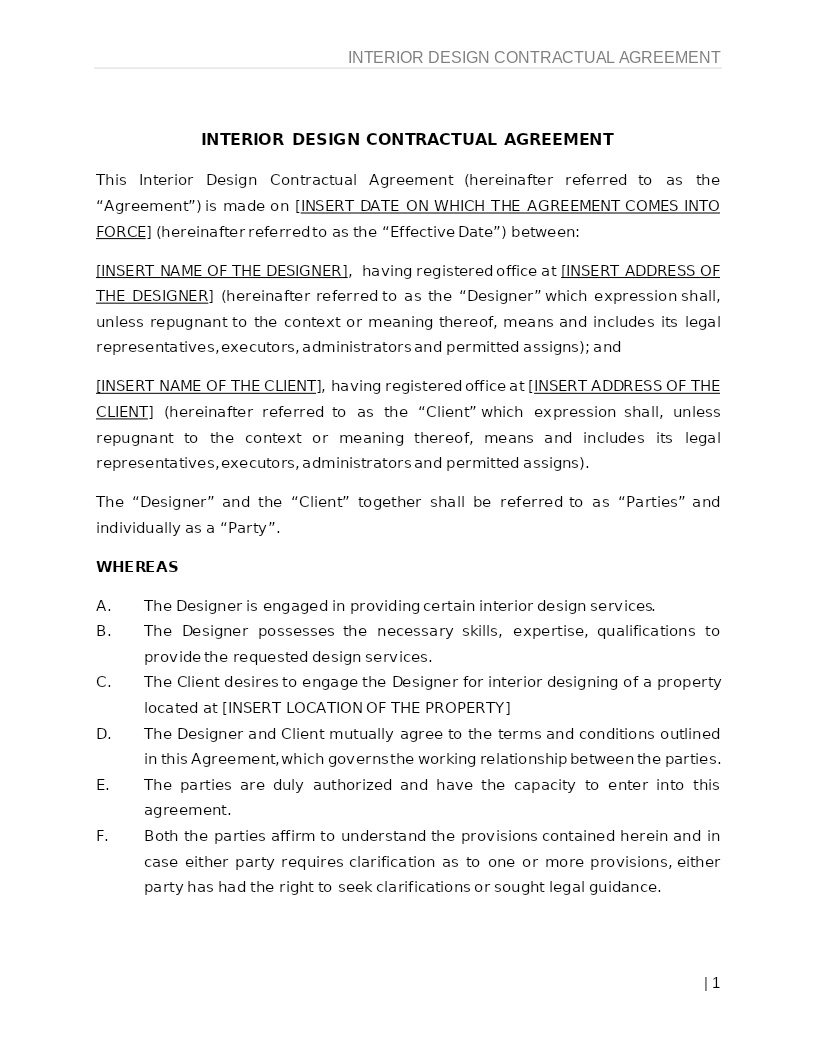
INTERIOR DESIGN CONTRACTUAL AGREEMENT
How does it work?
1. Choose this template
Start by clicking on "Fill out the template"
2. Complete the document
Answer a few questions and your document is created automatically.
3. Save - Print
Your document is ready! You will receive it in Word and PDF formats. You will be able to modify it.
Understanding Interior Design Contractual Agreements
An Interior Design Contractual Agreement is a legally binding contract between a client and an interior designer or design firm that outlines the terms under which design services will be provided. This agreement defines the scope of work, project timeline, design deliverables, procurement responsibilities, fee structures, intellectual property rights, material selections, and compliance with local building codes.
In the United States, Interior Design Agreements operate under state contract laws, consumer protection statutes, building regulations, safety codes, environmental standards, and licensing requirements applicable to interior designers. This agreement ensures that both the client and designer have a clear understanding of expectations, responsibilities, and financial obligations throughout the design process.
Where Interior Design Contractual Agreements Are Commonly Used
Interior Design Agreements are frequently used across residential, commercial, and hospitality projects, including:
- Home remodeling and renovation projects
- Commercial offices, coworking spaces, and corporate interiors
- Retail stores, boutiques, and shopping spaces
- Restaurants, hotels, and hospitality environments
- Model homes, real estate staging, and luxury residential design
- Healthcare, educational, and institutional spaces
- Construction and architectural collaborations
Whenever a designer provides creative and technical services for a built environment, a contractual agreement ensures clarity and legal protection.
Different Types of Interior Design Services You May Encounter
- Full-Service Interior Design: Covers concept creation, planning, material selection, procurement, installation, and project management.
- Consultation-Based Design: Designer provides guidance, concepts, and recommendations without managing purchases or installations.
- E-Design & Remote Design Services: Digital design solutions including 3D plans, mood boards, product lists, and virtual consultations.
- Commercial Interior Design: Designs commercial spaces while ensuring compliance with ADA, fire codes, and industry regulations.
- Renovation & Remodel Design: Focuses on structural changes, layout improvements, finishes, fixtures, and coordination with contractors.
When Legal Guidance Becomes Helpful
Legal review is beneficial when:
- The project involves major construction, materials procurement, or subcontractor management
- The designer provides architectural services requiring state licensing
- The agreement includes warranties, liability limits, or detailed payment schedules
- Intellectual property, custom designs, or creative assets need protection
- The project spans multiple jurisdictions with different building codes
- The client needs clarity on budget limits, change orders, or purchasing responsibilities
- Disputes may arise around delays, damaged goods, or installation issues
Legal guidance helps ensure compliance with state and local regulations while protecting the interests of both parties.
How to Work with This Template
- Identify the client and interior designer, including business information
- Describe the project location and scope of services
- Specify design deliverables, timelines, and milestones
- Outline fee structures—hourly, flat fee, percentage of project cost, or hybrid
- Include procurement terms, vendor coordination, and purchasing responsibilities
- Add confidentiality, IP ownership, and usage rights for design concepts
- Choose the governing U.S. state law
- Define dispute resolution, termination rights, and change-order procedures
- Sign electronically or physically following applicable contract standards
This template adheres to common U.S. interior design industry practices and is compatible with major digital signature platforms.
Frequently Asked Questions
Q1. What is an Interior Design Contractual Agreement and why is it important?
An Interior Design Contractual Agreement outlines the terms under which design services are provided. It is important because it protects both the client and designer by defining expectations, budgets, timelines, and responsibilities—reducing misunderstandings throughout the project.
Q2. Are Interior Design Agreements legally enforceable in the U.S.?
Yes. These agreements are enforceable under state contract laws. When properly drafted, they ensure both parties understand their obligations and offer legal protection if a dispute arises regarding payments, deliverables, or performance.
Q3. What should an Interior Design Agreement include?
A complete agreement includes scope of work, design deliverables, payment terms, procurement rules, installation responsibilities, material specifications, change order processes, and dispute resolution procedures. These help ensure transparency and accountability.
Q4. Do interior designers need to be licensed in the U.S.?
Licensing requirements vary by state. Some states require licenses for commercial design or work impacting building safety, while many allow residential designers to work without formal licensing. The agreement often references any required credentials.
Q5. Who purchases furniture, materials, and fixtures, the designer or the client?
It depends on the agreement. Some designers handle procurement and charge a purchasing fee or markup, while others provide a product list for the client to purchase directly. Clear terms help avoid confusion about costs and responsibilities.
Q6. What happens if the project goes over budget?
The agreement may include budget limits and change-order procedures. If design changes or upgrades increase costs, the client typically approves the changes in writing before additional expenses are incurred.
Q7. Who is responsible for delays or damages during installation?
Responsibility varies depending on the contractor, delivery service, or vendor involved. Strong agreements outline responsibilities for third-party damage, delivery issues, or installation errors to prevent disputes.
Q8. Are electronic signatures valid for Interior Design Agreements?
Yes. Under the U.S. ESIGN Act, electronic signatures are legally valid. Many interior designers and clients use digital signing tools for quick and secure contract execution.
Q9. Can the designer showcase the completed project in their portfolio?
Only if the agreement allows it. Many clients grant permission for photography and marketing use, while some restrict usage for privacy reasons. The agreement should clearly define usage rights.
Q10. Is an Interior Design Agreement suitable for small residential projects?
Definitely. Even small projects benefit from a written agreement. It provides structure, clarity, and legal protection—helping avoid misunderstandings about costs, deadlines, and design expectations.