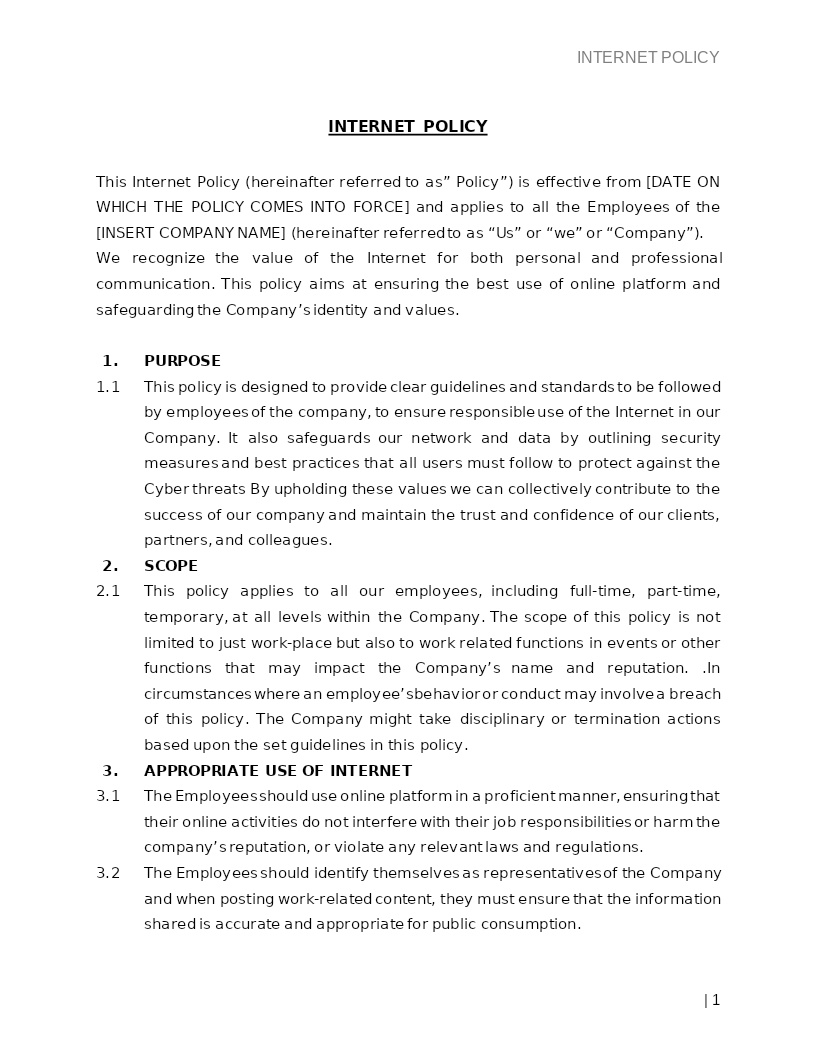
INTERNET POLICY
How does it work?
1. Choose this template
Start by clicking on "Fill out the template"
2. Complete the document
Answer a few questions and your document is created automatically.
3. Save - Print
Your document is ready! You will receive it in Word and PDF formats. You will be able to modify it.
Understanding an Internet Policy
An Internet Policy establishes clear rules for how employees, contractors, or authorized users may access, use, and manage internet resources while connected to an organization’s network or devices. The policy outlines acceptable online behavior, security responsibilities, restrictions, and compliance expectations to reduce legal exposure, protect company assets, and maintain a safe digital workplace.
A well-defined Internet Policy creates structure and consistency. It guides users on the appropriate use of websites, email, cloud applications, social media, data transfers, and online communication. It also helps companies reduce cybersecurity threats, prevent misuse of digital tools, and support compliance with U.S. privacy, data security, and employment laws.
Where Internet Policies Are Commonly Used
Most organizations rely on Internet Policies to maintain secure and productive digital environments, including:
• Corporate offices and hybrid/remote workplaces
• Schools, universities, and educational institutions
• Healthcare organizations and HIPAA-regulated entities
• Technology companies using cloud or SaaS systems
• Government agencies and regulated industries
• Retail, manufacturing, and service-based businesses
• Any workplace where employees access the internet for work
Anytime users connect to company devices or networks, an Internet Policy sets clear expectations and standards of conduct.
Different Types of Internet Use Covered
- Acceptable Use: Defines permitted activities such as browsing work-related sites, using email, and accessing approved cloud tools.
- Prohibited Use: Covers harmful activities such as accessing inappropriate websites, downloading unauthorized software, or using the internet for illegal activity.
- Security Requirements: Includes password rules, VPN use, firewalls, malware protection, and safe browsing behaviors.
- Social media and Communication Guidelines: Explains appropriate online interactions, professional communication, and restrictions on representing the company without authorization.
- Data Transfer & Privacy: Specifies proper handling of confidential information, use of encrypted tools, and compliance with company data protection policies.
When Legal Guidance Becomes Helpful
Legal review may be beneficial when:
• The company handles regulated data (HIPAA, FERPA, GLBA, COPPA)
• Employees access sensitive or confidential information remotely
• The organization uses monitoring tools or tracks user activity
• The policy must comply with state privacy laws (e.g., California Consumer Privacy Act)
• The company operates in multiple states or countries with differing requirements
• Disciplinary actions or termination may result from misuse
How to Work with This Template
• Identify which users and devices the policy applies to
• Outline acceptable and prohibited internet uses
• Include security rules, access guidelines, and monitoring practices
• Specify disciplinary actions for misuse
• Select the governing state law
• Review internally or with legal counsel (optional)
• Distribute the policy and obtain user acknowledgment
• Store signed copies in employee records
Frequently Asked Questions
Q1. Why does my organization need an Internet Policy?
An Internet Policy protects the business from security threats, legal liability, and inappropriate online behavior. It ensures that employees understand how to use company networks safely and responsibly, improving productivity and reducing risk.
Q2. Does an Internet Policy apply to remote or hybrid employees?
Yes. Anyone using company systems from office staff to remote workers must follow the same security and acceptable-use rules. This helps maintain consistent data protection across all work locations.
Q3. Can employers monitor employee internet activity?
In the U.S., employers generally may monitor usage on company-owned devices or networks, as long as notice is given. This policy explains monitoring practices to maintain transparency and legal compliance.
Q4. What types of websites or activities are usually prohibited?
Policies often prohibit accessing adult content, gambling sites, pirated media, malicious websites, or any online activity involving harassment, illegal behavior, or unauthorized downloads that can compromise security.
Q5. How does an Internet Policy improve cybersecurity?
It educates employees on safe browsing habits, phishing awareness, password rules, and proper handling of sensitive data helping prevent malware infection, data leaks, and unauthorized access.
Q6. Does this policy cover use of personal devices at work?
Yes, when personal devices connect to company networks or handle work data. The policy may require secure passwords, approved apps, or VPN use to protect business information.
Q7. Is social media use included in an Internet Policy?
Most policies address workplace social media activity, including rules about posting during work hours, discussing company information online, or using corporate branding without authorization.
Q8. What happens if someone violates the Internet Policy?
Consequences may include warnings, restricted access, mandatory training, or disciplinary action up to termination depending on the severity and company procedures. The policy outlines these consequences clearly.
Q9. Is this policy required for small businesses?
Absolutely. Even small organizations face cyber threats. A clear Internet Policy helps prevent misuse, reduces liability, and strengthens overall digital security practices.
Q10. Are employees required to sign the Internet Policy?
Yes, acknowledgment forms help document that employees read, understood, and agreed to follow the rules. This strengthens enforcement and supports HR compliance during disputes.