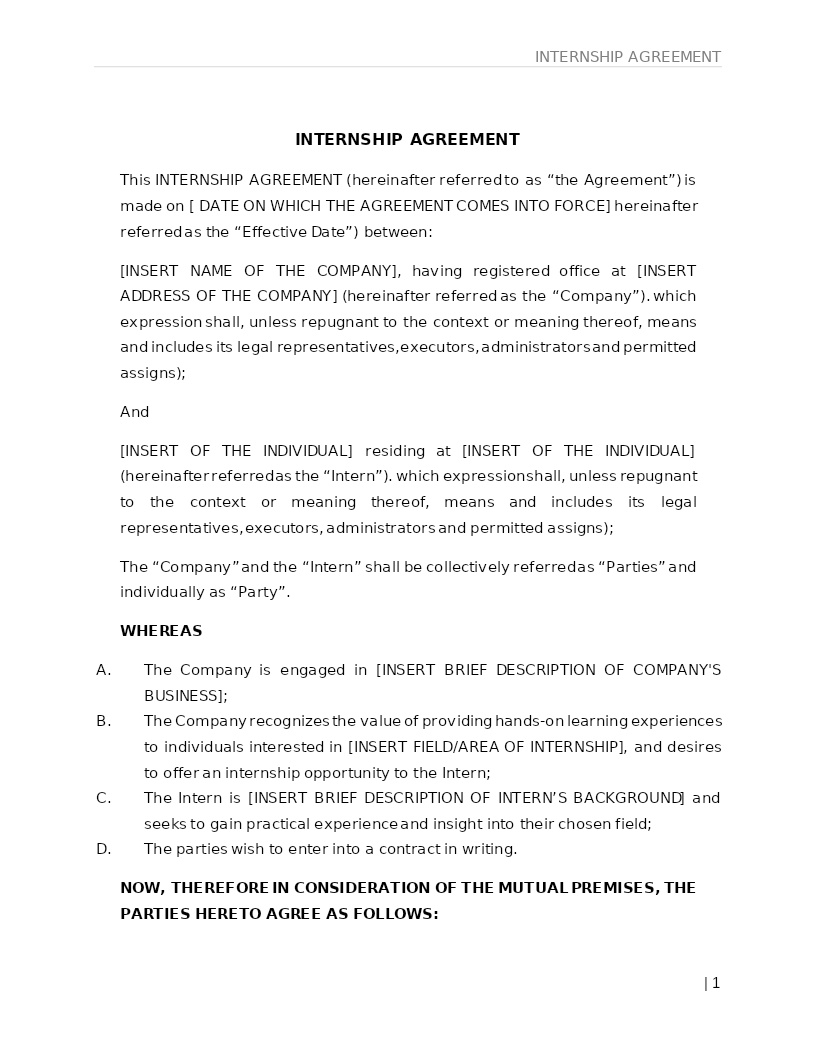
INTERNSHIP AGREEMENT
How does it work?
1. Choose this template
Start by clicking on "Fill out the template"
2. Complete the document
Answer a few questions and your document is created automatically.
3. Save - Print
Your document is ready! You will receive it in Word and PDF formats. You will be able to modify it.
Understanding Internship Agreement in U.S.
An Internship Agreement is a formal legal document that defines the terms and conditions of an internship between an organization and an intern. It outlines the expectations, responsibilities, and rights of both parties, ensuring a professional, structured, and legally compliant relationship. This agreement helps prevent misunderstandings while providing the intern with clarity on their role and the organization with legal protection.
Where Internship Agreements Are Commonly Used
Internship Agreements are standard across various sectors, including:
• Technology, startups, and software development
• Corporations, agencies, and consulting firms
• Nonprofits, educational institutions, and research organizations
• Media, marketing, and creative industries
• Healthcare, engineering, and specialized technical sectors
Any time an organization brings in interns for training, project support, or experiential learning, an Internship Agreement formalizes expectations and ensures compliance with U.S. labor laws.
Different Types of Internship Agreements You May Encounter
- Paid Internship Agreement: Used when interns receive wages, stipends, or other compensation. Must comply with the Fair Labor Standards Act (FLSA) and state wage laws.
- Unpaid Internship Agreement: Applied when internships qualify for unpaid status under the FLSA’s “Primary Beneficiary Test,” focusing on educational benefit to the intern.
- Academic or For-Credit Internship Agreement: Designed for internships tied to a school or university program. Often includes documentation required by educational institutions.
- Remote Internship Agreement: Used for virtual internships, outlining expectations around communication, availability, data security, and remote work tools.
- Confidentiality or IP-Focused Internship Agreement: Common in tech and creative sectors where interns access proprietary data, software, or brand assets.
When Legal Guidance Becomes Helpful
Legal support becomes valuable when:
• Determining whether the internship qualifies as paid or unpaid under U.S. law
• Interns handle sensitive information, intellectual property, or confidential projects
• The organization is operating in highly regulated industries
• Interns are brought in across multiple states with differing labor laws
• The agreement includes work-for-hire, IP ownership, or invention assignment terms
• There are complexities in scheduling, deliverables, or project timelines
• The internship is part of a broader corporate compliance or HR policy
Legal review helps ensure the agreement remains enforceable, compliant, and tailored to organizational needs.
How to Work With This Internship Agreement
• Clearly define the intern’s job duties, training expectations, and supervision
• Identify whether the internship is paid, unpaid, or for academic credit
• Provide details on the internship duration and weekly schedule
• Include confidentiality, non-disclosure, and IP ownership terms
• Specify workplace policies, codes of conduct, and compliance requirements
• Outline termination procedures and reasons for early conclusion
• Document the governing law and dispute resolution mechanisms
• Periodically review and update the agreement to maintain compliance
This structure ensures a transparent, effective, and legally sound internship experience.
Frequently Asked Questions
Q1. Are Internship Agreements legally required in the United States?
While not legally mandatory, Internship Agreements are strongly recommended because they formalize the relationship and help organizations comply with federal and state labor laws. A written agreement protects both parties by clearly outlining job duties, compensation rules, confidentiality obligations, and workplace expectations.
Q2. How do I know if an internship can be unpaid under U.S. law?
The U.S. Department of Labor uses the Primary Beneficiary Test under the Fair Labor Standards Act (FLSA) to determine whether an intern can legally be unpaid. The internship must primarily benefit the intern, not the employer. A detailed agreement helps document compliance and avoid misclassification issues.
Q3. What should be included in a legally compliant Internship Agreement?
A strong Internship Agreement includes details on job duties, compensation (if any), duration, confidentiality, supervision, conduct rules, and intellectual property ownership. It should also specify compliance with federal, state, and local laws. Clear documentation helps prevent misunderstandings and protects the organization against legal claims.
Q4. Do interns own the intellectual property they create?
In most cases, when included in the agreement, the employer owns the intellectual property produced during the internship under “work-for-hire” or “assignment of inventions” clauses. However, the intern retains rights to personal projects created outside the scope of the internship. Proper documentation prevents future disputes.
Q5. Should interns sign confidentiality or non-disclosure clauses?
Yes. Interns often have access to sensitive company information, proprietary data, and internal processes. A confidentiality clause ensures they do not misuse or disclose this information during or after the internship. This is especially important for tech, marketing, financial, and research-based organizations.
Q6. Can an internship be terminated early?
Yes. Internship Agreements typically include termination terms that allow either party to end the relationship with notice. Early termination may occur due to misconduct, lack of performance, policy violations, or changes in business needs. Clear termination procedures help avoid disputes and ensure smooth transitions.
Q7. Are remote internships covered under the same laws as on-site internships?
Yes. Whether remote or on-site, internships must still comply with federal and state labor laws, including those related to wages, work hours, and safety. Remote Internship Agreements often include additional terms related to data protection, equipment usage, communication expectations, and cybersecurity requirements.
Q8. Do Internship Agreements help prevent legal disputes?
Absolutely. A well-drafted agreement minimizes ambiguity, strengthens compliance, and outlines clear expectations, significantly reducing the likelihood of disputes. If issues arise, the agreement provides a structured reference point for resolving misunderstandings professionally and legally.