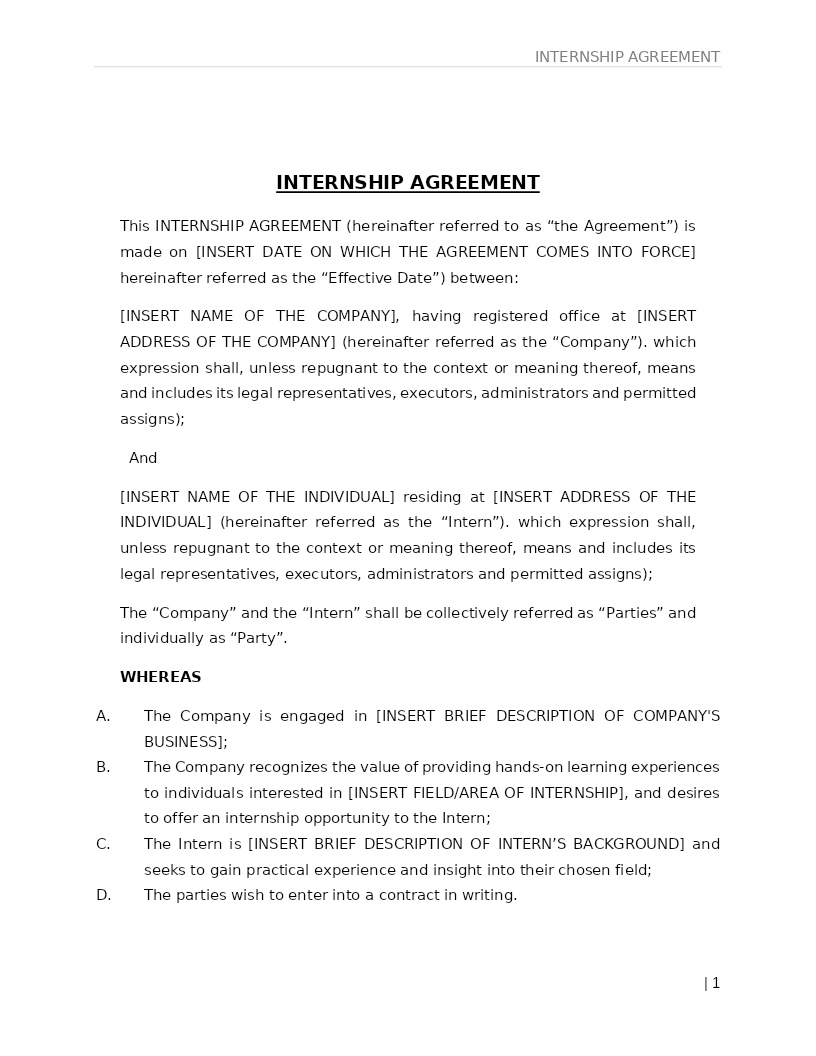
INTERNSHIP AGREEMENT
How does it work?
1. Choose this template
Start by clicking on "Fill out the template"
2. Complete the document
Answer a few questions and your document is created automatically.
3. Save - Print
Your document is ready! You will receive it in Word and PDF formats. You will be able to modify it.
Everything You Need to Know About an Internship Agreement
An Internship Agreement is a legally binding contract between a company (the host organization) and an intern that defines the terms and conditions of the internship program. In the United States, this agreement helps distinguish interns from employees, ensures compliance with federal and state labor laws, and clearly outlines the expectations, responsibilities, and learning goals associated with the internship.
A well-drafted Internship Agreement protects both the organization and the intern by establishing a structured framework for duties, confidentiality, workplace conduct, payment (if any), and the duration of the program. It also supports a safe and supportive learning environment while minimizing risks related to misclassification or workplace disputes.
Where an Internship Agreement Is Commonly Used
An Internship Agreement can be used by:
- Corporations, startups, and small businesses hiring student interns
- Nonprofits, research institutions, think tanks, and educational organizations
- Digital agencies, law firms, healthcare entities, media houses, and tech companies
- Remote internship programs or hybrid work models
- Universities partnering with employers for academic-credit internships
Any U.S. organization engaging interns, paid or unpaid, can use this agreement to ensure compliance and clarity.
Different Types of Internship Agreements
- Paid Internship Agreement: Used when the intern receives wages or stipends; must comply with the Fair Labor Standards Act (FLSA) and state wage laws.
- Unpaid Internship Agreement: Designed for learning-based internships where compensation is not provided; must meet specific FLSA criteria for unpaid internships.
- Academic-Credit Internship Agreement:Used when the internship is part of a university or college curriculum; includes academic requirements and evaluation criteria.
- Remote Internship Agreement: Covers remote working conditions, communication rules, digital confidentiality, and task expectations.
- International Internship Agreement: Applied when interns are foreign students or the internship spans multiple jurisdictions; includes immigration, tax, and compliance details.
Each type ensures the internship structure aligns with U.S. legal and educational standards.
When Legal Guidance Becomes Helpful
Consulting legal counsel is recommended when:
- The internship is unpaid and must meet FLSA’s “primary beneficiary test”
- The intern will access confidential, technical, or proprietary business information
- The internship may trigger employment law issues
- Multiple jurisdictions or remote workers are involved
- High-risk industries (healthcare, finance, technology) require compliance
- Custom IP ownership, liability waivers, or non-disclosure terms are needed
- The organization wants to prevent misclassification claims
Attorney review ensures enforceability, compliance, and protection.
How to Work With This Template
- Add intern and organization details, role, responsibilities, and reporting structure
- Specify duration, weekly schedule, location (onsite/remote), and required tools
- Clarify payment terms (stipend/no stipend) and any reimbursements
- Define training, learning goals, mentorship, and performance evaluation
- Include confidentiality, intellectual property, and code of conduct clauses
- Add termination rules, dispute mechanisms, and acknowledgment sections
- Ensure compliance with U.S. federal and state labor laws
This template can be fully customized for internships across industries and work environments.
Frequently Asked Questions
1. Is an Internship Agreement legally required in the United States?
While not legally mandatory, an Internship Agreement is strongly recommended because it sets clear expectations, outlines roles, and protects both parties. It helps ensure compliance with FLSA guidelines, prevents misclassification claims, and provides documentation if disputes arise. Most reputable organizations in the U.S. use written agreements for clarity and legal safety.
2. What is the difference between a paid and unpaid internship under U.S. law?
Paid interns are treated similarly to employees and must receive at least minimum wage under FLSA. Unpaid interns must meet strict criteria showing that the internship is primarily for the intern’s educational benefit. An Internship Agreement helps document these requirements, ensuring compliance with federal and state labor standards.
3. Does an Internship Agreement guarantee employment after the program?
No. A properly drafted agreement will clarify that the internship does not create an employment relationship or guarantee future hiring. Including a “no guarantee of employment” clause protects the organization from claims that the intern was promised a job.
4. Should confidentiality or nondisclosure clauses be included?
Yes. Interns often access internal documents, research, strategies, or client information. A confidentiality or NDA clause ensures they cannot disclose sensitive material during or after the internship. It protects the organization’s intellectual property and maintains professional boundaries.
5. Can remote interns be covered under the same agreement?
Absolutely. A remote internship agreement includes additional terms like communication expectations, tools and systems access, data protection obligations, and remote conduct rules. This ensures remote interns follow the same standards as onsite interns and remain compliant with U.S. data privacy laws.
6. What happens if the intern fails to meet expectations or violates policies?
The agreement outlines the grounds for termination, such as misconduct, absenteeism, confidentiality breaches, or failure to complete assigned tasks. It also provides a structured process for warnings or immediate termination, ensuring fairness and legal protection for the organization.
7. Does the agreement need to specify intellectual property ownership?
Yes. If the intern creates work such as designs, software, research, or written content, the agreement should clearly assign ownership to the organization. This prevents future disputes and ensures the company legally owns the work produced during the internship.
8. How does an Internship Agreement support the intern’s learning experience?
The agreement outlines learning objectives, mentorship plans, training opportunities, and performance evaluation processes. This helps interns understand the skills they will gain and ensures the internship is educational, structured, and professionally beneficial, meeting both legal standards and student expectations.