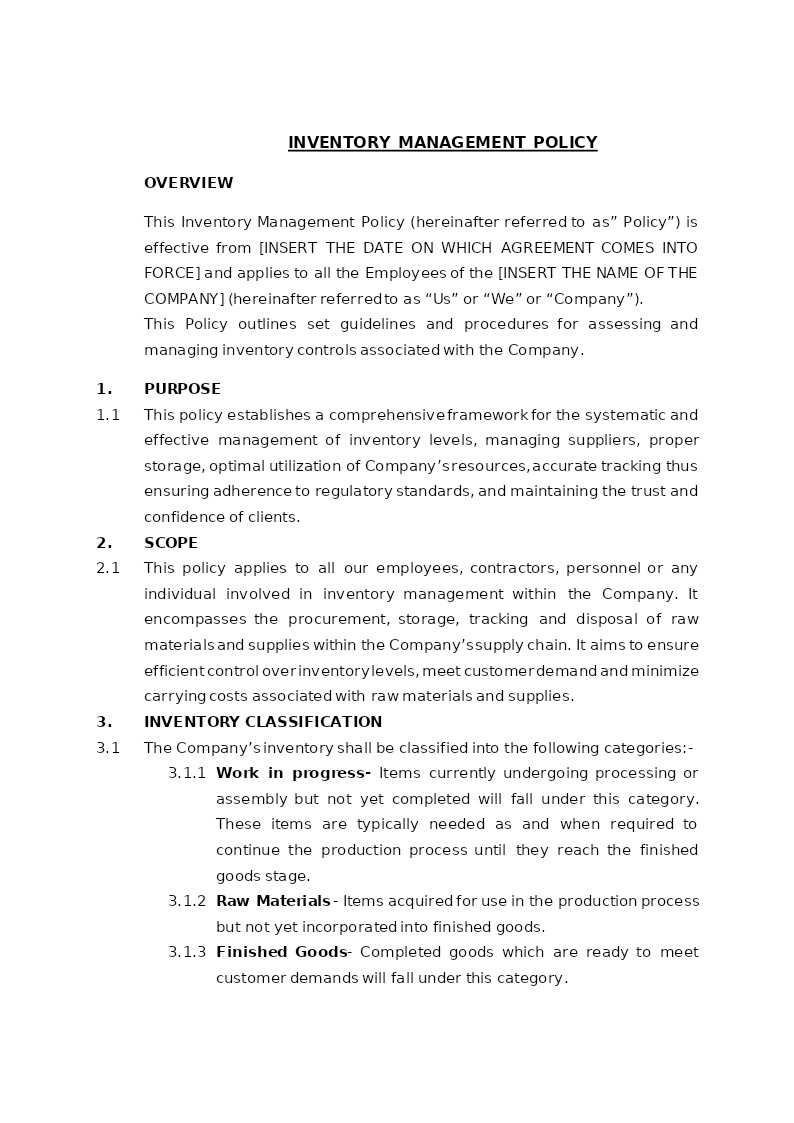
INVENTORY MANAGEMENT POLICY
How does it work?
1. Choose this template
Start by clicking on "Fill out the template"
2. Complete the document
Answer a few questions and your document is created automatically.
3. Save - Print
Your document is ready! You will receive it in Word and PDF formats. You will be able to modify it.
Understanding Inventory Management Policy in U.S.
An Inventory Management Policy is a structured framework that outlines how a U.S. business will track, store, control, and manage its inventory. This policy establishes standardized procedures for ordering, receiving, storing, auditing, and disposing of inventory. It ensures that stock levels remain accurate, prevents losses, and supports smooth business operations. A well-defined Inventory Management Policy also helps organizations comply with U.S. accounting standards, tax regulations, and industry-specific requirements. By implementing consistent guidelines, businesses can reduce waste, improve supply chain performance, enhance customer satisfaction, and support long-term financial stability.
Where an Inventory Management Policy Is Commonly Used
• Retail stores and e-commerce companies
• Manufacturing and production facilities
• Warehousing and distribution centers
• Restaurants, food businesses, and hospitality organizations
• Healthcare providers, pharmacies, and medical suppliers
• Technology and electronics companies
• Automotive and industrial supply sectors
• Any business that purchases, stores, or distributes goods
Different Types of Inventory Management Policies
- Stock Control Policy: Covers minimum inventory levels, reorder points, and replenishment procedures.
- Warehouse & Storage Policy: Defines storage rules, safety guidelines, and inventory handling processes.
- Inventory Valuation Policy: Specifies valuation methods such as FIFO, LIFO, or weighted average, in line with U.S. GAAP and IRS rules.
- Asset & Equipment Inventory Policy: Used for tracking non-consumable business assets, including fixed assets.
- Perishable Inventory Policy: Provides guidelines for expiration tracking, rotation, and disposal.
When Legal Guidance Becomes Helpful
Legal and in-house counsel help ensure your policy meets U.S. regulatory, contractual, and industry requirements. Lawyers can:
• Tailor the policy based on operational risks, storage needs, and supply chain structure
• Ensure compliance with U.S. state and federal laws, including OSHA, EPA, FDA, and IRS guidelines
• Address liability concerns related to product damage, loss, safety, or expiration
• Customize contract terms relating to vendors, suppliers, and third-party logistics providers
• Establish protective measures for high-value or regulated inventory
• Create enforceable documentation, dispute-resolution procedures, and audit protocols
• Align policies with corporate governance and internal risk-management frameworks
Their expertise ensures your policy is legally sound, enforceable, and aligned with your unique business operations.
How to Use This Inventory Management Policy
• Implement standardized procedures for ordering, receiving, and tracking stock
• Train employees on proper inventory handling and security practices
• Use inventory management software to ensure accuracy and real-time visibility
• Conduct periodic stock counts and reconcile discrepancies
• Maintain proper documentation for audits, tax compliance, and financial reporting
• Dispose of damaged, expired, or obsolete inventory responsibly
• Monitor inventory trends to forecast demand and reduce waste
By following these guidelines, businesses can enhance operational efficiency, minimize losses, and maintain accurate financial records.
Frequently Asked Questions
Q1. Why is an Inventory Management Policy important for U.S. businesses?
An Inventory Management Policy helps businesses maintain accurate stock levels, prevent waste, and comply with U.S. accounting and tax regulations. It minimizes operational delays and financial losses. By standardizing processes, companies can improve supply chain performance and support better decision-making.
Q2. Does this policy help reduce inventory theft or shrinkage?
Yes. A well-structured policy establishes security protocols, access controls, and audit procedures that reduce theft, misplacement, and shrinkage. It promotes accountability among employees and vendors, ensuring that inventory is tracked responsibly throughout its lifecycle.
Q3. How does an Inventory Management Policy support financial accuracy?
Inventory directly affects a company’s cost of goods sold (COGS) and taxable income. This policy ensures proper documentation and valuation methods aligned with U.S. GAAP and IRS standards. Accurate reporting prevents financial discrepancies and supports compliance during audits.
Q4. Should small businesses also have an Inventory Management Policy?
Absolutely. Even small businesses face inventory challenges such as stockouts, overstocking, and losses. A policy helps streamline operations, supports budgeting, and enhances profitability. It also prepares small businesses for growth and future regulatory compliance.
Q5. How often should a business review or update its Inventory Management Policy?
The policy should be reviewed annually or whenever there are changes in inventory systems, supply chains, or regulatory requirements. Regular reviews ensure that procedures remain effective, relevant, and compliant with current industry standards.
Q6. What U.S. laws can impact inventory management practices?
Depending on the business type, inventory policies may need to comply with OSHA (storage safety), FDA regulations (perishables/medical inventory), EPA guidelines (hazardous materials), and IRS rules (inventory valuation). Legal counsel helps ensure compliance across applicable regulations.
Q7. Can this policy integrate with inventory management software?
Yes. Most U.S. businesses integrate their Inventory Management Policy with digital tools or ERP systems. Software enhances accuracy, provides real-time tracking, and automates reordering. Aligning the policy with technology improves efficiency and reduces human error.
Q8. How does an Inventory Management Policy improve customer satisfaction?
By preventing stock shortages and delays, the policy ensures products are available when customers need them. It also supports faster fulfillment and accurate orders. Improved inventory reliability strengthens customer trust and enhances overall brand reputation.