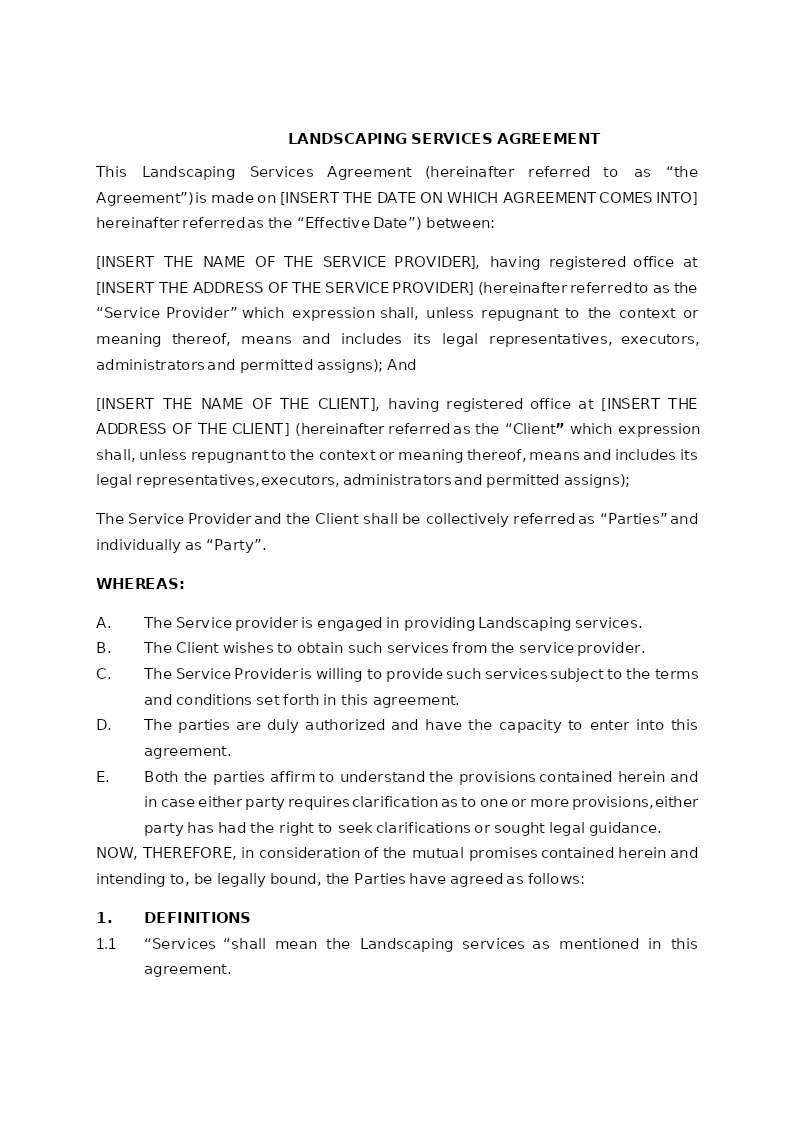
LANDSCAPING SERVICES AGREEMENT
How does it work?
1. Choose this template
Start by clicking on "Fill out the template"
2. Complete the document
Answer a few questions and your document is created automatically.
3. Save - Print
Your document is ready! You will receive it in Word and PDF formats. You will be able to modify it.
Setting Clear Expectations for Landscaping Services and Property Maintenance Across the United States
When you’re hiring a landscaping company or contractor to maintain or improve a property, it’s important to have a clear framework that governs how the work will be completed. A Landscaping Agreement provides that structure. It outlines the scope of services, project timelines, payment terms, maintenance responsibilities, and the standards both parties must follow.
Putting a Landscaping Agreement in place creates transparency, ensures predictable service quality, and allows both the client and service provider to communicate effectively. It establishes trust, prevents disputes over work or costs, and provides a professional foundation for ongoing or long-term landscaping maintenance.
Where Landscaping Agreements Are Commonly Used
Landscaping contracts are widely used in both residential and commercial settings, including:
- Routine lawn care, mowing, tree trimming, and seasonal maintenance
- Large-scale property beautification for homes or estates
- Maintenance for commercial buildings, malls, and office parks
- HOA and community landscaping services
- Property renovations, irrigation systems, and outdoor design projects
- Long-term maintenance for hotels, resorts, and business complexes
Any time landscaping services are provided, a written agreement helps define obligations and manage expectations.
Different Types of Landscaping Agreements You May Encounter
- Residential Landscaping Agreement: Ideal for homeowners seeking ongoing lawn care or seasonal yard maintenance.
- Commercial Landscaping Contract: Used for businesses, HOAs, and large properties requiring structured maintenance schedules.
- Project-Based Landscaping Agreement: Covers one-time improvements such as design builds, installations, or renovations.
- Maintenance and Service Agreement: Focuses on recurring services such as mowing, pruning, fertilizing, irrigation checks, and seasonal cleanup.
When Legal Guidance Becomes Helpful
Most routine landscaping arrangements can be handled with a standard agreement, but legal assistance is helpful when:
- The project involves significant construction, excavation, or design work
- Multiple subcontractors, suppliers, or large budgets are involved
- There are concerns about liability, property damage, or insurance requirements
- The agreement must comply with local building or environmental regulations
- There is a complex payment structure (milestones, retainers, performance-based fees)
- Intellectual property rights apply to landscape designs or custom plans
Legal review helps ensure enforceability and reduces the risk of disputes during large or specialized projects.
How to Work with This Template
- Identify both parties: client/property owner and landscaping service provider
- Clearly outline the scope of work and schedule
- Specify payment terms, project milestones, and invoicing procedures
- Define responsibilities for materials, equipment, and site conditions
- Include insurance requirements and liability limitations
- Review timelines, termination conditions, and dispute procedures
- Sign electronically or in hard copy
The template follows widely recognized contract standards used in the U.S. landscaping and property maintenance industry.
Frequently Asked Questions
Q1. Why is a Landscaping Agreement important for property owners and businesses?
A Landscaping Agreement clearly outlines the services to be performed, the payment terms, and the expected timelines. This reduces misunderstandings and ensures both parties agree on what the project includes. For property owners, it provides protection against poor workmanship or unexpected charges. For landscapers, it establishes a written commitment that supports efficient delivery.
Q2. What should be included in a Landscaping Agreement?
A good landscaping contract should include scope of work, schedules, materials, equipment usage, payment terms, and any limitations on services. It should also cover insurance requirements, project timelines, maintenance frequency, and termination clauses. These details ensure clarity and prevent disputes. The more detailed the agreement, the smoother the project execution.
Q3. How does a Landscaping Agreement protect the client?
It ensures the landscaper performs the agreed-upon services at the expected quality level and timeline. The contract clarifies responsibilities for damages, delays, or incomplete work. It also protects the client from hidden charges or unapproved modifications. Having the terms in writing supports accountability throughout the project.
Q4. How does the agreement protect the landscaping service provider?
The landscaper is protected from scope creep, unauthorized changes, or delayed payments. The agreement defines exactly what is included and excluded, helping avoid unrealistic expectations. It also outlines liability limitations and ensures the client understands the provider’s insurance terms. This safeguards the landscaping business from unnecessary disputes.
Q5. Are payment schedules and cost breakdowns necessary in the contract?
Yes. Clear payment terms, such as upfront deposits, milestone payments, or monthly invoices, help prevent conflicts and ensure cash flow stability. Cost breakdowns also prevent misunderstandings related to materials, labor, and add-on services. Documenting these details reduces financial disputes and keeps the project on track.
Q6. Can landscaping agreements include warranties or service guarantees?
Many agreements include warranties for plants, irrigation systems, or workmanship. These warranties specify what the landscaper will repair or replace if issues arise. Service guarantees also build trust and protect the client if performance falls short. Including such provisions enhances professionalism and accountability.
Q7. Should the agreement address liability and insurance?
Absolutely. Landscaping work can involve machinery, tools, and potential hazards. The agreement should specify the provider’s insurance coverage, including general liability and workers’ compensation. This protects both parties if accidents, property damage, or injuries occur. Lack of proper coverage can expose clients to unnecessary risks.
Q8. Does this agreement apply to ongoing maintenance services?
Yes. Landscaping Agreements can cover weekly, monthly, or seasonal maintenance. Clearly defining service frequency and responsibilities ensures consistent upkeep. This is especially important for commercial properties, where appearance and safety standards must be maintained. The agreement helps ensure long-term quality and reliability.