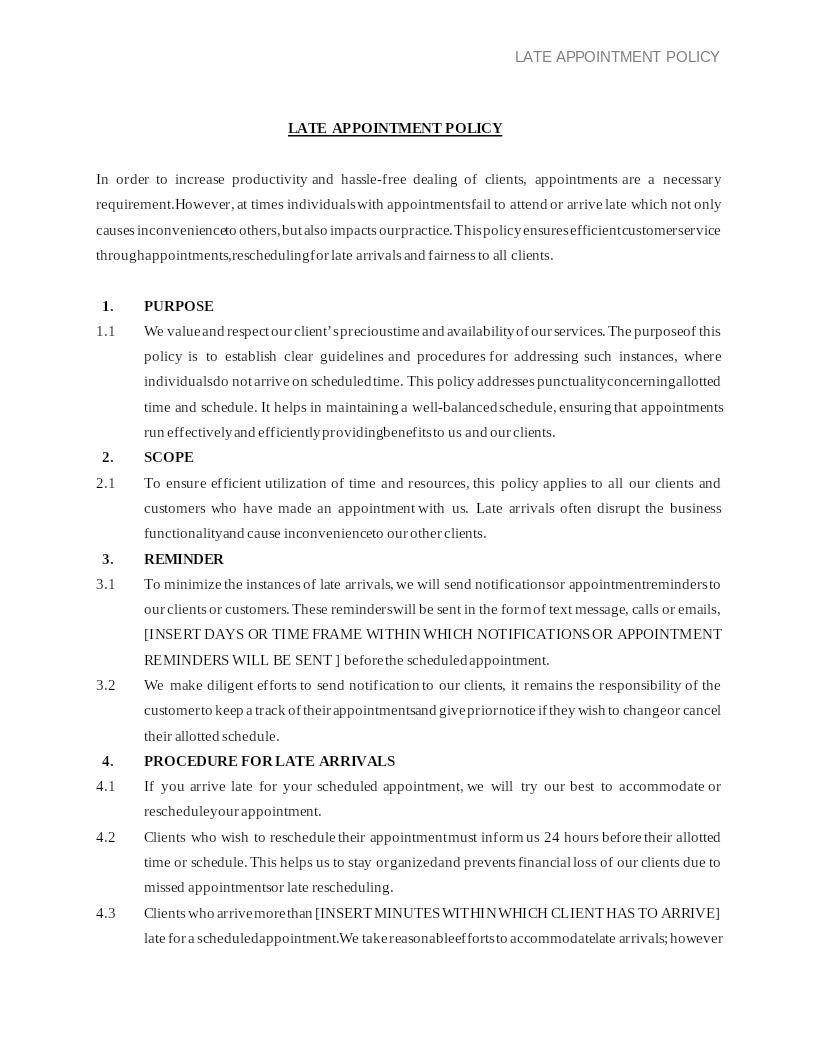
LATE APPOINTMENT POLICY
How does it work?
1. Choose this template
Start by clicking on "Fill out the template"
2. Complete the document
Answer a few questions and your document is created automatically.
3. Save - Print
Your document is ready! You will receive it in Word and PDF formats. You will be able to modify it.
Maintaining Professionalism and Schedule Efficiency
When an organization relies on scheduled appointments whether for client meetings, consultations, training sessions, or service-based interactions timeliness becomes essential for smooth operations. A Late Appointment Policy establishes clear expectations for punctuality, outlines what happens when someone arrives late, and ensures fairness for all clients and team members involved.
Having a written policy promotes accountability and helps avoid misunderstandings. It also ensures your team can manage their workload effectively, maintain customer satisfaction, and reduce operational disruptions caused by delayed arrivals.
Where Late Appointment Policies Are Commonly Used
Late Appointment Policies are standard across a wide range of industries and service environments, including:
• Medical offices, clinics, and wellness centers
• Professional services like law, consulting, accounting, and coaching
• Beauty salons, spas, and personal care providers
• Educational institutions, tutoring, and training programs
• Corporate environments with internal scheduling systems
• Fitness trainers, therapists, and appointment-based businesses
• Customer service centers and technical support schedules
Different Approaches to Late Appointment Management
- Grace Period Policies: Allow clients a short window often 5–10 minutes before the appointment is marked late.
- Reschedule or Cut-Short Policies: Late arrivals may still be served, but the session ends at the original time or must be rescheduled.
- Cancellation After Late Arrival: If someone is significantly late, the appointment is treated as a no-show.
- Fee-Based Late Policies: Some businesses charge a fee for late arrivals that disrupt operations.
When Legal Guidance Becomes Helpful
Most organizations do not need formal legal review to implement a Late Appointment Policy, but legal guidance may be useful when:
• The policy involves fees, deposits, or penalties
• You operate in a regulated industry, such as healthcare
• You need to comply with ADA, state consumer protection, or professional licensing rules
• Clients sign contracts that reference the policy
• The policy applies to employees and intersects with HR or labor laws
• Your business processes sensitive scheduling information
How to Work with This Template
• Identify the types of appointments covered by the policy
• Define lateness (e.g., after 10 minutes)
• Clarify whether a grace period is offered
• State how late arrivals affect service time
• Explain any fees or cancellation outcomes
• Choose governing state laws if tied to service contracts
• Provide clear examples when sharing the policy with staff or clients
• Sign electronically or include acceptance through online booking systems
Frequently Asked Questions
Q1. Why is a Late Appointment Policy important for businesses?
A Late Appointment Policy helps maintain scheduling efficiency, prevents delays from impacting other clients, and ensures staff time is respected. It promotes professionalism and reduces operational disruptions.
Q2. How is lateness typically defined in such policies?
Most organizations define lateness as arriving after a set grace period, often between 5–15 minutes. The policy spells out what timing triggers a late status and what happens afterward.
Q3. Can a business charge fees for late arrivals?
Yes, many businesses implement late fees or reduced-service charges, especially if lateness impacts staff productivity or results in lost appointment slots. These fees must be clearly disclosed and compliant with consumer protection laws.
Q4. What happens if a client is consistently late?
Depending on the policy, the business may shorten the session, require advance payment for future appointments, apply cancellation fees, or restrict future bookings. Repeated lateness can be treated similarly to repeated no-shows.
Q5. Are grace periods required by law?
No, grace periods are optional, but many businesses include them to promote fairness and customer satisfaction. Offering a short grace period also helps accommodate minor, unavoidable delays.
Q6. Can the business cancel the appointment if the client is late?
Yes. Many policies allow an appointment to be cancelled if someone arrives significantly late or if serving them would disrupt subsequent appointments. This is especially common in medical and professional service settings.
Q7. Does the policy apply to virtual or telehealth appointments?
Absolutely. Virtual appointments also rely on strict scheduling. Late arrival may result in shortened meeting time, rescheduling, or cancellation, depending on the policy.
Q8. How should businesses communicate the policy?
The policy should be displayed clearly on websites, booking pages, confirmation emails, intake forms, and service agreements. Clear communication ensures clients know expectations before scheduling.
Q9. Can staff make exceptions for emergencies?
Yes. Most policies allow discretionary exceptions for emergencies, unexpected circumstances, or accessibility-related delays. However, exceptions should be handled consistently to maintain fairness.
Q10. Is a Late Appointment Policy enforceable without a signature?
Yes. If the policy is publicly posted and clients book appointments with notice of the terms, it is generally enforceable. For stronger protection, businesses may request acknowledgment through booking forms or e-signatures.