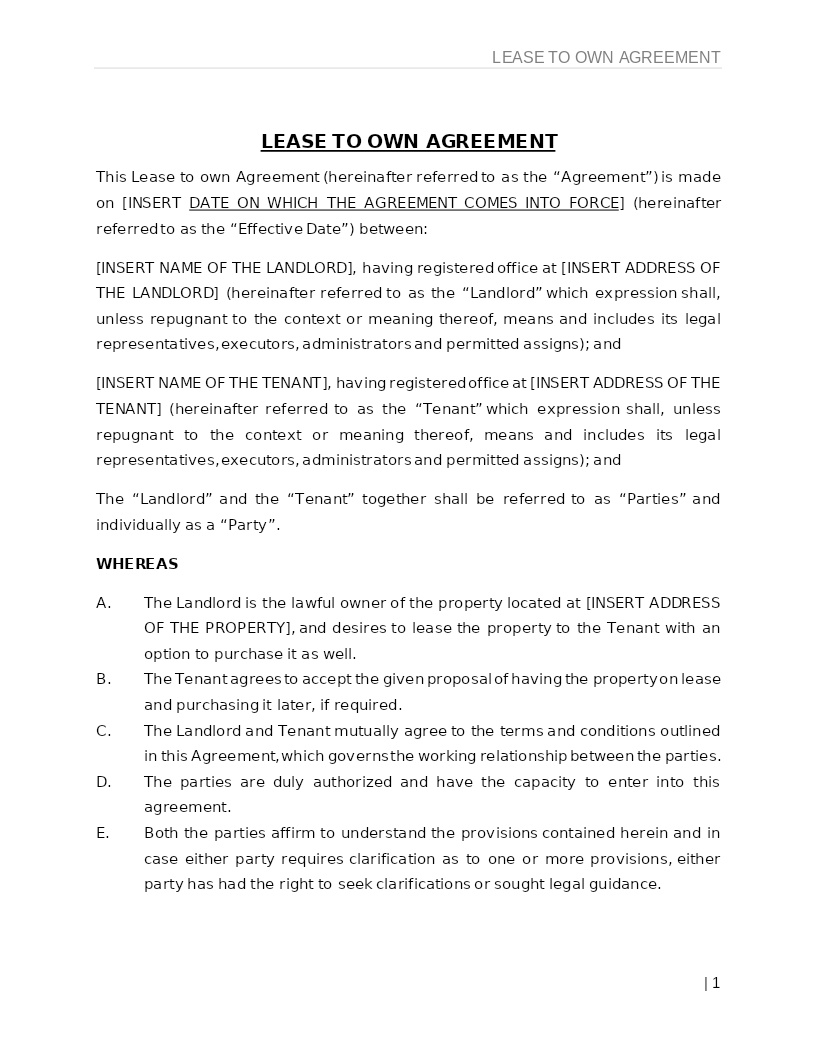
LEASE TO OWN AGREEMENT
How does it work?
1. Choose this template
Start by clicking on "Fill out the template"
2. Complete the document
Answer a few questions and your document is created automatically.
3. Save - Print
Your document is ready! You will receive it in Word and PDF formats. You will be able to modify it.
Understanding Lease to Own Arrangements in Residential Property
A Lease to Own Agreement also known as a Rent-to-Own Agreement, is a legally binding contract that allows a tenant to lease a property with the option to purchase it at a later date. This arrangement combines traditional renting with a structured pathway toward future homeownership. It outlines key terms such as monthly rent, the agreed purchase price, the option fee, maintenance responsibilities, and the timeframe for exercising the purchase option.
In the United States, Lease to Own Agreements are especially beneficial for tenants who need time to improve credit scores, save for a down payment, or stabilize income before securing a mortgage. For landlords, these agreements attract long-term, committed tenants while preserving the potential for an eventual sale.
Where Lease to Own Agreements Are Commonly Used
Lease to Own Agreements are used in a variety of residential and investment scenarios, including:
- Tenants seeking time to qualify for mortgage approval
- Buyers with limited savings who need a gradual financial transition
- Long-term renters who prefer trying a home before buying
- Sellers looking for steady rental income during slow markets
- Investors managing single-family properties or multi-unit rentals
- Families planning eventual homeownership for future relocation
These agreements work well when both parties want flexibility paired with a clear roadmap toward ownership.
Different Types of Lease to Own Agreements You May Encounter
- Lease with Option to Buy: The tenant has the option, but not the obligation, to purchase the property within the agreed period.
- Lease with Purchase Agreement: The tenant is obligated to buy the property at the end of the lease term, making this a more binding structure.
- Seller-Financed Rent-to-Own: The seller finances the purchase, allowing the tenant-buyer to avoid traditional mortgage lenders.
- Hybrid Rent Credit Models: A portion of the tenant’s monthly rent is credited toward the eventual purchase price or down payment.
When Legal Guidance Becomes Helpful
While Lease to Own Agreements offer flexibility, legal counsel is valuable when:
- The agreement includes rent credits, option fees, or complex payment structures
- The property has liens, title issues, or zoning complications
- The landlord wants specific default remedies or eviction rights
- The tenant needs clarity on maintenance, repairs, and long-term responsibilities
- The parties negotiate conditional purchase terms or price adjustments
- The transaction spans multiple states or investment entities
- The tenant wants to ensure the purchase price or appraisal method is fair
Real estate attorneys help ensure the agreement complies with federal housing regulations, state property laws, and fair-lending standards.
How to Work with This Template
- Define the landlord and tenant with full legal details
- Specify lease terms, monthly rent, and option fees
- Set the purchase price or outline how the price will be determined
- Clarify rent credit structures (if any)
- Assign maintenance and repair responsibilities
- Establish timelines for exercising the purchase option
- Include default, early termination, and dispute resolution terms
- Select governing state law and comply with local housing statutes
- Sign electronically or in hard copy
This template aligns with common U.S. real estate practices and supports residential lease-to-own arrangements across states.
Frequently Asked Questions
Q1. How does a Lease to Own Agreement benefit tenants in the United States?
A Lease to Own Agreement gives tenants the advantage of living in the home while preparing for long-term ownership. They can build credit, save for a down payment, and evaluate whether the property suits their family and lifestyle. This allows potential buyers to enter the housing market gradually, without the pressure of securing immediate financing.
Q2. What financial commitments are involved in a lease-to-own setup?
Tenants typically pay monthly rent along with an option fee that grants them the right to purchase the property later. Some agreements include rent credits, where a percentage of the rent is applied toward the final purchase price. These financial structures help tenants accumulate equity over time while giving landlords predictable income.
Q3. How is the purchase price determined in a Lease to Own Agreement?
The purchase price may be predetermined at the start of the lease or tied to an appraisal at the time the option is exercised. A fixed price offers certainty, while an appraisal-based price reflects current market value. The agreement clearly outlines which method applies to avoid misunderstandings later.
Q4. Who is responsible for property maintenance during the lease-to-own period?
Responsibility varies by agreement, but many lease-to-own contracts shift certain maintenance duties to the tenant, reflecting their long-term interest in the property. Tenants may handle routine repairs, landscaping, and upkeep, while major structural issues may remain the landlord’s responsibility. Clear maintenance clauses help prevent disputes and protect the property’s value.
Q5. Can a tenant walk away without buying the property?
In a lease with option to buy, the tenant may choose not to purchase the property at the end of the lease term. However, the option fee and rent credits—if applicable—are often non-refundable. This structure allows tenants flexibility while compensating landlords for reserving the property for a future sale.
Q6. What happens if the tenant defaults on payments or violates lease terms?
Default terms are specified in the agreement and may include loss of the purchase option, forfeiture of the option fee, or termination of the lease. Landlords may also pursue remedies under state landlord-tenant laws. These provisions ensure both parties are protected and understand the consequences of non-compliance.
Q7. Are Lease to Own Agreements enforceable across U.S. states?
Yes, Lease to Own Agreements are widely enforceable when properly drafted and compliant with state property laws. Each state may have specific requirements related to disclosures, option fees, rent credits, and real estate regulations. Choosing the governing law and ensuring proper notice requirements strengthens enforceability.
Q8. Can these agreements be signed electronically?
Yes. Under the ESIGN Act and UETA, Lease to Own Agreements can be validly executed using electronic signatures. This makes the process efficient, especially for long-distance transactions or situations involving property investors and out-of-state tenants.
Q9. Should both parties consult real estate attorneys before signing?
Yes. Because lease-to-own arrangements combine rental terms with future purchase terms, legal guidance ensures the contract is clear, fair, and compliant with state regulations. Attorneys help negotiate purchase conditions, clarify rent credit structures, address title issues, and ensure both the landlord’s and tenant’s interests are protected.