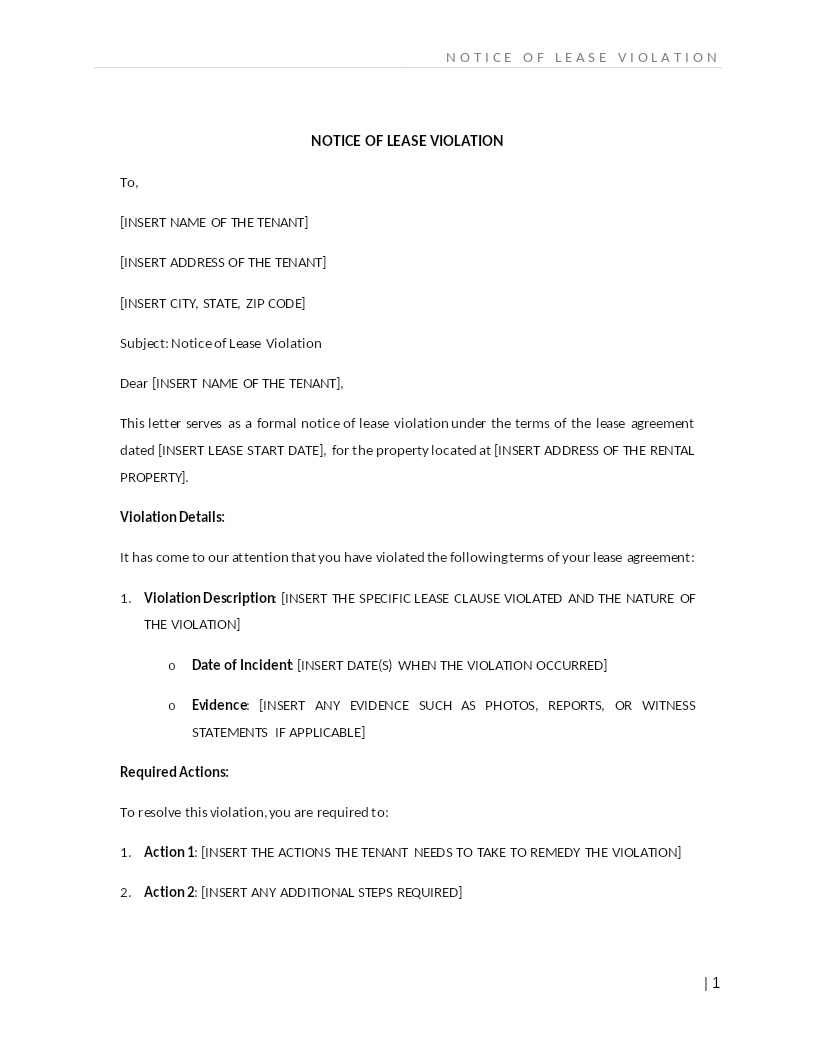
LEASE VIOLATION NOTICE
How does it work?
1. Choose this template
Start by clicking on "Fill out the template"
2. Complete the document
Answer a few questions and your document is created automatically.
3. Save - Print
Your document is ready! You will receive it in Word and PDF formats. You will be able to modify it.
Understanding Lease Violation Notice in U.S.
A Lease Violation Notice is a formal written document issued by a landlord to notify a tenant that they have breached specific terms of their lease agreement. It outlines the nature of the violation, the corrective actions required, and the deadline for compliance. This legal notice serves as an official warning and provides tenants an opportunity to resolve the issue before further action is taken, such as penalties or eviction. Lease Violation Notices are essential for maintaining compliance with U.S. landlord-tenant laws and ensuring proper documentation.
A properly drafted Lease Violation Notice helps landlords maintain order, protect property value, enforce lease terms, and follow legally required procedures before escalating enforcement actions.
Where Lease Violation Notices Are Commonly Used
Lease Violation Notices are typically used for:
- Non-payment or repeated late payment of rent
- Unauthorized occupants or pets
- Excessive noise, nuisance, or disruptive behavior
- Property damage or neglect
- Illegal activities conducted on the premises
- Violation of building rules, safety standards, or HOA regulations
- Failure to maintain cleanliness or sanitation
Any situation where a tenant breaches lease terms may require a formal Lease Violation Notice.
Different Types of Lease Violation Notices You May Encounter
- Pay-or-Quit Notice: Issued for non-payment of rent, giving tenants time to pay or vacate.
- Cure-or-Quit Notice: Allows tenants to correct a specific violation within a set timeframe.
- Unconditional Quit Notice: Requires the tenant to leave without an opportunity to fix the violation (used in severe cases permitted by law).
- Notice of Lease Non-Compliance: General notice informing tenants of lease rule violations and corrective expectations.
When Legal Guidance Becomes Helpful
Legal consultation is important when:
- Violations involve safety hazards or illegal activities
- The landlord plans to proceed with eviction
- Multiple notices have been issued or violations continue
- State-specific laws require unique notice formats or timelines
- The tenant disputes the violation or claims discrimination
- The property falls under rent-controlled or subsidized housing programs
- The landlord needs help crafting enforceable deadlines and remedies
Professional guidance ensures compliance with state laws and reduces legal risks.
How to Work With This Lease Violation Notice
- Identify the specific lease clause violated
- Describe the violation clearly with dates, details, and evidence
- Provide corrective steps and compliance deadlines
- Specify potential consequences if the tenant fails to cure the violation
- Include the landlord’s signature and proper service method
- Ensure compliance with state-required notice periods
- Retain proof of delivery for legal purposes
Frequently Asked Questions
Q1. Why is a Lease Violation Notice necessary?
A Lease Violation Notice provides a formal written record that the tenant has breached the lease terms. It helps landlords follow legal eviction processes and gives tenants a fair opportunity to correct the issue. This documentation helps prevent misunderstandings and protects both parties in potential disputes.
Q2. Is a Lease Violation Notice legally binding in the U.S.?
Yes. Lease Violation Notices are legally enforceable and often required by state landlord-tenant laws before filing for eviction. A properly drafted notice establishes that the landlord communicated the issue and provided the required cure period, ensuring compliance with due-process requirements.
Q3. What types of lease violations typically require a notice?
Common violations include non-payment of rent, unauthorized occupants, property damage, noise complaints, illegal activity, and violation of community rules. A notice helps document the issue and gives tenants a structured opportunity to resolve it before further action is taken.
Q4. How much time must a landlord give a tenant to fix the violation?
Timeframes vary by state, type of violation, and local housing laws. Many states require anywhere from 24 hours to 30 days to cure the issue. The timeline must be reasonable and compliant with state rules to ensure the notice is legally valid.
Q5. What happens if the tenant does not comply with the notice?
Failure to cure the violation or vacate the property may allow the landlord to pursue eviction through the court system. A Lease Violation Notice serves as essential evidence during legal proceedings, demonstrating that proper notice was given.
Q6. Can a Lease Violation Notice be used for minor issues?
Yes. Even minor issues such as cleanliness concerns or repeated noise complaints may warrant a notice. Addressing small problems early helps prevent escalation, maintains building standards, and protects the rights of other tenants.
Q7. Does a tenant have the right to dispute the notice?
Tenants may dispute a notice if they believe the violation is incorrect, discriminatory, or retaliatory. They can communicate concerns to the landlord or present evidence in court if the issue escalates. Fair-housing laws also protect tenants from unlawful notices.
Q8. Are landlords required to keep copies of Lease Violation Notices?
Yes. Maintaining copies is essential for legal compliance and future documentation. These records may be required in eviction proceedings or to demonstrate compliance with state and local housing regulations.