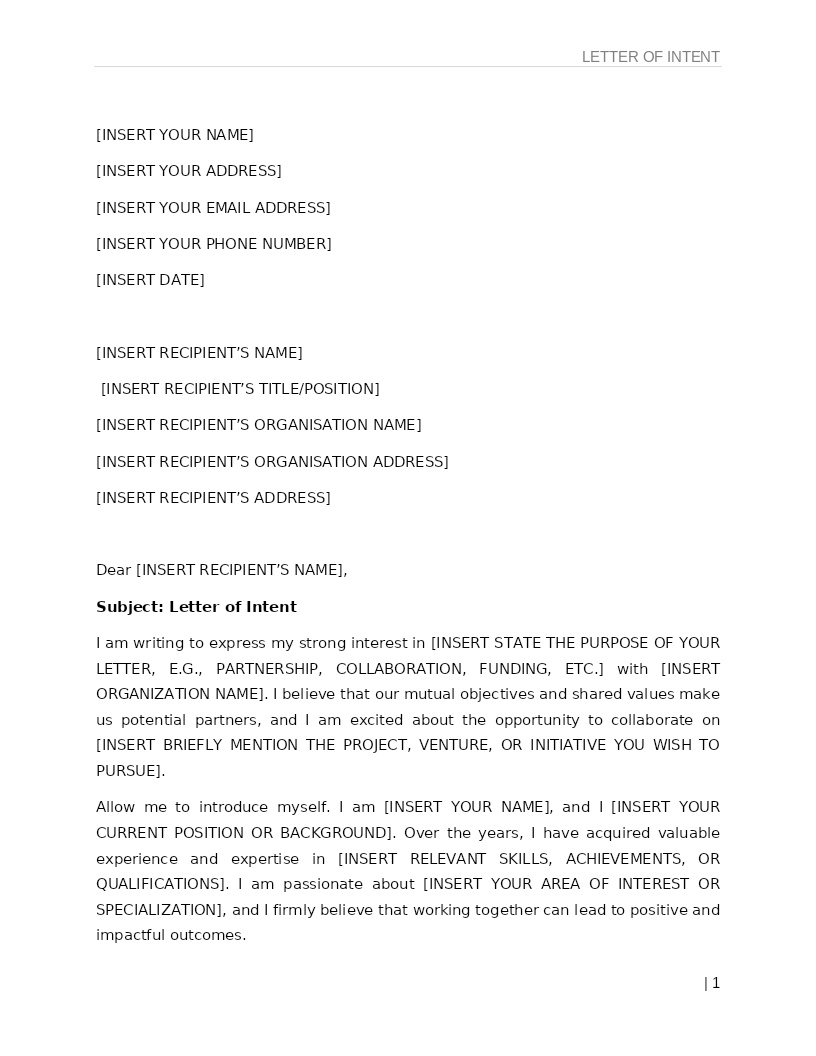
LETTER OF INTENT
How does it work?
1. Choose this template
Start by clicking on "Fill out the template"
2. Complete the document
Answer a few questions and your document is created automatically.
3. Save - Print
Your document is ready! You will receive it in Word and PDF formats. You will be able to modify it.
Understanding a Letter of Intent
A Letter of Intent (LOI) is a preliminary document that outlines the key terms, expectations, and intentions of parties before entering into a formal contract. While not always legally binding, an LOI provides a structured way to confirm mutual understanding, summarize negotiation points, and establish a roadmap for final agreements.
An LOI is especially useful when parties want clarity during early discussions, need to document commitments, or must show progress toward a deal while detailed terms are still being finalized.
Putting a Letter of Intent in place helps ensure both sides are aligned on goals, responsibilities, timelines, confidentiality, and any conditions that must be met before a full agreement is executed.
Where LOIs Are Commonly Used
Letters of Intent are standard in a wide range of business and commercial settings, including:
• Early-stage negotiations for a merger, acquisition, or joint venture
• Real estate transactions, property purchases, or long-term leases
• Vendor partnerships, service agreements, or distribution arrangements
• Investment discussions between companies and potential investors
• Hiring senior employees or contractors where terms must be pre-confirmed
• Collaboration between research, academic, or nonprofit organizations
• Technology licensing or intellectual property negotiations
Different Types of LOIs You May Encounter
- Transactional LOIs: Used in M&A, asset purchases, or business sales to preview major terms before the final agreement.
- Commercial Relationship LOIs: Outline expectations between vendors, partners, or service providers prior to a detailed contract.
- Real Estate LOIs: Used to establish rental terms, purchase conditions, or due-diligence timelines for property transactions.
- Employment LOIs: Summaries of job terms before signing a formal employment contract, common for executive hiring.
When Legal Guidance Becomes Helpful
Most LOIs are simple, but legal review is useful when:
• The LOI includes binding clauses such as exclusivity or confidentiality
• The transaction involves regulated industries, IP rights, or due diligence
• The LOI outlines payment terms, equity stakes, or financial obligations
• Multiple parties or cross-border jurisdictions are involved
• You want clear separation between binding and non-binding terms
• The LOI will be shared with investors, lenders, or regulatory bodies
How to Work with This Template
• Identify the parties involved and the purpose of the LOI
• Summarize the proposed terms, obligations, and expectations
• Clearly distinguish between binding and non-binding provisions
• Select the governing U.S. state law
• Outline timelines for negotiation, due diligence, or contract drafting
• Review the terms together (legal review is optional but helpful)
• Sign electronically or in hard copy
Frequently Asked Questions
Q1. Is a Letter of Intent legally binding?
An LOI is usually non-binding, except for specific clauses like confidentiality, exclusivity, or governing law. Clearly labeling which sections are binding helps avoid misunderstandings later.
Q2. Why is an LOI useful before signing a full contract?
An LOI aligns expectations early, helps parties negotiate efficiently, and reduces the risk of major disagreements when drafting the final agreement.
Q3. Can an LOI be used for real estate deals?
Yes. LOIs are commonly used to outline purchase price, contingencies, due-diligence periods, and rental terms before signing formal real estate contracts.
Q4. What happens after signing an LOI?
Parties usually begin due diligence, negotiate remaining terms, and draft the final detailed agreement. The LOI acts as a roadmap for the process.
Q5. Can terms in an LOI be changed later?
Absolutely. LOIs represent preliminary intentions and can be revised as negotiations progress, unless specific clauses are designated as binding.
Q6. Does signing an LOI commit me to the final deal?
Not usually. Most LOIs allow either party to walk away unless they violate binding sections such as confidentiality or exclusivity.
Q7. Are electronic signatures valid for LOIs in the U.S.?
Yes. Under the ESIGN Act, digital signatures are legally enforceable, making online execution common for business agreements.
Q8. Should financial terms be included in an LOI?
Yes. Including pricing, payment structure, or investment ranges reduces negotiation time and strengthens alignment between parties.
Q9. Can an LOI help protect my confidential information?
Yes, especially if it includes a confidentiality clause. This prevents the unauthorized use of sensitive business information exchanged during discussions.
Q10. Is an LOI appropriate for partnerships or collaborations?
Definitely. LOIs clarify goals, responsibilities, timelines, and deliverables, making them ideal for early-stage partnerships or joint initiatives.