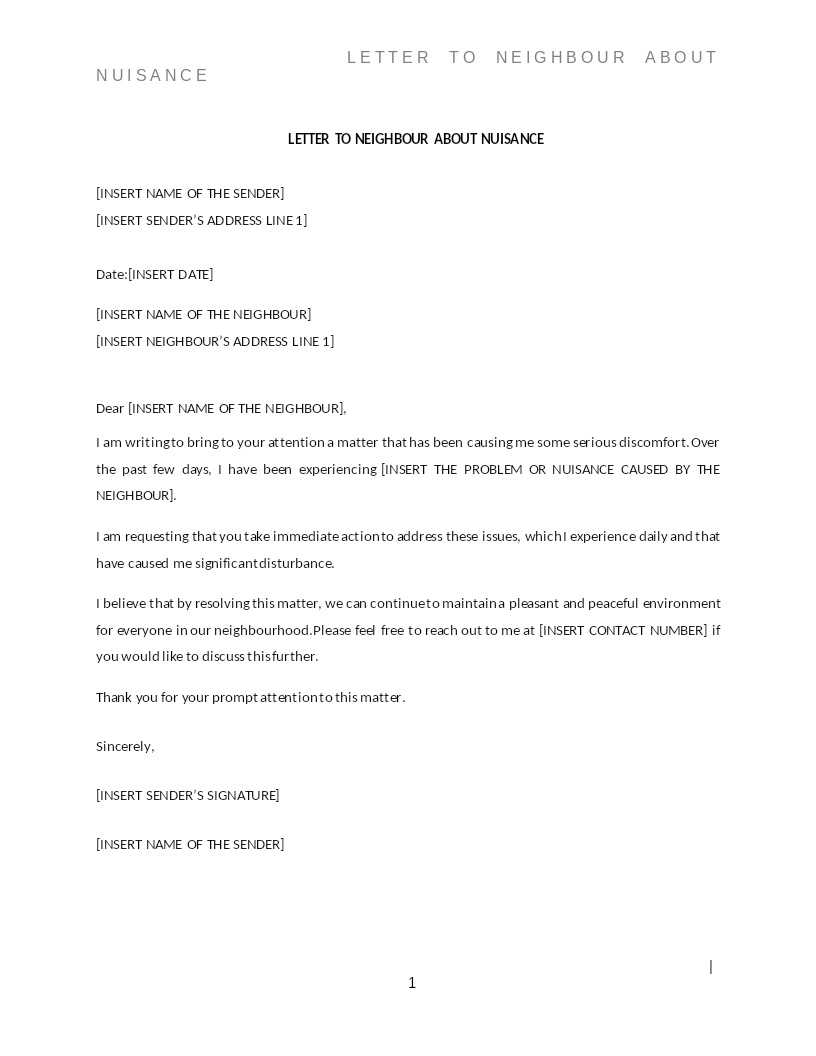
LETTER TO NEIGHBOR ABOUT NUISANCE
How does it work?
1. Choose this template
Start by clicking on "Fill out the template"
2. Complete the document
Answer a few questions and your document is created automatically.
3. Save - Print
Your document is ready! You will receive it in Word and PDF formats. You will be able to modify it.
Addressing Disturbances and Maintaining Good Neighbour Relations
When you share a residential area whether it’s an apartment building, a townhouse community, or a suburban neighbourhood maintaining a peaceful environment is essential for everyone’s comfort. Sometimes, noise, pets, parking issues, disruptive behaviour, or improper property use can interfere with daily living.
A Letter to Neighbour About Nuisance provides a respectful, written way to address those issues. It sets a clear tone, explains the concern, and opens the door to resolving the situation amicably. This type of letter helps maintain goodwill while documenting the problem should further action ever be required.
Where These Letters Are Commonly Used
Communication like this is typical in many residential settings, including:
- Apartments and condominium communities
- Townhouse developments and gated communities
- Single-family neighbourhoods
- Homeowners’ associations (HOAs)
- Rental properties with shared living arrangements
- Multi-unit homes or duplexes
- Areas with shared parking, amenities, or common walls
Whenever a neighbour’s behaviour affects your comfort or property, a polite written notice clarifies the issue without escalating tension.
Different Types of Nuisance Issues You May Address
- Noise Nuisance: Late-night music, loud gatherings, barking dogs, machinery, or continuous disturbances.
- Pet-Related Issues: Uncontrolled animals, constant barking, waste left unattended, or aggressive behaviour.
- Odor or Cleanliness Concerns: Trash accumulation, strong smells, unclean outdoor spaces, or pest-attracting conditions.
- Property Maintenance Problems: Overgrown yards, blocked pathways, poor upkeep, or safety hazards.
- Parking and Vehicle Issues: Blocking driveways, using reserved spots, or storing non-operational vehicles.
- General Disruptive Conduct: Frequent parties, disputes, or behaviours affecting peace and quiet.
When Legal Guidance Becomes Helpful
Most nuisance matters can be resolved with friendly communication, but legal review or additional steps might be helpful when:
- The neighbour repeatedly ignores polite requests
- The issue violates HOA rules or property regulations
- The behaviour breaches state or local nuisance laws
- The disturbance involves safety risks or potential property damage
- The landlord or property manager needs a formal record
- Local mediation or formal complaint processes may be necessary
Legal guidance isn’t always required, but it can support your position if informal efforts don’t lead to improvement.
How to Work with This Template
- Clearly identify your neighbour and the issue being reported
- Use a calm, polite tone to explain how the problem affects you
- Provide dates or examples to show the pattern of disturbance
- Suggest reasonable solutions or compromises
- Request their cooperation in resolving the issue
- Note that the letter is a friendly attempt to avoid escalation
- Keep a copy for your own records
- Submit a follow-up or escalate to management/HOA only if necessary
This template supports respectful, solution-focused communication and follows U.S. standards for neighbourly dispute resolution.
Frequently Asked Questions
Q1. Why should I send a written letter instead of talking in person?
A written letter creates a polite, non-confrontational record of the problem. It ensures your message is clear, avoids emotional conversations, and provides documentation if the issue continues.
Q2. Is a nuisance letter legally binding?
No. It’s not a legal document, but it may serve as evidence if the issue escalates to a landlord, HOA, mediator, or local authority. It demonstrates that you attempted to resolve the matter reasonably.
Q3. What tone should the letter use?
The tone should be calm, respectful, and collaborative. The goal is to encourage cooperation not conflict while making your concerns clear.
Q4. Do I need to include dates and details?
Yes. Specific examples, such as dates, times, or descriptions of the disturbance, help the neighbour understand the issue and show that the letter is based on repeated experiences.
Q5. Can I remain anonymous?
It’s generally not recommended. Anonymous complaints may be dismissed or ignored. A signed letter is more credible and invites open communication.
Q6. What if my neighbour reacts negatively?
Stay calm. If the behaviour continues or escalates, you may document future incidents and involve your landlord, HOA, or local authorities depending on the nature of the nuisance.
Q7. Can I send the letter by email or text instead?
Yes. Written communication via email is acceptable as long as it remains clear and polite. For official documentation, many people prefer printed letters.
Q8. What if the nuisance violates HOA or building rules?
You may reference the specific rule in your letter and, if needed, forward the issue to the HOA or property management for enforcement.
Q9. Can this letter be used in landlord-tenant situations?
Absolutely. Tenants may write to neighbours within the same building, or landlords may write on behalf of tenants. It helps maintain a peaceful living environment for everyone.
Q10. What if the nuisance involves safety hazards?
Notate the concern in the letter and encourage immediate resolution. If safety is at risk, you may escalate directly to property management or local authorities.