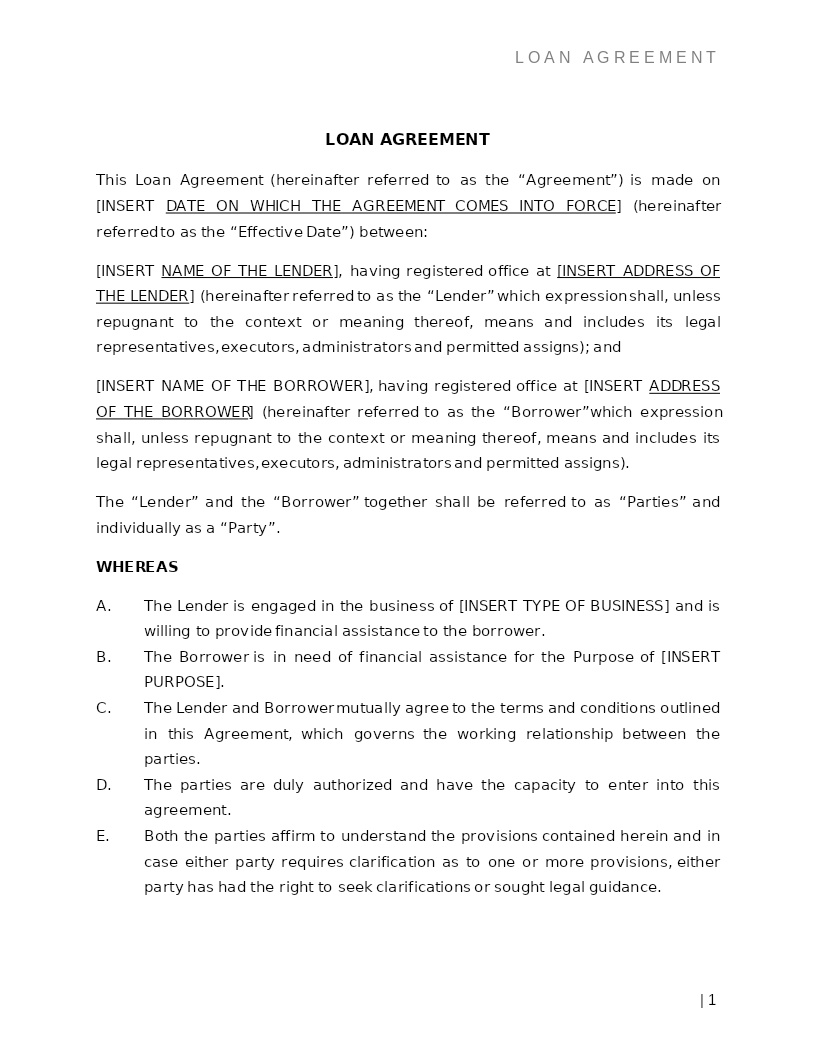
LOAN AGREEMENT
How does it work?
1. Choose this template
Start by clicking on "Fill out the template"
2. Complete the document
Answer a few questions and your document is created automatically.
3. Save - Print
Your document is ready! You will receive it in Word and PDF formats. You will be able to modify it.
Understanding Loan Agreement In U.S.
A Loan Agreement is a legally binding contract that outlines the terms under which one party (the lender) provides funds to another party (the borrower). It specifies key financial details such as the loan amount, interest rate, repayment schedule, collateral (if any), and consequences of late or missed payments. This agreement ensures both parties fully understand their rights and obligations, creating transparency and enforceability under U.S. contract and lending laws.
A well-drafted Loan Agreement helps prevent misunderstandings, reduces financial risk, and provides a structured process for repayment, thereby protecting the lender’s investment and the borrower’s rights throughout the loan term.
Where Loan Agreements Are Commonly Used
Loan Agreements are typically used in:
- Personal loans between individuals
- Business financing and commercial lending
- Startup funding, bridge loans, or seed capital arrangements
- Secured loans backed by collateral such as real estate or equipment
- Vehicle loans, equipment loans, and asset financing
- Intercompany loans within corporate groups
- Short-term or long-term credit arrangements
Any situation involving borrowed money benefits from a legally enforceable Loan Agreement.
Different Types of Loan Agreements You May Encounter
- Secured Loan Agreement: Backed by collateral such as property, vehicles, or equipment.
- Unsecured Loan Agreement: Not backed by collateral, relying on the borrower’s creditworthiness.
- Fixed-Interest Loan Agreement: The interest rate remains constant throughout the loan period.
- Variable-Interest Loan Agreement: Interest rate fluctuates based on market conditions or index rates.
- Installment Loan Agreement: Repayment occurs in structured installments over a set schedule.
When Legal Guidance Becomes Helpful
Legal consultation is valuable when:
- The loan includes collateral requiring proper lien filing (e.g., UCC filings)
- Significant loan amounts require detailed default and remedy clauses
- Interest rates must comply with federal and state usury laws
- Complex repayment structures or balloon payments are involved
- Loans occur between businesses, partners, or related parties
- You need customized provisions for early repayment, refinancing, or restructuring
- Cross-state or cross-country lending introduces jurisdictional issues
Legal review ensures the loan remains valid, enforceable, and compliant with applicable U.S. regulations.
How to Work With This Loan Agreement
- Identify the lender, borrower, and loan purpose
- Clearly outline interest rate, repayment dates, and late payment penalties
- Specify collateral (if applicable) and how security interests will be recorded
- Define default events and available legal remedies
- Include dispute resolution, governing law, and notice procedures
- Clarify tax responsibilities and reporting requirements
- Review the terms together and sign electronically or in hard copy
Frequently Asked Questions
Q1. Why is a Loan Agreement important?
A Loan Agreement ensures both parties understand the financial expectations and repayment terms. It protects the lender’s right to recover the loaned amount and safeguards the borrower from unexpected obligations. This clarity helps prevent disputes and supports responsible lending practices.
Q2. Are Loan Agreements legally enforceable in the U.S.?
Yes. Loan Agreements are enforceable when they include clear terms, mutual consent, and compliance with federal and state lending laws. Courts recognize written loan contracts as binding evidence of the parties’ obligations, making them essential in resolving disputes or defaults.
Q3. What happens if a borrower defaults on the loan?
Default occurs when the borrower fails to make payments or violates key terms of the agreement. The lender may take actions such as charging late fees, demanding full repayment, seizing collateral, or pursuing legal remedies. Clear default clauses help protect both parties.
Q4. Do Loan Agreements need to include interest rates?
Yes. U.S. lending laws require clear disclosure of interest rates to avoid violations of usury regulations. The agreement should specify whether interest is fixed or variable and outline how payments are applied. Transparent interest terms protect both lender and borrower.
Q5. Can a Loan Agreement be used between family members or friends?
Absolutely. Personal loans benefit significantly from written agreements to prevent misunderstandings. A formal Loan Agreement ensures clarity, protects relationships, and provides legal backing if repayment issues arise.
Q6. Are there tax implications for loans?
Yes. Loans may have tax implications depending on interest rates and loan purpose. The IRS may classify interest-free or below-market loans differently. Proper documentation helps avoid penalties and ensures compliance with U.S. tax regulations.
Q7. Can a Loan Agreement be modified later?
Yes, but only with mutual consent. Any changes, such as adjusting the interest rate or extending the repayment schedule, should be documented in writing through an amendment. This ensures the updated terms remain legally enforceable.
Q8. Do both parties need to sign the Loan Agreement?
Yes. Signatures from both lender and borrower are required for enforceability. Once signed, the agreement becomes a binding contract that outlines the terms each party must follow. Electronic signatures are also legally valid in most U.S. states.