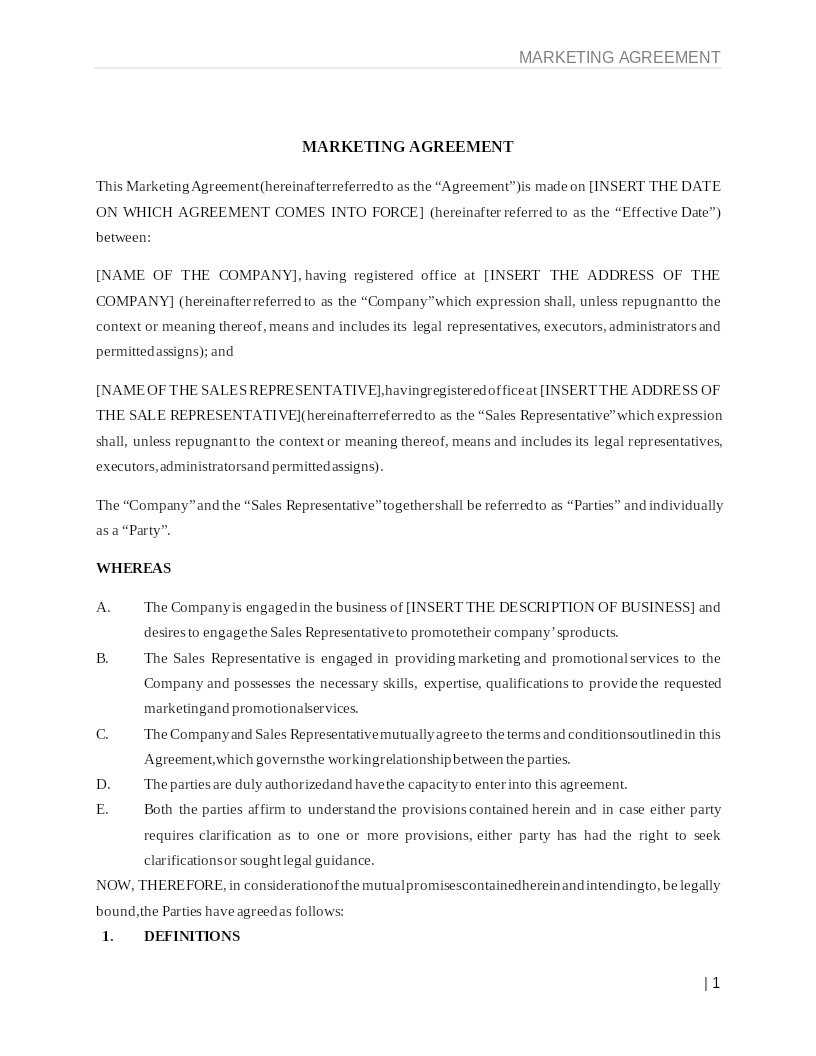
MARKET AGREEMENT
How does it work?
1. Choose this template
Start by clicking on "Fill out the template"
2. Complete the document
Answer a few questions and your document is created automatically.
3. Save - Print
Your document is ready! You will receive it in Word and PDF formats. You will be able to modify it.
Understanding Market Agreement in U.S.
A Market Agreement is a legally binding contract used by businesses to define the terms of market access, distribution, promotion, and sales within a specific territory or segment. It establishes clear guidelines for how parties, such as manufacturers, distributors, agents, or retailers, collaborate to operate within a designated market. The agreement outlines responsibilities, performance standards, branding rules, exclusivity rights, pricing structures, and compliance obligations.
By providing a structured framework aligned with U.S. commercial and regulatory standards, a Market Agreement enables parties to work together efficiently, reduce risks, expand market reach, and protect brand integrity. It also serves as an essential tool for maintaining transparency, accountability, and consistency in market operations.
Where Market Agreements Are Commonly Used
Market Agreements are widely utilized across industries that depend on coordinated sales, marketing, and distribution efforts. They are frequently used in:
- Manufacturing, supply-chain, and wholesale distribution networks
- Retail, e-commerce, and franchising arrangements
- Food, beverage, and consumer goods markets
- Technology, SaaS, and digital product licensing
- Pharmaceutical, healthcare, and regulated product sectors
- Real estate, automotive, and industrial equipment markets
Any business seeking structured market operations, regional expansion, or partnership-based growth can benefit from a well-drafted Market Agreement.
Different Types of Market Agreements You May Encounter
- Territorial Market Agreements: Define rights and responsibilities for selling or promoting products within a specific region or market segment. Often include exclusivity provisions.
- Distribution or Reseller Agreements: Grant distributors or resellers the authority to market, promote, or sell products on behalf of the manufacturer or owner.
- Market Access or Entry Agreements: Facilitate entry into new markets by leveraging local expertise, networks, or regulatory familiarity.
- Co-Marketing and Promotional Agreements: Outline collaborative marketing activities, branding rules, and promotional responsibilities between partnering companies.
- Joint Market Development Agreements: Used when two entities combine resources to develop or expand into new market opportunities.
When Legal Guidance Becomes Helpful
Legal consultation is essential for customizing Market Agreements because:
• U.S. federal and state trade, consumer protection, and advertising laws must be followed.
• Industry-specific regulations, such as FDA rules, export laws, or FTC guidelines, may apply.
• Lawyers ensure market exclusivity, distribution rights, and pricing terms are enforceable and compliant with antitrust laws.
• Agreements involving cross-border markets must address foreign regulations, tax implications, and import/export compliance.
• Legal review ensures IP protection, brand guidelines, representations, warranties, and liability limitations are clearly defined.
• Real-time counsel helps negotiate terms that reflect commercial realities and mitigate business risks.
A legally sound Market Agreement protects both parties while supporting long-term market success.
How to Work With This Policy Template
• Define the market territory, scope, and products/services covered under the agreement.
• Establish performance metrics, sales targets, marketing responsibilities, and reporting requirements.
• Clarify financial terms including pricing, commissions, revenue-sharing, and payment schedules.
• Include exclusivity clauses, competitive-restriction rules, and brand protection requirements.
• Address U.S. regulatory obligations, compliance standards, and territory-specific laws.
• Outline dispute resolution processes, termination conditions, and renewal procedures.
• Ensure the agreement aligns with internal business strategies and long-term market goals.
• Review the agreement periodically to adapt to market changes or regulatory updates.
Frequently Asked Questions
Q1. Why is a Market Agreement important for business partnerships?
A Market Agreement provides clarity on roles, responsibilities, pricing, and performance expectations between partnering businesses. It minimizes misunderstandings and aligns both parties toward shared market goals. By defining obligations clearly, it helps maintain collaboration, transparency, and accountability throughout the relationship.
Q2. Does a Market Agreement help with U.S. legal compliance?
Yes. Market Agreements help businesses comply with federal and state laws, including trade regulations, advertising rules, consumer protection standards, and industry-specific regulations. Proper documentation reduces the risk of legal disputes and ensures commercial activities are conducted ethically and lawfully.
Q3. What key elements are typically included in a Market Agreement?
These agreements generally include territory definitions, market access rights, exclusivity terms, pricing rules, branding guidelines, sales targets, reporting obligations, and dispute-resolution procedures. They may also include IP protections and regulatory compliance requirements to safeguard both parties.
Q4. How does a Market Agreement support market expansion?
By leveraging the expertise, networks, and resources of local partners or distributors, businesses can enter new markets more efficiently. The agreement outlines how market activities will be carried out, ensuring consistent brand presence and structured operations, which accelerate market penetration and growth.
Q5. Does this agreement help mitigate business risks?
Absolutely. A Market Agreement allocates responsibilities, defines risk-sharing terms, and outlines liability protections. It sets clear procedures for handling disputes, performance failures, or regulatory challenges. This reduces the likelihood of financial losses or operational disruptions.
Q6. Can exclusivity rights be included in a Market Agreement?
Yes. Many Market Agreements contain exclusivity clauses that grant one party exclusive rights to promote or distribute products within a specific market. These clauses protect both parties from competition-related conflicts and support stable, long-term partnerships.
Q7. What happens if performance targets are not met?
The agreement typically includes evaluation metrics and corrective action procedures. If performance remains below expectations, parties may renegotiate terms, impose penalties, adjust strategies, or terminate the agreement. This ensures accountability and protects market interests.
Q8. Is a Market Agreement suitable for small or growing businesses?
Yes. Market Agreements are highly flexible and can be customized to support startups, small businesses, or large enterprises. They provide structure, protect brand reputation, and help smaller companies access new markets or distribution channels with reduced risk.