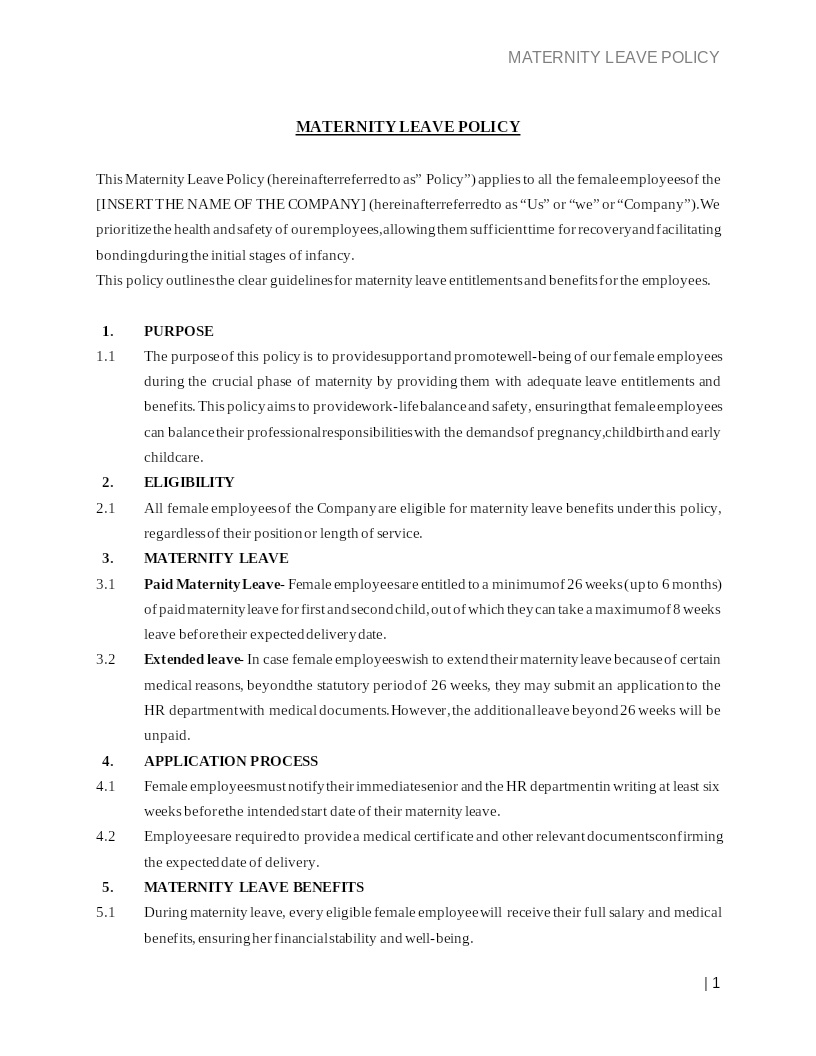
MATERNITY LEAVE POLICY
How does it work?
1. Choose this template
Start by clicking on "Fill out the template"
2. Complete the document
Answer a few questions and your document is created automatically.
3. Save - Print
Your document is ready! You will receive it in Word and PDF formats. You will be able to modify it.
Understanding Maternity Leave Policy in U.S.
A Maternity Leave Policy is an organizational framework that provides clear guidelines for supporting pregnant employees before, during, and after childbirth. The policy outlines eligibility criteria, leave duration, compensation, benefits, job protection, and procedures for requesting leave. In the United States, maternity leave policies must comply with federal laws such as the Family and Medical Leave Act (FMLA), the Pregnancy Discrimination Act (PDA), ADA accommodations for pregnancy-related medical conditions, and any applicable state leave laws. A well-designed Maternity Leave Policy promotes employee well-being, ensures legal compliance, and fosters a supportive and inclusive workplace culture.
Where a Maternity Leave Policy Is Commonly Used
• Corporate workplaces
• Hospitals and healthcare facilities
• Educational institutions
• Retail and service industries
• Government agencies
• Small and medium-sized businesses
• Organizations offering parental or family leave benefits
Different Types of Maternity Leave Covered Under This Policy
- Federal Maternity Leave (FMLA): Provides up to 12 weeks of unpaid, job-protected leave for eligible employees.
- Paid Maternity Leave (Employer-Provided): Companies may offer paid leave programs to support employee recovery and bonding.
- State-Mandated Maternity Benefits: Certain states offer paid family leave (e.g., CA, NY, MA, NJ, WA, CT).
- Medical Leave for Pregnancy-Related Conditions: Covers doctor-ordered bed rest, complications, and postpartum medical recovery.
- Short-Term Disability (STD) Benefits: Provides partial income replacement during pregnancy and postpartum recovery.
- Additional Company Benefits: Extended leave, return-to-work programs, flexible schedules, and lactation support.
When Legal Guidance Becomes Helpful
Consulting real-time attorneys or in-house counsel ensures the Maternity Leave Policy complies with U.S. labor laws, protects against discrimination claims, and reflects industry-specific requirements. Lawyers help:
• Align the policy with FMLA, PDA, ADA, and state leave laws
• Draft clear eligibility rules, documentation requirements, and timelines
• Define employer rights, employee protections, and liability limitations
• Structure paid benefits, STD integration, and payroll compliance
• Prevent legal risks involving wrongful termination or discrimination
• Tailor the policy to organizational goals and internal HR standards
• Establish procedures for accommodations, flexible work, and return-to-work transitions
A lawyer-reviewed policy ensures fairness, enforceability, and legal protection for your organization.
How to Use This Policy
• Provide this policy to all employees during onboarding
• Include it in the employee handbook and HR portal
• Train managers on pregnancy accommodations and compliance rules
• Use standardized forms for maternity leave requests and approvals
• Review the policy annually based on updated laws and HR trends
Frequently Asked Questions
Q1. How long is maternity leave in the United States?
Under the FMLA, eligible employees may take up to 12 weeks of unpaid, job-protected maternity leave. Some U.S. states also offer paid maternity or family leave programs that provide wage replacement during the leave period. Many employers choose to supplement these laws with additional paid maternity leave benefits.
Q2. Is maternity leave paid or unpaid?
Federal law does not require paid maternity leave, but employers may offer paid programs voluntarily. Some states, such as California, New York, and New Jersey, provide paid family leave benefits through state insurance funds. Employees may also receive partial pay through Short-Term Disability (STD) coverage.
Q3. Who is eligible for FMLA maternity leave?
Employees are eligible for FMLA maternity leave if they have worked for the employer for at least 12 months, completed 1,250 work hours in the past year, and work for a company with 50 or more employees within a 75-mile radius. Eligibility requirements must be clearly stated in the policy.
Q4. Are employees protected from termination during maternity leave?
Yes. The Pregnancy Discrimination Act (PDA) and FMLA protect employees from termination, retaliation, or discrimination for taking pregnancy-related leave. Employers must restore the employee to the same or an equivalent position upon returning from leave.
Q5. Does maternity leave require medical documentation?
Most employers require a medical certificate confirming pregnancy and an expected due date. For medical complications or extended recovery periods, a healthcare provider may need to issue additional documentation. Proper documentation helps ensure compliance and accurate recordkeeping.
Q6. Can maternity leave be extended beyond the standard period?
Extensions may be possible depending on company policy, state laws, medical needs, or ADA-related accommodations. Some organizations allow unpaid extended leave, while others offer flexible or phased return-to-work options. Policies should clearly define extension procedures.
Q7. Does maternity leave affect employee benefits?
Under FMLA, employers must continue group health insurance coverage under the same terms as active employment. Some employers also continue other benefits, such as retirement contributions or paid time off accrual. Each organization should specify how benefits are handled.
Q8. Can an employee work while on maternity leave?
Generally, employees on maternity leave should not perform work unless the employer has specific policies allowing modified duties, remote work arrangements, or transitional return-to-work programs. Working without clear guidelines may affect compensation, benefits, and compliance obligations.