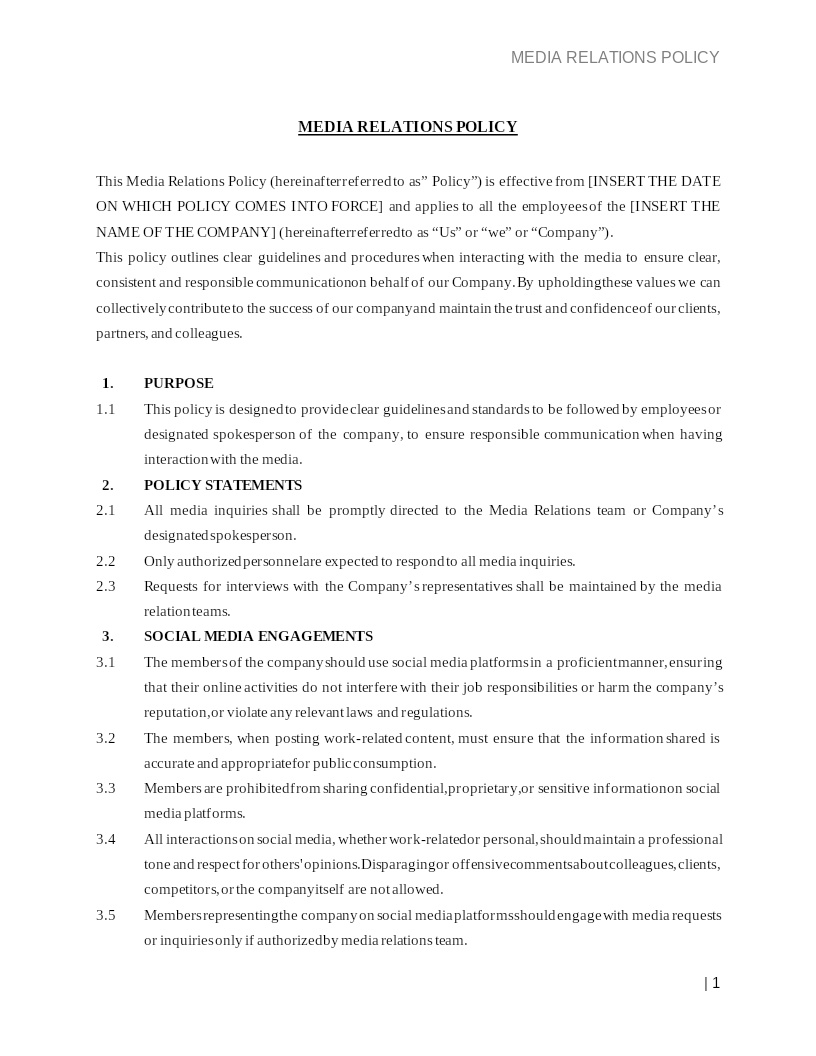
MEDIA RELATIONS POLICY
How does it work?
1. Choose this template
Start by clicking on "Fill out the template"
2. Complete the document
Answer a few questions and your document is created automatically.
3. Save - Print
Your document is ready! You will receive it in Word and PDF formats. You will be able to modify it.
Promoting Accurate Communication and Organizational Accountability Through a Media Relation Policy
A Media Relation Policy is an organizational governance document that establishes the standards, responsibilities, and procedural requirements for engaging with journalists, media agencies, digital publications, and other external communication channels. Created in accordance with U.S. communication, disclosure, and privacy laws, including defamation and libel laws, intellectual-property protections, data-privacy regulations, and, where applicable, SEC Regulation FD governing public disclosure of material information, this policy ensures that all external communications are accurate, consistent, lawful, and aligned with the organization’s strategic interests. It outlines who is authorized to speak on behalf of the organization, the protocols for responding to media inquiries, the approval pathways for press releases or public statements, and the safeguards required to protect confidential, proprietary, or sensitive information. By adopting this policy, the organization promotes responsible communication, reduces legal and reputational risk, and maintains full compliance with regulatory and business requirements.
A comprehensive Media Relation Policy details the processes employees must follow when contacted by the media, including immediate referral to designated spokespersons, communication officers, or public-relations representatives. It clarifies the procedures for developing official statements, coordinating interviews, preparing talking points, and obtaining legal or executive-level approvals prior to the release of information. The policy prohibits unauthorized public statements, disclosure of nonpublic or proprietary information, speculation about legal matters, crisis events, or confidential business operations, and outlines the consequences of noncompliance. Additionally, it addresses crisis-communication protocols, including rapid response procedures, coordination with legal counsel, and the need to maintain accuracy under high-pressure circumstances. The policy also identifies acceptable use standards for digital and social media platforms and underscores the organization’s responsibility to preserve brand integrity and uphold ethical communication practices. By clearly defining these requirements, the organization ensures clarity, transparency, and consistency in all media interactions.
Where Media Relation Policies Are Commonly Used
Media Relation Policies are widely implemented across industries such as:
- Corporations, startups, and publicly traded companies with public disclosure obligations
- Healthcare providers managing HIPAA-protected information in public communications
- Government agencies and public institutions interacting with the press
- Nonprofit organizations communicating about programs, donors, and public initiatives
- Educational institutions handling news related to students, faculty, or public events
- Technology companies addressing product announcements, cybersecurity matters, or innovation news
- Retail, hospitality, and service industries issuing statements on consumer issues
- Manufacturing, logistics, and industrial companies managing operational or crisis communication
Any organization engaged in external communication benefits from a structured Media Relation Policy.
Different Types of Media Relation Policies
1. Corporate Media Communication Policies: Regulate authorized spokespersons and content review procedures.
2. Crisis Communication Policies: Provide guidelines for communication during emergencies, accidents, or public-facing incidents.
3. Social Media and Digital Communication Policies: Govern employee conduct on social platforms and online engagement with the public.
4. Public Disclosure and Investor Communication Policies: Ensure compliance with SEC Reg FD and other material disclosure rules.
5. Brand Reputation and Public Image Policies: Focus on consistent messaging and controlled dissemination of corporate narratives.
When Legal Guidance Becomes Helpful
Legal consultation is advisable when:
- Media interactions involve litigation, investigations, or regulatory matters
- Public disclosures may contain confidential, proprietary, or trademarked information
- Crisis events require coordinated communication to avoid liability
- Statements could expose the organization to defamation, misrepresentation, or unfair-practice claims
- SEC-regulated companies must avoid selective or improper disclosure of material information
- Employees are disciplined for unauthorized statements, triggering employment-law considerations
- Release of information could affect safety, privacy, or contractual confidentiality obligations
Legal review ensures that all public communications comply with U.S. laws and mitigate potential claims.
How to Work with This Template
- Identify who is authorized to speak to the media on behalf of the organization
- Establish referral procedures for employees who receive press inquiries
- Define approval workflows for public statements, press releases, and interviews
- Clarify restrictions on confidential or proprietary disclosures
- Include guidelines for social media usage and organizational branding
- Develop crisis communication protocols and escalation pathways
- Require coordination with legal counsel for sensitive or high-risk topics
- Provide training for spokespersons on best practices and legal considerations
- Maintain documentation of media inquiries, statements, and responses
- Update the policy regularly to reflect changes in media law, technology, or organizational structure
This template reflects best practices in communications governance, reputation protection, and legal compliance.
Frequently Asked Questions
Q1. What is a Media Relation Policy, and why is it important?
A Media Relation Policy establishes rules for communicating with reporters and public-facing audiences. It is important because it protects the organization from misinformation, legal liability, and reputational harm.
Q2. Who is authorized to speak to the media?
Only designated spokespersons typically communication officers, executives, or trained representatives may respond to media inquiries.
Q3. Can employees make public statements without approval?
No. Unauthorized statements may violate confidentiality rules and expose the organization to legal or reputational risks.
Q4. Does the policy cover social media?
Yes. Employees must follow organizational guidelines when referencing the company on any digital or social platform.
Q5. What should an employee do if a reporter contacts them?
Employees must refer the inquiry to the designated media-relations contact and refrain from making statements.
Q6. How does the policy support crisis management?
It establishes procedures for rapid, coordinated communication during emergencies, ensuring accuracy and legal compliance.
Q7. What laws govern public statements?
Defamation laws, privacy laws, intellectual property laws, and where applicable SEC disclosure rules.
Q8. Are internal approvals required before issuing a press release?
Yes. Legal counsel, communications leadership, and relevant executives must review and approve all external statements.
Q9. Can violations of the policy result in disciplinary action?
Yes. Unauthorized or misleading communications may result in disciplinary measures, up to and including termination.
Q10. Should legal counsel review the Media Relation Policy?
Absolutely. Legal oversight ensures compliance with disclosure obligations, privacy laws, and risk-management principles.