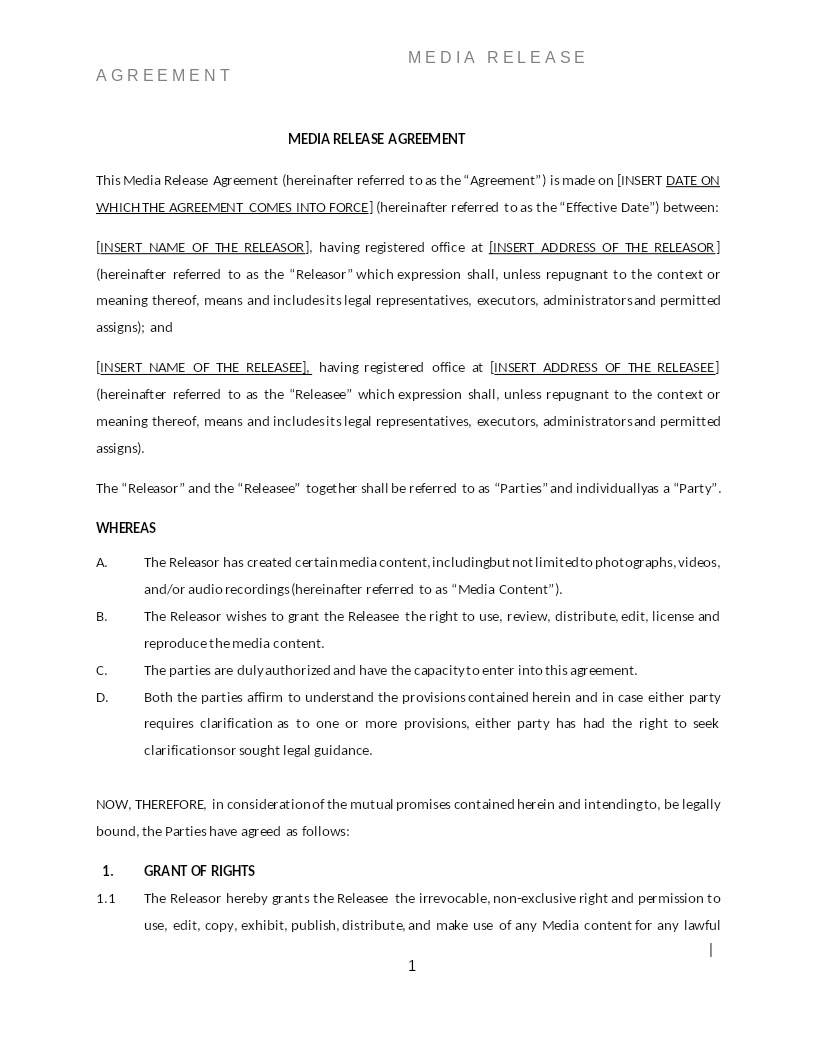
MEDIA RELEASE AGREEMENT
How does it work?
1. Choose this template
Start by clicking on "Fill out the template"
2. Complete the document
Answer a few questions and your document is created automatically.
3. Save - Print
Your document is ready! You will receive it in Word and PDF formats. You will be able to modify it.
Understanding the Media Release Agreement
When businesses, filmmakers, photographers, or content creators use an individual’s image, video, voice, or likeness in any form of media, they must have clear legal permission. A Media Release Agreement provides that structure. It outlines how a person’s likeness may be recorded, reproduced, distributed, and published across various platforms, ensuring compliance with U.S. privacy, publicity, and copyright laws.
Putting a Media Release Agreement in place protects organizations from legal claims, ensures ethical content use, and secures necessary rights before media is shared publicly or commercially.
Where Media Release Agreements Are Commonly Used
Media Release Agreements are widely used in industries that rely on photography, video production, or promotional content, including:
- Film, television, commercial, and entertainment projects
- Corporate interviews, training materials, and promotional campaigns
- Social media content creation, influencer collaborations, and advertising
- Photography sessions for brands, events, or modeling portfolios
- Public events, conferences, and professional gatherings
- News broadcasts, documentaries, and digital publications
Any time an individual’s likeness is recorded or published, a Media Release Agreement ensures lawful and transparent usage.
Different Types of Media Release Agreements You May Encounter
- Standard Media Release: Grants permission to use a person’s image, voice, or likeness in specified media content.
- Commercial Media Release: Provides rights for promotional campaigns, advertisements, or branding purposes.
- Minor Release Agreement: Used when the subject is under 18; requiring parent or guardian consent.
- Photography/Video Release: Specifies usage rights for professional photos, event footage, or visual content.
- Social Media Release: Tailored for platforms like Instagram, TikTok, YouTube, and advertising reels.
- Unlimited or Perpetual Release: Grants long-term rights for repeated or global use of the media.
When Legal Guidance Becomes Helpful
Legal review becomes essential when:
- Media will be used commercially or distributed on a large scale
- The agreement involves minors, vulnerable individuals, or celebrities
- The content will be published internationally or syndicated across networks
- The organization needs perpetual, exclusive, or global usage rights
- Compensation, royalties, or revenue-sharing is included
- Sensitive content may impact privacy laws or reputation
- The release needs to cover digital ads, AI tools, or deepfake-restricted environments
Guidance ensures the agreement complies with privacy laws, right-of-publicity statutes, and media regulations.
How to Work with This Template
- Identify the individual granting permission and the organization receiving rights
- Specify the media types (photos, videos, audio, digital content)
- Clarify usage rights, commercial, editorial, internal, or promotional
- Define duration, territory, editing rights, and limitations
- Include compensation terms, if applicable
- Select governing U.S. state law
- Review collaboratively legal review optional but recommended
- Sign electronically or physically, e-signatures are enforceable across the United States
This template aligns with recognized media, advertising, and entertainment industry standards across the U.S.
Frequently Asked Questions
Q1. Why is a Media Release Agreement important for businesses and content creators?
A Media Release Agreement ensures lawful use of someone’s image, voice, or likeness in promotional or commercial content. It prevents legal claims by obtaining clear, written consent before publishing media. This protects the business from privacy violations and establishes trust with participants. It also guarantees the creator has the necessary rights to distribute media confidently.
Q2. Does the Media Release Agreement allow companies to edit or modify the media?
Yes, if the agreement includes editing rights. A well-drafted release clarifies whether the organization may crop, enhance, alter, or repurpose the media. This avoids disputes by stating how extensively the content may be changed. It also helps protect brand consistency by allowing flexible usage across campaigns and platforms.
Q3. Can the agreement cover long-term or global media usage?
Absolutely. Many Media Release Agreements include unlimited, perpetual, or worldwide rights. This is useful for brands that plan to use content across future campaigns, social media, or international promotions. Clear terms help avoid repeated approvals and ensure ongoing legal protection across jurisdictions.
Q4. What happens if the individual wants to revoke their permission later?
Revocation depends on the terms of the agreement. Most releases, especially commercial ones, are irrevocable once signed, allowing the organization to continue using the content already created. This protects businesses from disruption, financial loss, and brand inconsistencies. Clarity in drafting avoids disputes over withdrawal of consent.
Q5. Do Media Release Agreements protect minors and sensitive individuals?
Yes. When minors are involved, parental or guardian consent is legally required. Releases can also include enhanced protective language for sensitive subjects or vulnerable individuals. This ensures compliance with privacy laws and prevents unauthorized or harmful use of their likeness.
Q6. Can a Media Release Agreement include compensation for the individual?
Yes. Payment can be monetary, non-monetary, or waived entirely. The agreement can specify fees, royalties, or benefits in exchange for granting media rights. Clearly stating compensation avoids future claims and ensures transparency, especially for commercial or advertising-related content.
Q7. Is the agreement enforceable if the individual and the company are in different states?
Yes. Media Release Agreements remain enforceable across state lines if they include a governing law clause. This ensures consistent rights regardless of where the media is created or distributed. It also supports digital content that may reach nationwide or global audiences.
Q8. Does the agreement cover social media usage and online promotions?
Yes. Releases can explicitly permit posting on social platforms, digital ads, websites, and online publications. This protects creators from claims if the content goes viral, is shared by third parties, or is reused in future online campaigns. It ensures full compliance with modern digital media practices.