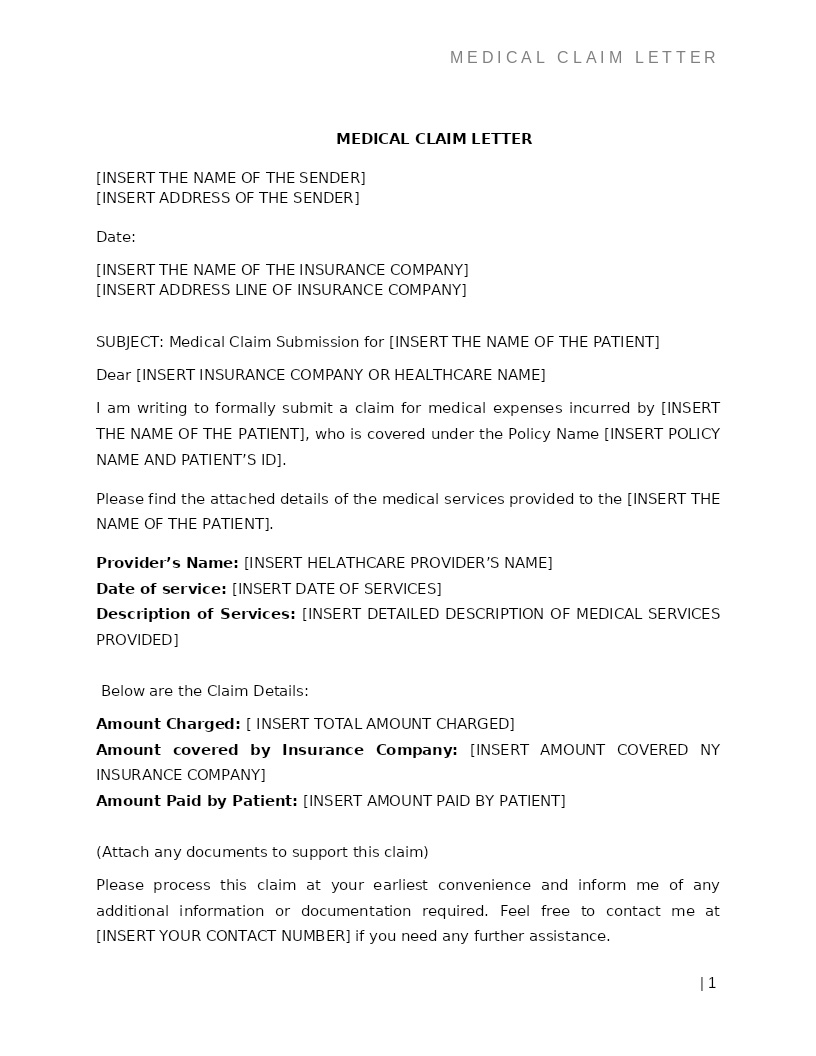
MEDICAL CLAIM LETTER
How does it work?
1. Choose this template
Start by clicking on "Fill out the template"
2. Complete the document
Answer a few questions and your document is created automatically.
3. Save - Print
Your document is ready! You will receive it in Word and PDF formats. You will be able to modify it.
Understanding Medical Claim Letters in the United States
A Medical Claim Letter is a formal written request submitted to an insurance company, employer, or healthcare provider to seek reimbursement or coverage for medical expenses. It is used to explain the medical services received, the associated costs, and why the policyholder is entitled to financial compensation under their insurance plan or healthcare benefits.
In the United States, medical claim letters play an important role in navigating insurance processes governed by private insurers, employer benefit plans, and federal regulations such as the Affordable Care Act (ACA). A well-prepared Medical Claim Letter strengthens the validity of a claim, speeds up processing, and ensures compliance with documentation requirements.
Where Medical Claim Letters Are Commonly Used
Medical Claim Letters are used for a wide variety of reimbursement requests, including:
- Hospitalization and emergency room bills
- Doctor visits and specialist consultations
- Prescription reimbursement requests
- Surgeries and outpatient procedures
- Diagnostic tests, imaging, and lab work
- Physical therapy and rehabilitation costs
- Dental, vision, or mental health services
- Medical equipment or assistive device expenses
Any time a policyholder seeks reimbursement for healthcare costs, a properly drafted Medical Claim Letter supports timely and accurate claim approval.
Different Types of Medical Claim Letters You May Encounter
- Insurance Reimbursement Claim Letter: Used to request payment for medical expenses covered under a health insurance policy.
- Employer Health Benefit Claim Letter: Submitted to employers or benefit administrators for workplace medical reimbursements.
- Appeal Letter for Denied Claims: Used when an insurer denies the initial claim and the policyholder submits an appeal.
- Out-of-Network or Exception Request Letter: Requests reimbursement for services outside the insurer’s approved network.
- Pre-Authorization or Coverage Confirmation Letter: Submitted before treatment to confirm payment eligibility.
When Legal Guidance Becomes Helpful
Legal consultation is beneficial when:
- A claim is denied or partially approved
- The insurer disputes coverage or medical necessity
- The claim involves personal injury, workers’ compensation, or liability coverage
- Medical documentation, billing codes, or insurance policy terms are unclear
- High-value claims require strong supporting evidence
- The insurer misinterprets policy language or delays claim processing
- There are concerns about compliance with ERISA regulations for employer-sponsored plans
Attorneys help strengthen appeals, ensure proper documentation, and protect the claimant’s rights under U.S. insurance law.
How to Work With This Template
- Include claimant and policyholder details
- Identify the insurance provider or benefits administrator
- Describe the medical treatment received and attach receipts
- State the amount requested and reference policy coverage
- Include medical reports, diagnosis information, and billing codes
- Add justification for reimbursement and highlight policy entitlements
- Request timely evaluation under U.S. insurance processing guidelines
- Sign and attach supporting documentation
This template aligns with U.S. insurance correspondence standards and supports faster claim evaluation.
Frequently Asked Questions
Q1. Why is a Medical Claim Letter important for U.S. insurance reimbursement?
A Medical Claim Letter helps clearly present medical expenses, treatment details, and policy provisions, increasing the chances of approval. It ensures the insurer receives complete and organized information, reducing delays and misunderstandings in the reimbursement process.
Q2. Can a Medical Claim Letter help if my insurance claim is denied?
Yes. A strong, well-documented letter can support an appeal by explaining medical necessity, correcting errors, and referencing specific insurance policy rights. This increases the likelihood of reversing a denial and receiving proper reimbursement.
Q3. What documents should I include with a Medical Claim Letter?
You should attach medical bills, receipts, explanations of benefits (EOBs), doctor’s reports, diagnostic results, and any pre-authorization approvals. These documents validate the treatment received and support the claim’s accuracy and legitimacy.
Q4. Can a Medical Claim Letter speed up claim processing?
Absolutely. Providing clear explanations, itemized costs, and required documentation helps insurers process claims faster. A well-structured letter reduces the need for additional information requests, minimizing delays.
Q5. Is a Medical Claim Letter required for all insurance reimbursements?
Not always. Some insurers allow online claim submissions. However, for complex, high-value, or disputed claims, a written letter provides a stronger foundation and serves as formal proof of your reimbursement request.
Q6. Can a Medical Claim Letter be used for out-of-network expenses?
Yes. Out-of-network claims often require additional justification. A Medical Claim Letter helps establish medical necessity and provides insurers with the documentation needed to consider exceptions or partial reimbursement.
Q7. Does the letter provide legal protection if the insurer denies coverage?
Yes. A written letter creates a documented record of your request and strengthens your position in appeals or legal disputes. It demonstrates that you provided complete and timely information in accordance with your policy rights.
Q8. Can the letter be customized for different types of treatments or emergencies?
Definitely. Medical Claim Letters can be tailored to hospital stays, surgeries, emergency visits, ongoing therapies, or prescription reimbursements. Customization ensures clarity and improves the success rate of claims.