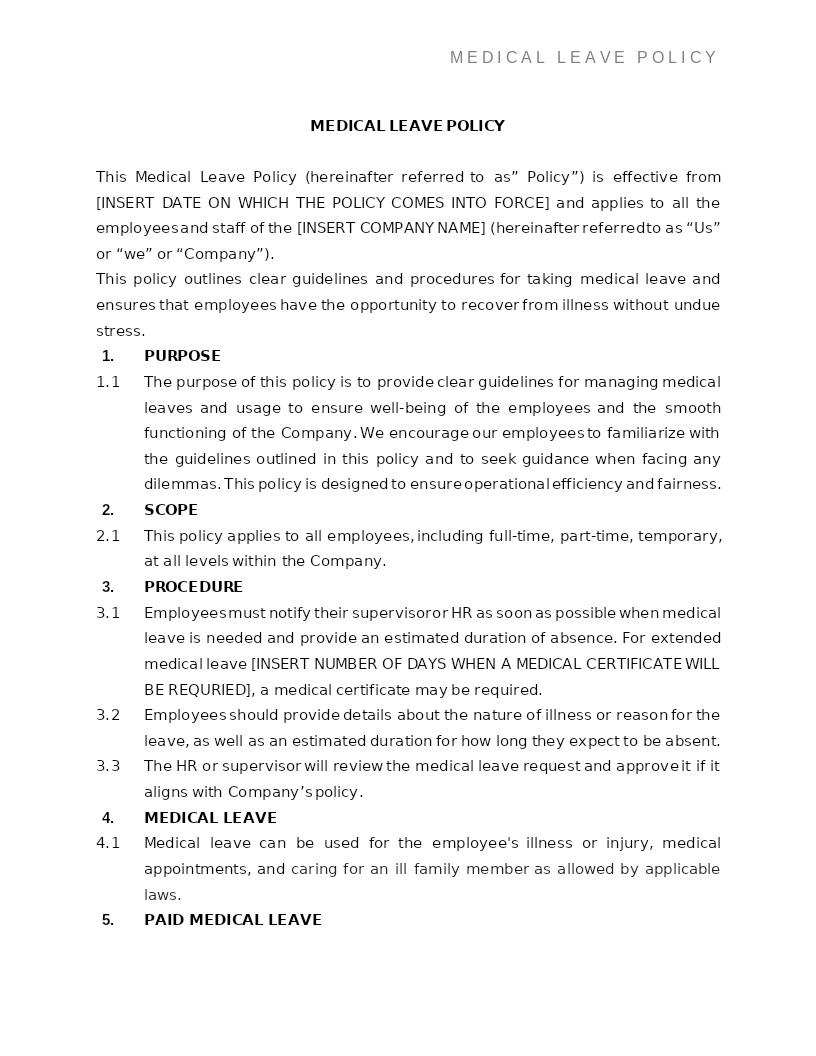
MEDICAL LEAVE POLICY
How does it work?
1. Choose this template
Start by clicking on "Fill out the template"
2. Complete the document
Answer a few questions and your document is created automatically.
3. Save - Print
Your document is ready! You will receive it in Word and PDF formats. You will be able to modify it.
Understanding Medical Leave Policy in U.S.
A Medical Leave Policy is an internal workplace policy that establishes clear guidelines for employees who require time off due to illness, injury, medical treatment, or health-related conditions. The policy explains eligibility criteria, leave duration, whether the leave is paid or unpaid, and the procedure for submitting a leave request. In the United States, medical leave must comply with applicable federal and state regulations, including the Family and Medical Leave Act (FMLA), ADA accommodations, and company-specific benefits. This policy ensures employees can focus on recovery without job insecurity while helping employers maintain workflow, staffing, and operational continuity.
Where a Medical Leave Policy Is Generally Used
A Medical Leave Policy is implemented in:
- Corporations and organizations providing employee benefits
- Small and medium businesses establishing formal leave procedures
- Workplaces subject to FMLA or state-level medical leave laws
- Industries requiring clear attendance and health-related guidelines
- HR systems that track, record, and evaluate employee leave patterns
- Remote and on-site work environments that need predictable staffing
Different Types of Medical Leave You May Encounter
- Short-Term Medical Leave: Used for brief illnesses, injuries, or medical appointments requiring temporary time off.
- Long-Term Medical Leave: Used for extended health conditions requiring ongoing treatment or prolonged absence.
- FMLA Leave (Federal Protection): Provides eligible employees with up to 12 weeks of unpaid, job-protected medical leave.
- State-Mandated Medical Leave: Some U.S. states offer paid or supplemental medical leave programs (e.g., CA, NY, NJ, MA).
- Doctor-Recommended Leave: Leave supported by medical documentation for recovery, surgery, or specialized treatment.
When Legal Guidance Becomes Helpful
Legal assistance becomes important when:
- Employees may be eligible for FMLA or ADA accommodations
- Leave overlaps with workers’ compensation or disability laws
- The employer operates in states with additional medical leave requirements
- The policy interacts with benefit programs or paid leave entitlements
- Termination, demotion, or disciplinary actions occur during or after leave
- Employers must ensure confidentiality under HIPAA-related guidelines
Lawyers help ensure the policy complies with U.S. federal and state regulations and minimizes the risk of legal claims.
How to Work With This Medical Leave Policy
- Provide employees with written guidelines during onboarding
- Maintain confidentiality for all medical information
- Require timely submission of leave forms and medical documentation
- Track leave balances in compliance with company policies and state laws
- Communicate decisions regarding approval, partial approval, or denial
- Prepare coverage plans to avoid workflow disruption
- Document all leave-related communication and decisions
Frequently Asked Questions
Q1. Is medical leave mandatory under U.S. law?
Federal law requires qualifying employers to provide medical leave under the FMLA. However, not all organizations or employees qualify. Some states offer additional paid medical leave programs, making it important for employers to comply with both federal and state rules.
Q2. Is medical leave paid or unpaid?
Medical leave can be either paid or unpaid depending on company policy, state law, and employee benefits. While FMLA is unpaid, many employers offer paid sick leave or disability benefits to support employees during medical recovery.
Q3. What documentation is required for medical leave?
Most employers require a doctor’s note, medical certificate, or healthcare provider’s report confirming the need for leave. Documentation helps ensure the policy is applied fairly and prevents misuse of leave benefits.
Q4. Can an employer deny medical leave?
An employer may deny medical leave if the employee does not meet eligibility requirements or fails to provide required documentation. However, employers must comply with laws such as FMLA, ADA, and state leave statutes to avoid discrimination or wrongful denial claims.
Q5. Does taking medical leave protect my job?
Under FMLA, eligible employees receive job-protected leave, meaning they must be reinstated to the same or an equivalent position. Other forms of medical leave may not guarantee job protection unless covered by state laws or employer policy.
Q6. Can medical leave be extended?
Yes. Extensions may be granted based on medical necessity, updated documentation, or applicable legal protections. Employers should document extension decisions and comply with ADA accommodation requirements when applicable.
Q7. Are employees paid benefits during medical leave?
Benefits such as health insurance may continue depending on company policy, FMLA rules, or state programs. Some employers require employees to pay their share of premiums during extended leave periods.
Q8. Can employees take intermittent medical leave?
Yes. Intermittent leave may be allowed when medically necessary, for example, for recurring treatment, therapy sessions, or chronic conditions. Employers may require documentation and advanced notice when possible.