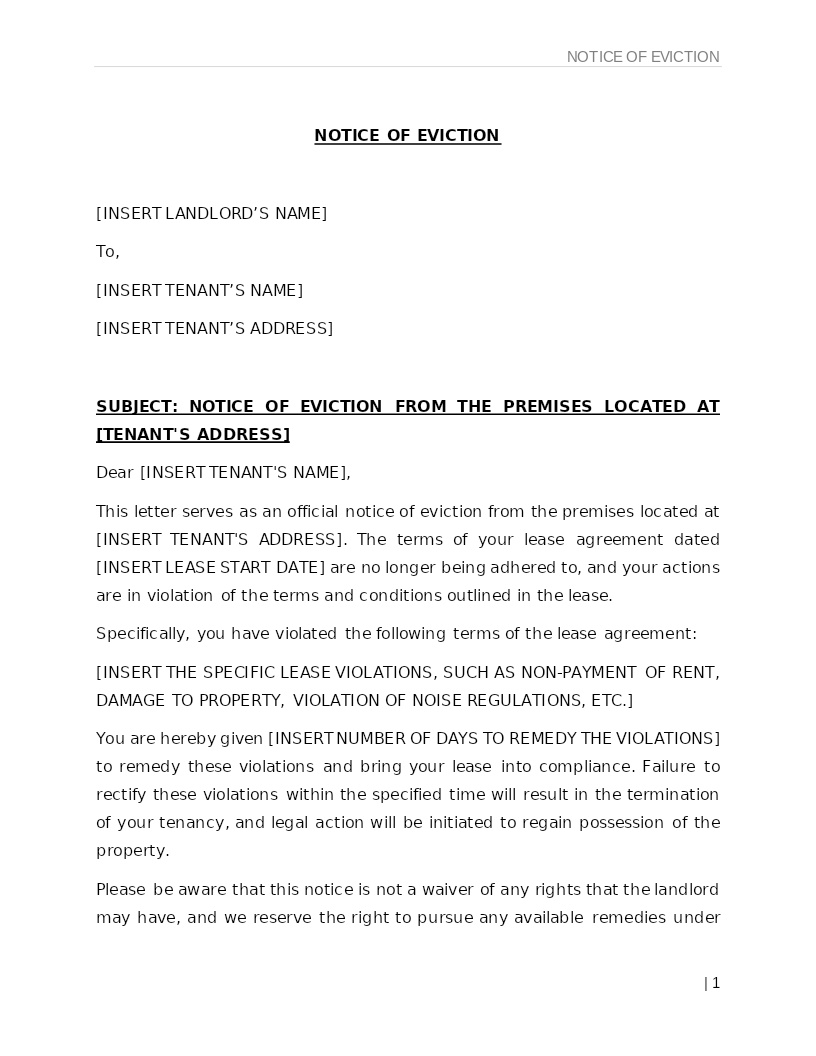
NOTICE OF EVICTION
How does it work?
1. Choose this template
Start by clicking on "Fill out the template"
2. Complete the document
Answer a few questions and your document is created automatically.
3. Save - Print
Your document is ready! You will receive it in Word and PDF formats. You will be able to modify it.
Providing Clear, Legal, and Timely Notification for Tenant Removal
When a landlord needs to begin the legal process of removing a tenant from a rental property, it becomes essential to have a clear framework that governs how the notice must be delivered. A Notice of Eviction provides that structure. It explains the reason for eviction, outlines what the tenant must do to remedy the issue (if applicable), and establishes the timeline before further legal action is taken.
Putting a Notice of Eviction in place ensures compliance with state rental laws, promotes transparency, and helps both parties understand their rights and responsibilities during the eviction process.
Where Notices of Eviction Are Commonly Used
Eviction notices are required in a wide range of rental and leasing situations, including:
- Residential rental homes, apartments, and shared living arrangements
- Commercial and retail lease properties
- Month-to-month tenancy arrangements
- Situations involving non-payment of rent
- Lease violations such as property damage or misconduct
- Holdover tenancies after lease expiration
- Illegal activities occurring on the property
Any time a landlord must formally request that a tenant vacate a property, a Notice of Eviction sets clear expectations and starts the required legal timeline.
Different Types of Eviction Notices You May Encounter
- Pay or Quit Notice: Issued when the tenant fails to pay rent; gives a set number of days to pay or vacate.
- Cure or Quit Notice: Used when a tenant violates a lease term and must correct the issue within a given timeframe.
- Unconditional Quit Notice: Requires the tenant to vacate without an opportunity to “cure,” often reserved for severe or repeated violations.
- Notice to Vacate: Given at the end of a lease or for month-to-month tenancy termination.
- Immediate Termination Notice: Applicable when law permits immediate eviction due to threats, illegal activity, or significant property damage.
When Legal Guidance Becomes Helpful
Many eviction matters can be straightforward, but legal guidance becomes essential when:
- The tenant disputes the notice or refuses to vacate
- The eviction involves discrimination, retaliation, or safety concerns
- Local, state, or federal eviction moratoriums apply
- The property is in a jurisdiction with complex landlord-tenant regulations
- The landlord is unsure which notice type is legally required
- Multiple tenants, co-signers, or subleases complicate the situation
- The eviction involves commercial leases or nontraditional rental arrangements
Legal review helps ensure compliance with United States landlord-tenant laws and avoids costly delays or invalid notices.
How to Work with This Template
- Identify the correct eviction notice required under state law
- Specify the reason for eviction (unpaid rent, violations, expiration, etc.)
- Clearly outline the action required from the tenant and applicable deadlines
- Include payment details, correction steps, or vacate instructions
- Follow local service requirements for delivery (posting, certified mail, hand-delivery)
- Maintain copies and documentation for potential court proceedings
- Review timelines to ensure compliance with state laws and fair housing rules
This structure aligns with widely recognized landlord-tenant notice requirements across the United States.
Frequently Asked Questions
Q1. What is a Notice of Eviction and why is it necessary?
A Notice of Eviction formally informs a tenant that they must correct a violation or leave the property within a specified period. It ensures landlords comply with state laws by providing proper written notice before filing for eviction. The notice outlines the reason for removal and the tenant’s options. This structured approach prevents misunderstandings and gives both parties clarity. It also serves as essential documentation for future legal proceedings.
Q2. What types of situations require a Notice of Eviction?
Eviction notices are typically issued for non-payment of rent, lease violations, property damage, or illegal activity. They may also be used to end month-to-month tenancies or remove holdover tenants. Different types of notices apply depending on the severity and nature of the issue. Providing the correct notice ensures the process is legally valid. It also allows tenants a fair chance to remedy the situation when allowed by law.
Q3. How much time must a landlord give a tenant before eviction?
The required notice period varies by state and the type of eviction notice being issued. Some states require only a few days for non-payment cases, while lease violations may allow longer timelines. End-of-tenancy or no-cause notices often require 30 to 60 days' notice. Following the correct timelines is essential to ensure legal compliance. Improper timelines may invalidate the eviction process entirely.
Q4. Can a tenant fix the issue and avoid eviction?
In many cases, yes, especially for non-payment of rent or curable lease violations. A “Pay or Quit” or “Cure or Quit” notice gives the tenant time to correct the issue. If the problem is resolved within the provided timeframe, eviction may be avoided. However, serious offenses may lead to unconditional notices. Each notice specifies whether a cure is permitted.
Q5. Is a court process required after a Notice of Eviction is issued?
Yes, if the tenant does not comply with the notice. A Notice of Eviction is the first legal step, but landlords must file an eviction lawsuit (often called an unlawful detainer) to remove the tenant legally. Courts then review the case and issue a judgment. Self-help evictions, such as changing locks or removing belongings, are illegal. Following legal steps protects both parties.
Q6. Can a tenant challenge or dispute an eviction notice?
Absolutely. Tenants may dispute the eviction notice if they believe it was issued incorrectly, in retaliation, or based on discrimination. They may also provide evidence that rent was paid or that the alleged violation did not occur. If the case goes to court, both parties present their arguments. Having documentation strengthens each party’s position. Dispute rights ensure fairness and prevent wrongful evictions.
Q7. How must a Notice of Eviction be delivered to be legally valid?
Each state specifies acceptable delivery methods, such as certified mail, hand-delivery, or posting the notice on the property. Some jurisdictions require multiple delivery attempts or combined methods. Proper delivery is crucial; incorrect service can invalidate the notice. Documentation of delivery protects the landlord in court. Complying with local rules ensures the eviction process proceeds legally.
Q8. Are eviction rules different for commercial tenants?
Yes. Commercial leases often have stricter terms, longer notice periods, and different procedures compared to residential leases. Businesses may negotiate unique eviction conditions in their contracts. Commercial eviction also typically involves more detailed documentation and compliance obligations. Understanding the lease terms is essential. Legal review is recommended for commercial evictions due to higher stakes.