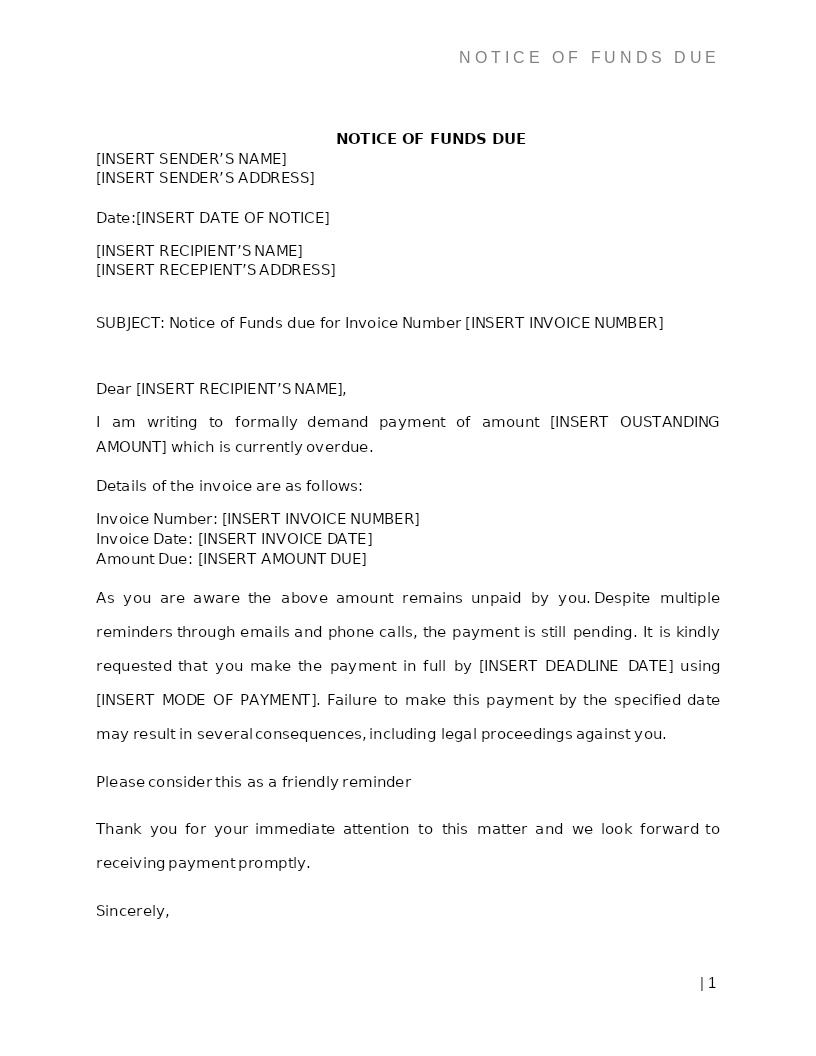
NOTICE OF FUNDS DUE
How does it work?
1. Choose this template
Start by clicking on "Fill out the template"
2. Complete the document
Answer a few questions and your document is created automatically.
3. Save - Print
Your document is ready! You will receive it in Word and PDF formats. You will be able to modify it.
Understanding Notice of Funds Due in U.S.
A Notice of Funds Due is a formal written communication used to inform an individual or business about an outstanding payment that has not yet been made. It details the amount owed, the payment deadline, acceptable payment methods, and any consequences of failing to pay on time. This notice serves as both a professional reminder and an official record of the debt, helping maintain transparency and compliance with U.S. financial and contractual standards. It is often the first step taken before initiating further collection actions.
A well-drafted Notice of Funds Due helps ensure timely payment, reduces misunderstandings, and provides documentation supporting future legal or collection efforts if the balance remains unpaid.
Where Notices of Funds Due Are Commonly Used
Notices of Funds Due are typically used in:
- Service-based industries requesting overdue invoice payments
- Landlord-tenant situations involving unpaid rent or charges
- Loan repayments, installment plans, and financing agreements
- Contractor and subcontractor billing reminders
- Membership fees, subscriptions, or recurring service charges
- Healthcare billing and insurance reimbursement follow-ups
- Business-to-business transactions with outstanding balances
Any situation involving unpaid financial obligations can require a Notice of Funds Due.
Different Types of Notices of Funds Due You May Encounter
- Initial Reminder Notice: A friendly reminder notifying the customer of an overlooked or upcoming payment.
- Past-Due Notice: Sent when payment is overdue and may include late fees or penalties.
- Final Demand Notice: A stronger communication indicating possible legal or collection actions.
- Invoice Reconciliation Notice: Sent when clarification is needed regarding outstanding balances or discrepancies.
When Legal Guidance Becomes Helpful
Legal consultation is important when:
- The debt remains unpaid after multiple notices
- Collection efforts may escalate to legal action
- State or federal debt collection regulations apply (such as FDCPA)
- The notice is tied to a contract, lease, or financing agreement with complex terms
- Interest, late fees, or penalties require compliance with usury laws
- Disputes arise regarding billing accuracy or contractual obligations
A lawyer ensures compliance with U.S. regulations and protects against improper collection practices.
How to Work With This Notice of Funds Due
- Clearly identify both parties and reference the contract or invoice number
- Specify the amount owed, due date, and payment instructions
- Include applicable late fees, interest, or penalties
- Provide a deadline for payment or a request for dispute clarification
- Outline next steps if the recipient fails to respond
- Maintain copies for financial and legal documentation
- Deliver the notice through a verifiable method (email, certified mail, etc.)
Frequently Asked Questions
Q1. Why is a Notice of Funds Due important?
A Notice of Funds Due provides clear, written communication reminding the recipient of an outstanding payment. It protects both parties by documenting payment expectations and timelines. It also helps avoid disputes by outlining the exact amount owed and the consequences of non-payment.
Q2. Is a Notice of Funds Due legally enforceable?
While the notice itself is not a judgment, it serves as an important piece of documentation under U.S. contract and debt-collection laws. If the matter escalates to legal action, the notice helps demonstrate that proper procedures were followed and the debtor was informed.
Q3. When should I send a Notice of Funds Due?
A notice is typically sent when a payment becomes overdue or when a contract requires formal written reminders. Sending it promptly helps maintain cash flow, strengthens financial accountability, and reduces the risk of prolonged non-payment.
Q4. What happens if the recipient ignores the notice?
If the recipient fails to pay by the given deadline, the creditor may pursue additional steps such as late fees, third-party collections, or legal action. The Notice of Funds Due establishes that the debtor was notified and given an opportunity to resolve the issue voluntarily.
Q5. Can a Notice of Funds Due include late fees or penalties?
Yes, if permitted under the original agreement and U.S. state laws. The notice should clearly state any applicable fees and reference the clause authorizing them. Transparent communication helps avoid legal disputes over unexpected charges.
Q6. Does sending a Notice of Funds Due damage business relationships?
Not necessarily. A professionally written notice demonstrates responsibility and fairness. It allows both parties to address overdue payments promptly without escalating tension. Clear communication often preserves long-term relationships.
Q7. Can a Notice of Funds Due be used for rent or lease payments?
Absolutely. Landlords commonly use this notice to remind tenants of overdue rent or fees. It supports compliance with landlord-tenant laws and serves as essential documentation if further action, such as a lease violation notice, becomes necessary.
Q8. Should the notice include a payment deadline?
Yes. A firm deadline helps the recipient understand the urgency and prevents confusion. It also aligns with legal and contractual requirements for collection procedures. Deadlines vary, but many businesses allow 5–15 days from the date of notice.