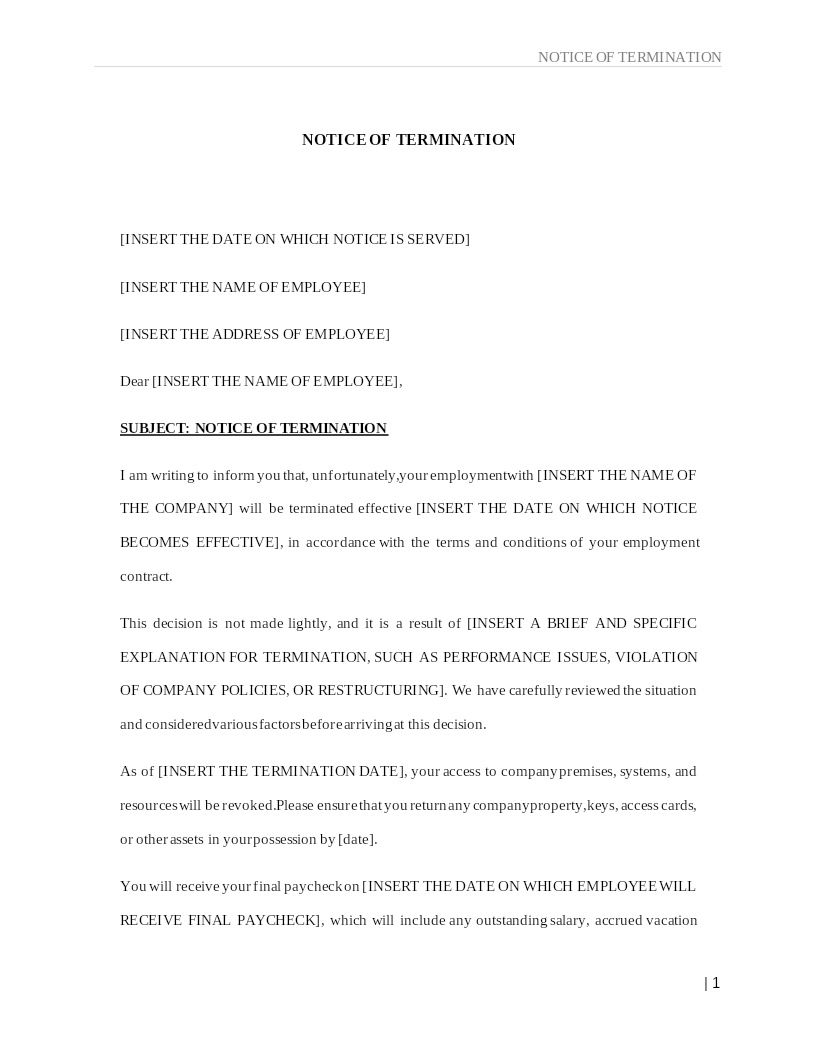
NOTICE OF TERMINATION- EMPLOYEE
How does it work?
1. Choose this template
Start by clicking on "Fill out the template"
2. Complete the document
Answer a few questions and your document is created automatically.
3. Save - Print
Your document is ready! You will receive it in Word and PDF formats. You will be able to modify it.
Understanding Notice of Termination in U.S.
A Notice of Termination of Employee is a formal written document issued by an employer to notify an employee that their employment will be ending. It typically includes the effective termination date, the reason for termination (if required by law or company policy), and information about final pay, benefits, and return of company property.
This notice helps ensure compliance with U.S. employment laws, supports a transparent and respectful separation process, and creates an official record of the employer’s decision. It protects both the employer and the employee by clearly documenting the terms of termination and the steps required for a smooth offboarding process.
Where a Notice of Termination of Employee Is Commonly Used
This notice is used across all industries, including:
• Corporate offices and professional workplaces
• Retail, hospitality, and service industries
• Healthcare, education, and government jobs
• Manufacturing, logistics, and trade labor
• Contract-based and at-will employment environments
It is essential when ending employment due to performance issues, misconduct, layoffs, redundancy, restructuring, end of contract, or any reason allowed under U.S. employment laws.
Different Types of Notices of Termination of Employee
- Termination for Cause Notice: Used when an employee is terminated due to misconduct, violation of policies, or other serious issues.
- Termination Without Cause Notice: Issued when an employer ends the employment but not for misconduct, common in at-will employment states.
- Layoff or Redundancy Notice: Provided when employment ends due to economic reasons, restructuring, or business downsizing.
- End-of-Contract Termination Notice: Used when a fixed-term employment contract reaches its expiration date.
- Immediate Termination Notice: Provided when employment ends immediately due to severe violations or safety concerns.
When Legal Guidance Becomes Necessary
Legal counsel is often needed when:
• Termination reasons may raise discrimination or wrongful termination concerns
• The employee works in a state with strict notice or final pay regulations
• The termination relates to mass layoffs governed by the WARN Act
• Employment contracts include specific termination procedures
• The employee holds sensitive positions or has access to confidential data
• The termination might trigger severance requirements or legal claims
Lawyers ensure compliance, reduce risk, and help employers avoid costly litigation.
How to Work With This Notice of Termination of Employee
• Clearly state the employee’s last working day and any required notice period
• Document the reason for termination when legally appropriate
• Provide details regarding final pay, unused PTO payout, and benefits continuation
• List all company assets the employee must return
• Include instructions for COBRA health insurance, if applicable
• Maintain a signed copy for HR and legal records
• Conduct an exit interview when appropriate to ensure a smooth transition
A well-structured notice ensures clarity, professionalism, and legal compliance.
Frequently Asked Questions
Q1. Is a Notice of Termination required in the U.S. if employment is “at-will”?
While at-will employment allows employers to terminate employees without notice, providing a written Notice of Termination is strongly recommended. It creates documentation, reduces misunderstandings, and can be important evidence if disputes arise regarding the reason or timing of the termination.
Q2. Does an employer need to state the reason for termination?
Under federal law, employers are generally not required to state a reason for termination in an at-will arrangement. However, certain states, employment contracts, or company policies may require written justification. Including a reason also provides transparency and can protect against wrongful termination claims.
Q3. When must an employer provide the final paycheck after termination?
Final paycheck laws vary by state. Some states require immediate payment, while others allow payment on the next scheduled payday. Employers must comply with state-specific regulations regarding wage payment, unused PTO payout, and severance (if applicable).
Q4. Can a Notice of Termination protect the employer from legal claims?
Yes. A properly drafted notice documents essential details such as the termination date, reason (if included), and compliance with policies. This reduces the risk of disputes and strengthens the employer’s position if allegations of discrimination, retaliation, or wrongful termination arise.
Q5. Should employees receive severance pay when terminated?
Severance pay is not required under U.S. federal law unless specified by contract, employer policy, or a collective bargaining agreement. Many employers offer severance voluntarily to support departing employees and reduce the likelihood of legal claims.
Q6. What happens if an employee refuses to acknowledge or sign the notice?
The notice remains valid even if the employee refuses to sign it. Employers should note the refusal and have a witness (such as an HR representative) sign the document to confirm that the notice was delivered.
Q7. Does the employee have a right to challenge the termination?
Employees may challenge termination if they believe it was discriminatory, retaliatory, or in violation of an employment contract. Providing a detailed, legally compliant termination notice helps employers demonstrate that proper procedures were followed.
Q8. Can the Notice of Termination include post-employment obligations?
Yes. The notice may reference confidentiality obligations, non-compete clauses (where allowed), return of company property, and any remaining financial or legal requirements. Clear instructions help avoid future issues and ensure proper offboarding.