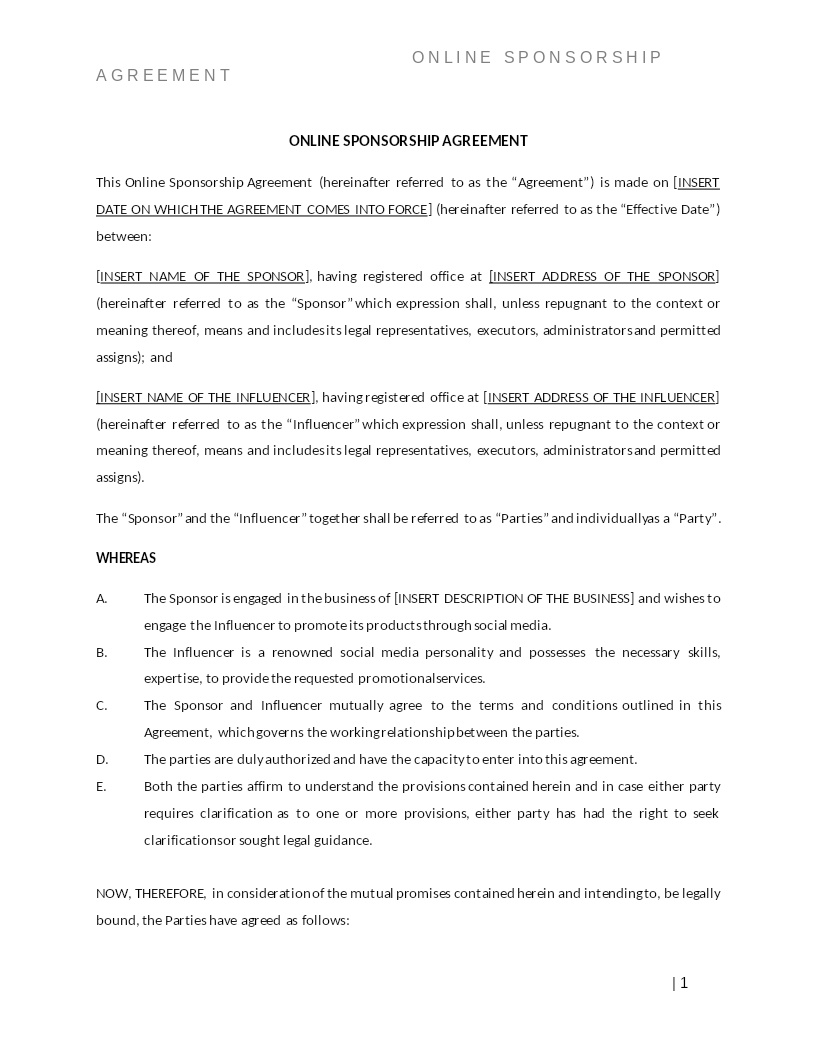
ONLINE SPONSORSHIP AGREEMENT
How does it work?
1. Choose this template
Start by clicking on "Fill out the template"
2. Complete the document
Answer a few questions and your document is created automatically.
3. Save - Print
Your document is ready! You will receive it in Word and PDF formats. You will be able to modify it.
Understanding the Online Sponsorship Agreement
When a brand collaborates with a content creator, influencer, podcaster, streamer, or website owner for digital promotions, there must be a clear framework that governs how the sponsorship will be executed. An Online Sponsorship Agreement provides that structure. It defines what content must be created, how the brand will be represented, what compensation is owed, and what legal requirements both parties must follow, especially in the highly regulated U.S. advertising space.
Putting a sponsorship agreement in place ensures a transparent, professional partnership that protects both the sponsor and the creator while enabling compliant and effective digital marketing.
Where Online Sponsorship Agreements Are Commonly Used
Sponsorship agreements are widely used in today’s digital economy, including:
- Collaborations with influencers on Instagram, TikTok, YouTube, Facebook, or X
- Sponsored podcast segments or product mentions
- Branded livestreams on Twitch, Kick, or YouTube Live
- Sponsored blog posts or affiliate content on websites
- Creator-brand partnerships in gaming, fitness, beauty, or lifestyle niches
- Paid endorsements across newsletters, online communities, or membership platforms
Any time a brand pays for online exposure or endorsement, an Online Sponsorship Agreement sets clear boundaries around content, compensation, timelines, and usage rights.
Different Types of Online Sponsorship Agreements You May Encounter
- Paid Content Sponsorship: The brand compensates the creator to produce specific content, such as videos, reels, blogs, or stories.
- Affiliate or Commission-Based Sponsorship: The creator earns commissions based on sales or traffic generated through unique codes or links.
- Product or Gifted Sponsorship: Products or services are provided free in exchange for promotional content.
- Long-Term or Ambassador Sponsorship: The creator becomes a recurring brand representative, posting content over multiple months or campaigns.
- Livestream or Event-Based Sponsorship: Brands sponsor real-time digital events, livestreams, webinars, or product showcases.
- Hybrid Sponsorship: A combination of paid content, gifted products, commissions, and long-term collaboration.
When Legal Guidance Becomes Helpful
Most sponsorships appear simple, but legal guidance becomes essential in situations involving:
- FTC compliance, including proper disclosure (#ad, #sponsored)
- Cross-border sponsorships involving multiple jurisdictions
- Usage of copyrighted music, images, or third-party assets
- Content that may be repurposed for ads, boosting, or paid campaigns
- Negotiating exclusivity clauses or competing brand restrictions
- High-value sponsorships with multi-channel deliverables
- Complex compensation models involving royalties or affiliate earnings
- Long-term brand ambassador commitments
- Influencers who work with minors or sensitive industries
Legal review helps ensure the sponsorship terms are enforceable, fair, and compliant, minimizing the risk of disputes or regulatory violations.
How to Work with This Template
- Identify both parties, the sponsor and the content creator/online entity
- Clearly define the type of deliverables, posting schedule, and approval requirements
- Specify payment structure, fees, affiliate commissions, and timelines
- Clarify ownership and usage rights for all content created under the sponsorship
- Select governing U.S. state law applicable to the partnership
- Include compliance obligations for FTC disclosure and platform policies
- Review all terms together; legal review is optional but recommended
- Sign electronically or physically, U.S. law fully supports e-signatures
This template follows standard practices recognized across the U.S. advertising, digital media, and influencer-marketing industries.
Frequently Asked Questions
Q1. What is an Online Sponsorship Agreement and why is it essential for U.S. creators and brands?
An Online Sponsorship Agreement is a legal contract that outlines the expectations, obligations, and deliverables between a sponsor and a creator. In the U.S., it’s essential because it ensures brand safety, compliance with FTC advertising laws, transparency in compensation, and clear communication around content ownership and performance standards.
Q2. Does the agreement cover FTC disclosure requirements like #ad or #sponsored?
Yes. The agreement should include mandatory disclosure language to comply with the Federal Trade Commission’s guidelines. These rules require creators to clearly identify sponsored content, helping avoid regulatory penalties and maintaining transparency with audiences.
Q3. Who owns the content created during a sponsorship?
Ownership depends on what the agreement specifies. Some sponsors only obtain a license to use the content, while the creator retains ownership. Others may require full ownership or long-term usage rights. Clearly defining these rights prevents disputes over reposting, repurposing, or paid boosting of content.
Q4. Can a sponsor use the creator’s content for ads or paid promotions?
Only if the agreement grants those rights. Without explicit permission, brands cannot use creator content for paid ads, long-term campaigns, or commercial distribution. The contract should clarify usage scope, duration, and any additional compensation owed for extended rights.
Q5. What happens if a creator fails to deliver content on time?
The agreement typically includes timelines, revision requirements, approval processes, and consequences for missed deadlines. Remedies may include fee adjustments, termination rights, or rescheduling provisions. Having these terms in writing helps maintain professionalism and accountability.
Q6. Are Online Sponsorship Agreements enforceable across different states?
Yes. Parties simply choose the governing state law, commonly California, New York, Texas, or Delaware. This ensures enforceability even if the sponsor and creator operate in different states.
Q7. Can the agreement include exclusivity clauses?
Absolutely. Brands often require creators not to promote competitors during the campaign period. The agreement can define the exclusivity scope, duration, and compensation associated with such restrictions.
Q8. Is an Online Sponsorship Agreement suitable for small creators or micro-influencers?
Yes. Even smaller creators benefit from written agreements. Clear terms protect creators from late payments, misuse of content, unfair expectations, and unclear deliverables. Brands also benefit from a structured, compliant partnership.