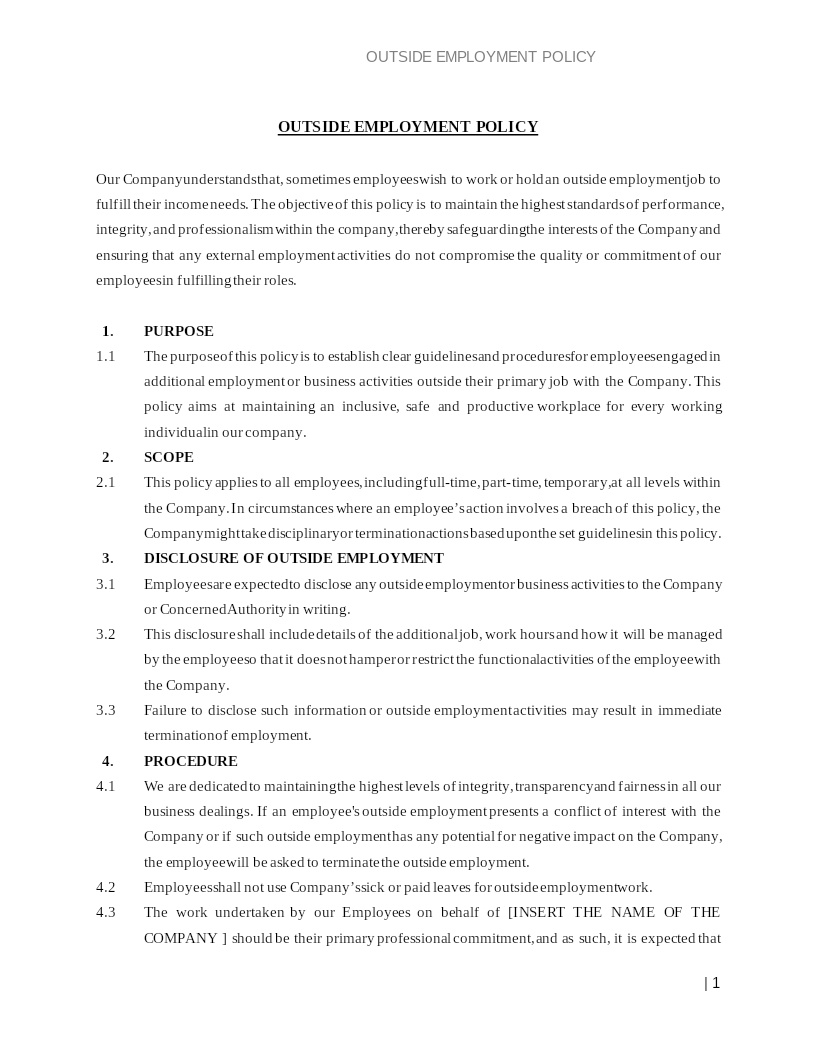
OUTSIDE EMPLOYMENT POLICY
How does it work?
1. Choose this template
Start by clicking on "Fill out the template"
2. Complete the document
Answer a few questions and your document is created automatically.
3. Save - Print
Your document is ready! You will receive it in Word and PDF formats. You will be able to modify it.
Understanding Outside Employment Policy in U.S.
An Outside Employment Policy outlines the guidelines for employees who engage in work, business activities, or freelance opportunities outside their primary employment. The purpose of this policy is to prevent conflicts of interest, safeguard confidential information, ensure job performance remains unaffected, and uphold the organization’s ethical and professional standards.
By defining clear expectations and restrictions, this policy supports transparency, protects business interests, and ensures compliance with U.S. employment laws, including conflict-of-interest rules, confidentiality obligations, and labor regulations. It also encourages employees to balance external commitments responsibly without compromising their primary job duties.
Where Outside Employment Policies Are Commonly Used
Outside Employment Policies are implemented across industries where conflicts of interest, confidentiality concerns, or performance risks may arise. These policies are commonly used in:
• Corporate offices, professional services, and financial institutions
• Healthcare, education, and government agencies
• Technology firms, SaaS companies, and cybersecurity-sensitive workplaces
• Retail, hospitality, and service-based industries
• Engineering, manufacturing, and research-driven organizations
• Startups and enterprises managing proprietary systems or intellectual property
Any organization that values integrity, transparency, and consistency benefits from adopting a structured Outside Employment Policy.
Different Types of Outside Employment Restrictions You May Encounter
- Conflict of Interest Rules: Prohibit employees from engaging in activities that compete with the organization, create divided loyalties, or undermine business interests.
- Confidentiality and Data Protection Requirements: Ensure external work does not involve sharing or misusing proprietary, sensitive, or confidential company information.
- Performance and Availability Expectations: Clarify that outside work must not interfere with the employee’s availability, job performance, or ability to meet deadlines and responsibilities.
- Use of Company Resources Prohibition: Forbid using company time, equipment, tools, or confidential systems for outside employment or personal business ventures.
- Disclosure and Approval Procedures: Require employees to disclose and obtain written approval before engaging in outside employment or freelance work.
When Legal Guidance Becomes Helpful
Legal review is essential when drafting or customizing an Outside Employment Policy because:
• U.S. labor laws affect how much control employers have over outside work and employee autonomy.
• Conflict-of-interest definitions vary and must be clearly supported by enforceable contractual language.
• State laws surrounding moonlighting, employee rights, and off-duty conduct differ widely.
• Lawyers ensure confidentiality protections, non-compete clauses (where permitted), and IP ownership terms comply with legal standards.
• Policies must avoid violating anti-discrimination laws or interfering with protected activities (e.g., political participation).
• Real-time counsel ensures balanced rules that protect company interests without overreaching.
A carefully drafted policy mitigates risks while safeguarding organizational ethics and operational integrity.
How to Work With Outside Employment Policy Template
• Define what qualifies as outside employment, side work, freelancing, or business ventures.
• Establish approval procedures and disclosure requirements for employees seeking external work.
• Clarify conflict-of-interest rules and confidentiality obligations under U.S. laws.
• Outline performance expectations to ensure outside work does not impact job duties.
• Prohibit use of company resources, systems, or time for external engagements.
• Address disciplinary actions for violations and ensure fair, consistent enforcement.
• Review policy regularly to reflect organizational changes or updated legal standards.
Frequently Asked Questions
Q1. Why is an Outside Employment Policy important for businesses?
This policy ensures employees' external work does not conflict with company interests or compromise performance. It protects confidential information, prevents misuse of resources, and establishes clear expectations. As businesses grow, structured guidelines help maintain professionalism and reduce risks associated with moonlighting.
Q2. Does this policy comply with U.S. employment laws?
Yes. Outside Employment Policies are drafted to comply with federal and state laws governing conflicts of interest, confidentiality, employment rights, and off-duty conduct. Legal review ensures the policy respects employee freedoms while appropriately protecting business interests and intellectual property.
Q3. What types of outside work must employees disclose?
Employees typically must disclose freelance work, part-time jobs, side businesses, consulting roles, and income-generating activities. This helps the organization identify potential conflicts and ensure external commitments do not violate confidentiality or competitive restrictions.
Q4. How does this policy prevent conflicts of interest?
The policy prohibits employees from engaging in work that competes with the company, affects neutrality, or involves sharing sensitive information. Disclosure and approval processes ensure any potential conflicts are identified and addressed early, supporting ethical practices and business protection.
Q5. Can employees still pursue hobbies or non-paid activities?
Yes. Most non-paid activities, such as volunteering or personal hobbies, are permitted as long as they do not interfere with work responsibilities or create conflicts of interest. Employees may still be asked to disclose activities that involve sensitive industries or potential competitive overlap.
Q6. Does outside employment affect job performance expectations?
Employees must continue to meet all performance standards, attendance requirements, and deadlines. If external work negatively impacts job performance, employers may deny approval or request that the external activity be modified or discontinued to maintain productivity and accountability.
Q7. What happens if an employee violates the Outside Employment Policy?
Violations may result in disciplinary actions, including warnings, revocation of outside employment approval, or termination depending on severity. Consequences aim to protect the company from risks such as data breaches, performance issues, or competitive harm.
Q8. Is an Outside Employment Policy suitable for small businesses?
Absolutely. Small businesses benefit significantly from clear guidelines preventing resource misuse, conflicts of interest, and performance issues. The policy promotes transparency, fairness, and trust, helping smaller teams operate smoothly while protecting their competitive advantage.