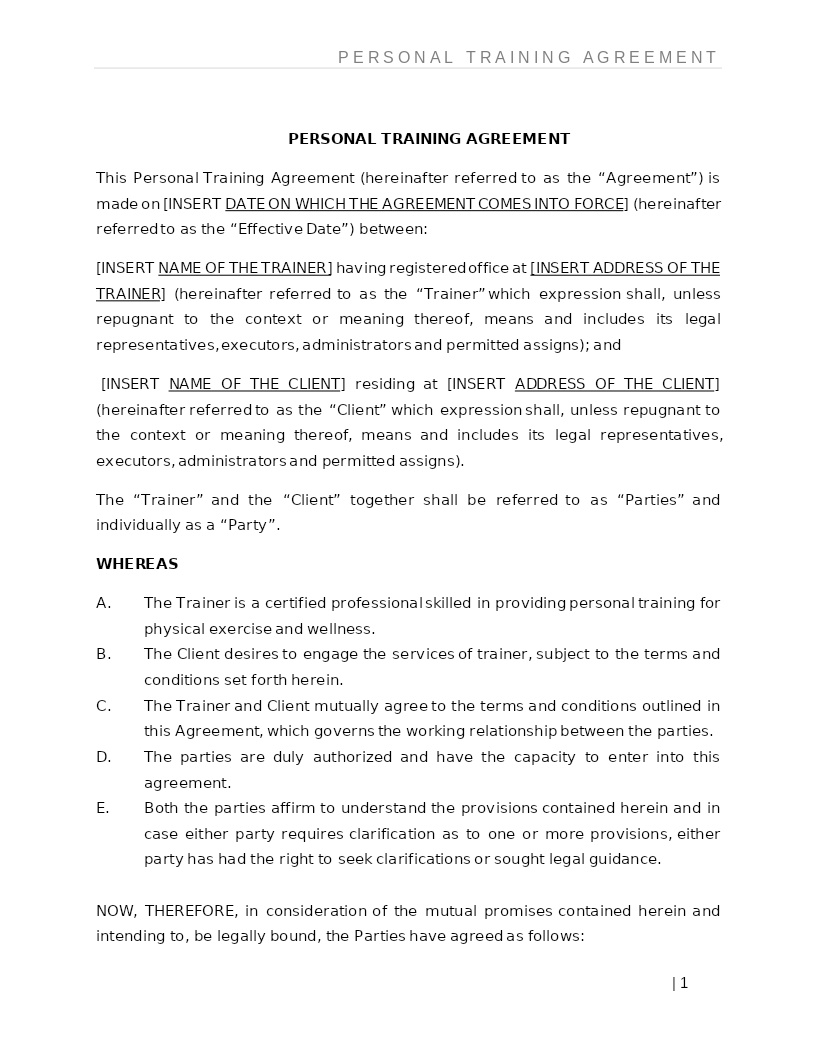
PERSONAL TRAINING AGREEMENT
How does it work?
1. Choose this template
Start by clicking on "Fill out the template"
2. Complete the document
Answer a few questions and your document is created automatically.
3. Save - Print
Your document is ready! You will receive it in Word and PDF formats. You will be able to modify it.
Understanding Personal Training Agreement in U.S.
A Personal Training Agreement is a legally binding contract between a certified personal trainer and a client that outlines the terms of their professional fitness arrangement. It includes essential details such as training schedules, session types, payment terms, cancellation and refund policies, liability waivers, and expectations for both parties. This agreement ensures clarity, protects the trainer from potential legal disputes, and helps clients stay committed to their wellness goals. Under U.S. laws, including general contract principles and state-specific liability regulations, this agreement provides a secure and professional foundation for fitness services.
Where a Personal Training Agreement Is Generally Used
A Personal Training Agreement is commonly used in:
- Fitness centers and gyms offering private training
- Independent personal trainers and wellness coaches
- In-home personal training services
- Online or virtual training programs
- Corporate wellness programs
- Sports performance or athletic coaching sessions
- Medical fitness and rehabilitation programs
Different Types of Personal Training Agreements
- Standard Personal Training Agreement: Used for in-person training sessions with set schedules and payment terms.
- Online / Virtual Training Agreement: Includes virtual class access, communication methods, and digital deliverables.
- Corporate or Group Training Agreement: Covers multiple participants, shared liability, and group-rate payment structures.
- Specialized Program Agreement: Used for rehab, sports conditioning, weight-loss programs, or medically directed fitness plans.
- Session Package Agreement: Outlines prepaid sessions, expiration dates, and rules on cancellations or rescheduling.
When Legal Guidance Becomes Helpful
You may need legal assistance for:
- Drafting strong liability waivers and assumption-of-risk clauses
- Ensuring compliance with state fitness service laws and insurance requirements
- Customizing cancellation, refund, and no-show policies
- Addressing medical disclosures, emergency protocols, and injury-related risks
- Adding clauses for photography/video consent and use of client results
- Creating enforceable payment terms and subscription billing arrangements
- Handling multi-state or online training programs with nationwide clients
- Preparing confidentiality terms for sensitive client health information
Legal review ensures the agreement is enforceable, customized, and aligned with U.S. legal standards.
How to Work With This Personal Training Agreement
- Clearly define training goals, session types, and expected results
- Establish payment rules, late fees, and refund eligibility
- Set boundaries for trainer responsibilities vs. client self-care obligations
- Document health history and obtain medical clearance if required
- Outline communication expectations and schedule modification procedures
- Maintain copies for compliance, insurance, and dispute resolution
- Use the agreement to track packages, renewals, and progress milestones
Frequently Asked Questions
Q1. What should a Personal Training Agreement include?
A strong agreement includes training schedules, session types, payment terms, cancellation rules, liability waivers, and client responsibilities. It outlines expectations for performance, safety, and communication, helping ensure a professional and structured fitness experience.
Q2. Do personal trainers need a written agreement in the U.S.?
While not legally required, a written agreement is highly recommended. It protects the trainer from liability claims, clarifies expectations, and outlines essential terms like refunds, safety rules, and injury disclaimers. It also provides enforceable documentation under U.S. contract law.
Q3. Can a Personal Training Agreement include health and medical requirements?
Yes. Many agreements require clients to disclose medical conditions or obtain clearance from a physician. These clauses protect both the trainer and the client by ensuring workouts are safe and tailored to the client’s health needs.
Q4. Are liability waivers enforceable in fitness agreements?
In most U.S. states, properly drafted liability waivers are enforceable. They must be clear, specific, and voluntarily signed. A waiver protects trainers from claims relating to accidental injuries, physical risks, or client negligence during training.
Q5. Can clients cancel or reschedule personal training sessions?
Most agreements include detailed cancellation and rescheduling rules. Clients may be required to give advance notice, often 12 to 24 hours, to avoid being charged. Clear policies help prevent disputes and ensure the trainer’s schedule is respected.
Q6. How are payments typically handled in a Personal Training Agreement?
Payment may be made per session, per package, or through monthly subscriptions. The agreement outlines payment methods, due dates, refunds, and late fees. Clear payment terms protect trainers from non-payment and help clients understand financial obligations.
Q7. Can the agreement cover online or virtual training sessions?
Yes. Virtual training agreements include digital access instructions, equipment requirements, communication policies, and disclaimers about remote supervision. These provisions help ensure safety and clarity for clients training outside a gym environment.
Q8. Can a Personal Training Agreement be terminated early?
Most agreements include early-termination clauses that specify conditions for cancellation by either party. Terms may include notice requirements, non-refundable fees, or prorated refunds. This ensures a fair and transparent process for both trainer and client.