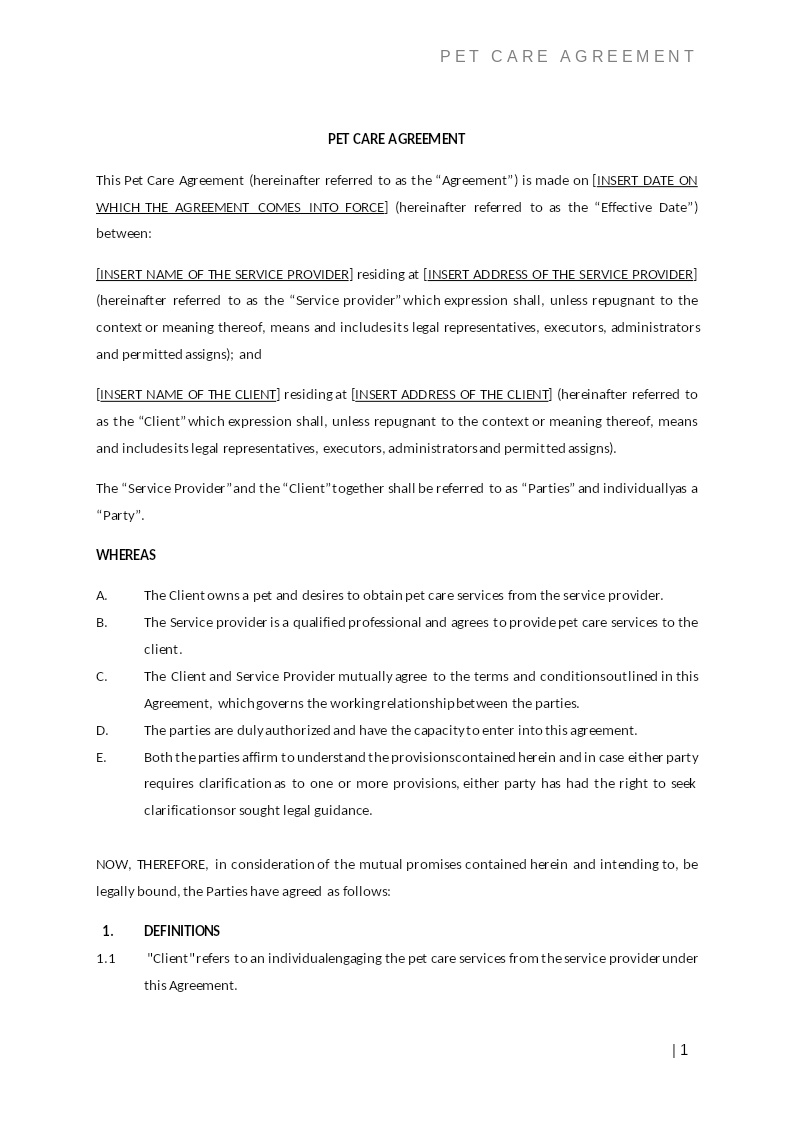
PET CARE AGREEMENT
How does it work?
1. Choose this template
Start by clicking on "Fill out the template"
2. Complete the document
Answer a few questions and your document is created automatically.
3. Save - Print
Your document is ready! You will receive it in Word and PDF formats. You will be able to modify it.
Ensuring Clear Expectations in Pet Care Services
When you entrust your pet to a caregiver, whether for daily walks, boarding, grooming, or long-term sitting, it’s important to establish a clear understanding of responsibilities, safety standards, and service expectations. A Pet Care Agreement provides that structure. It outlines the type of care being provided, how your pet’s needs will be met, and what the caregiver is authorized and prohibited from doing.
Having a written Pet Care Agreement builds trust and protects both the pet owner and the service provider. It ensures open communication, clarifies instructions for feeding, medication, exercise, and emergency protocols, and prevents misunderstandings that could affect the pet’s well-being.
Where Pet Care Agreements Are Commonly Used
Pet care contracts are routinely used across a variety of professional and personal situations, including:
- Daily dog-walking services
- Overnight pet sitting and in-home care
- Boarding facilities and daycare centers
- Groomers and specialized pet service providers
- Veterinary-adjacent care arrangements
- Long trips, vacations, or temporary relocations
- Care for pets with special needs, medication schedules, or behavioral requirements
Any time you allow someone else to care for your pet, a written agreement sets clear expectations and safeguards your pet’s routine and safety.
Different Types of Pet Care Agreements You May Encounter
- Daily Care or Walking Agreement: Used when a provider visits the home for regular exercise, feeding, and companionship.
- Boarding or Overnight Care Agreement: Covers extended stays at a sitter’s home or boarding facility.
- Special Needs or Medical Care Agreement: Used when pets require medication, injections, mobility assistance, or scheduled treatments.
- Grooming Services Agreement: Focuses on grooming procedures, handling requirements, safety conditions, and owner authorizations.
- Drop-In Care Agreement: Designed for short, periodic visits for feeding, litter cleaning, or quick check-ins.
When Legal Guidance Becomes Helpful
Most routine pet-care arrangements do not require legal intervention. However, professional advice can be useful when:
- Your pet has medical or behavioral risks that require strict compliance
- The provider uses subcontractors or additional helpers
- You need detailed liability waivers or emergency medical authorizations
- State or local regulations apply to boarding, grooming, or animal transport
- High-value animals or breeding pets require specialized contractual terms
- You want to address potential property damage, bites, or third-party injuries
Legal review isn’t mandatory, but it can reduce risk when the care involves health concerns, regulated facilities, or complex expectations.
How to Work with This Template
- Identify the pet owner and the care provider
- State the type of care and the duration of the service
- Outline feeding instructions, routines, exercise needs, and medication details
- Select the governing state law
- Specify liability limitations, emergency procedures, and veterinary authorization
- Review expectations together (legal review optional)
- Sign electronically or in hard copy
This template aligns with common standards used by pet-care professionals across the United States and is compatible with standard e-signature tools.
Frequently Asked Questions
Q1. Is a Pet Care Agreement necessary for short-term services?
Yes. Even brief visits can involve feeding schedules, home access, and safety concerns. A written agreement ensures clarity and protects both the pet and the provider.
Q2. Can this agreement be used for multiple pets?
Yes. You can include all pets under one agreement or attach additional information for pets with special needs, medications, or behavior instructions.
Q3. What if the pet has a medical emergency?
The agreement typically includes a veterinary authorization clause allowing the caregiver to seek treatment if you cannot be reached. You can set spending limits or list preferred clinics.
Q4. Are electronic signatures legally valid?
Yes. Under U.S. law, electronic signatures are fully enforceable once both parties agree to sign digitally.
Q5. Does this cover pets with behavioral issues?
Yes, but it’s important to clearly describe any aggression, anxiety, or triggers. Transparency ensures the caregiver can provide safe and appropriate handling.
Q6. Can I customize the care instructions later?
Absolutely. You can update instructions as needed, feeding changes, medication updates, new routines and confirm them in writing so both parties stay aligned.
Q7. What about property access and security?
If the caregiver will enter your home, the agreement can include rules for keys, alarm codes, and access times to ensure privacy and security.
Q8. Does the agreement address liability for bites or damage?
Yes. Many Pet Care Agreements include indemnity and liability terms to protect both parties if the pet causes damage or injury during care.
Q9. Can this be used for boarding facilities?
Yes. Boarding centers, kennels, and daycares commonly use similar agreements, adjusted for their specific policies, capacity requirements, and safety standards.
Q10. Is this suitable for professional and casual pet sitters?
Definitely. Whether hiring a professional service, neighborhood sitter, or independent contractor, a written agreement helps ensure consistency, accountability, and peace of mind.