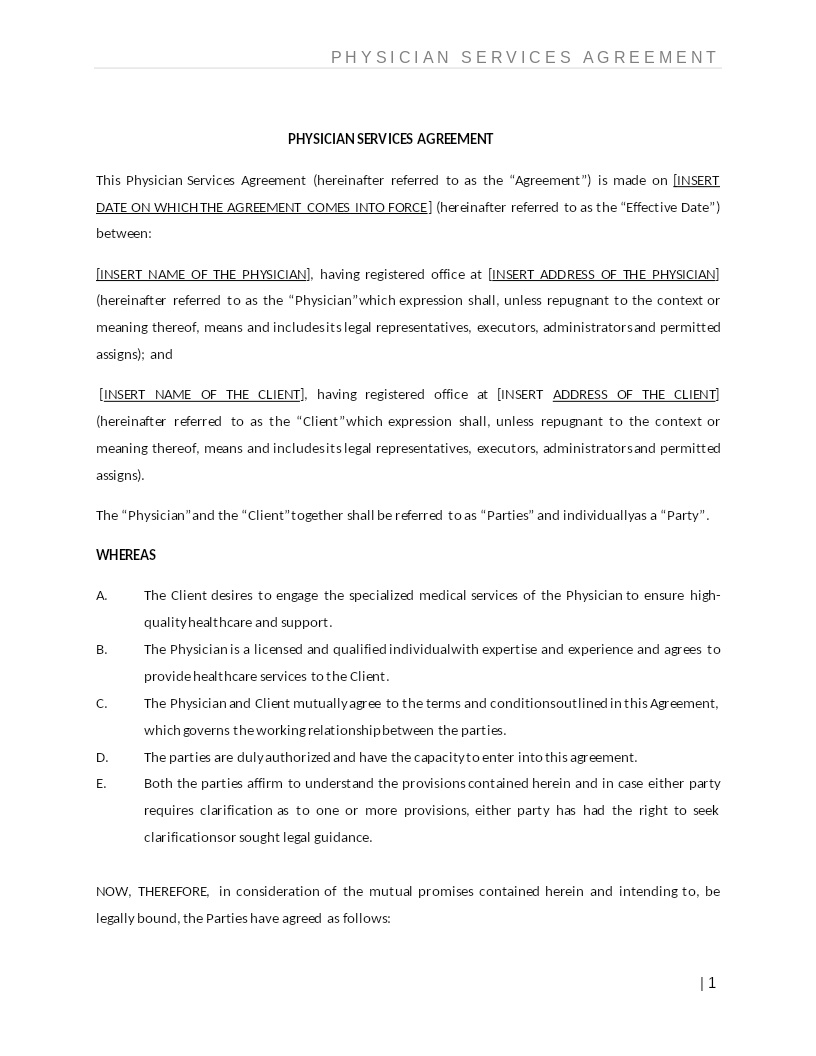
PHYSICIAN SERVICES AGREEMENT
How does it work?
1. Choose this template
Start by clicking on "Fill out the template"
2. Complete the document
Answer a few questions and your document is created automatically.
3. Save - Print
Your document is ready! You will receive it in Word and PDF formats. You will be able to modify it.
Understanding the Physician Service Agreement
When a physician provides medical services to a hospital, clinic, medical group, telemedicine platform, or private patient, a clear contractual framework is essential to define expectations and responsibilities. A Physician Service Agreement provides this structure. It outlines the scope of practice, compensation, scheduling, compliance obligations, and malpractice coverage required for the delivery of healthcare services.
Putting a Physician Service Agreement in place ensures legal clarity, protects patient care standards, and creates a stable, professional working relationship between the physician and the healthcare organization.
Where Physician Service Agreements Are Commonly Used
Physician Service Agreements are widely used across the U.S. healthcare system, including:
- Hospitals, clinics, urgent care centers, and ambulatory surgery centers
- Telemedicine practices, concierge medicine services, and direct-care models
- Physician groups contracting with facilities or health networks
- Independent contractors providing specialized medical services
- Healthcare systems requiring coverage for on-call duties and shift work
- Academic medical centers hiring faculty physicians or specialists
Any time medical services are provided under a structured arrangement, this agreement ensures compliance, clarity, and quality of care.
Different Types of Physician Service Agreements You May Encounter
- Independent Contractor Physician Agreement: Defines terms for physicians providing services on a non-employee basis.
- Employment-Based Physician Service Agreement: Used when the physician is a full-time or part-time employee of a healthcare entity.
- Telemedicine Physician Agreement: Addresses virtual care, technology platforms, interstate licensing, and remote practice compliance.
- Concierge or Direct Primary Care Agreement: Specifies membership fees, exclusive care access, and patient service commitments.
- Specialist or On-Call Coverage Agreement: Used to secure coverage in emergency, surgical, or specialty departments.
- Group Practice Service Agreement: Applies when a medical group contracts physicians to hospitals or facilities.
When Legal Guidance Becomes Helpful
Legal review becomes essential when:
- The agreement includes malpractice requirements, tail insurance, or liability caps
- Compensation models involve RVUs, incentives, or CMS-regulated reimbursement
- The physician provides services across multiple states or telemedicine platforms
- HIPAA, data security, or patient confidentiality obligations are complex
- Non-compete, non-solicitation, or exclusivity clauses are included
- Stark Law, Anti-Kickback Statute, or other federal healthcare laws may apply
- The arrangement involves high-risk specialties or emergency/on-call care
- Termination, renewal, or performance expectations require customization
Legal guidance ensures regulatory compliance and protects both parties from serious healthcare-related liabilities.
How to Work with This Template
- Identify the physician and healthcare entity clearly
- Define the scope of services, clinical responsibilities, and scheduling
- Specify compensation, benefits, reimbursement, and on-call pay
- Outline malpractice insurance, compliance duties, and credentialing requirements
- Select governing U.S. state law and dispute resolution terms
- Review the agreement collaboratively legal guidance is optional but recommended
- Sign electronically or physically—U.S. law supports enforceable e-signatures
This template aligns with widely recognized U.S. medical, regulatory, and practice-management standards.
Frequently Asked Questions
Q1. What is included in a Physician Service Agreement?
A Physician Service Agreement typically includes service duties, scheduling, compensation, malpractice insurance requirements, compliance obligations, and termination terms. It ensures that both parties understand their responsibilities and operational requirements. These terms protect the physician, the healthcare organization, and patient care quality.
Q2. Do physician agreements need to comply with HIPAA and medical regulations?
Yes. A Physician Service Agreement must comply with HIPAA, state licensing laws, and industry standards governing patient privacy and clinical practice. It may also include requirements for secure data handling, electronic health record access, and reporting duties. This ensures legal compliance and the protection of sensitive patient information.
Q3. Can a Physician Service Agreement include non-compete or non-solicitation clauses?
Yes, but enforceability varies by state. Many healthcare entities use non-compete provisions to protect patient relationships and business interests. These clauses must be reasonable in scope, duration, and geographic coverage. A properly drafted agreement reduces legal risks and maintains continuity of care.
Q4. What type of malpractice coverage is usually required?
Most agreements specify malpractice insurance minimums, including coverage limits and whether the physician must carry tail coverage after termination. These terms protect both parties against medical liability claims. Clear malpractice provisions also help healthcare organizations meet regulatory and accreditation requirements.
Q5. Are physicians considered employees or independent contractors under this agreement?
Both structures are possible. Employment agreements provide benefits, payroll tax handling, and structured schedules, while independent contractor agreements offer flexibility but fewer benefits. The contract outlines compensation, autonomy, and compliance obligations, ensuring the classification aligns with federal and state laws.
Q6. How does compensation typically work in a Physician Service Agreement?
Compensation may include salary, hourly rates, RVUs, incentive bonuses, or per-shift pay. The agreement also covers reimbursement for CME, travel, or administrative duties. Detailed compensation terms protect both sides and ensure financial transparency throughout the engagement.
Q7. Can a Physician Service Agreement apply to telemedicine services?
Yes. Telemedicine agreements often include multi-state licensing rules, remote care protocols, technology requirements, data privacy obligations, and virtual visit workflows. These agreements help ensure legal compliance and safe delivery of digital healthcare services nationwide.
Q8. What happens if the physician or facility wants to terminate the agreement early?
Termination depends on the contract terms. Most agreements include notice periods, cause-based termination, and post-termination responsibilities. Clear termination clauses protect patient care continuity while preventing abrupt disruptions to medical services.