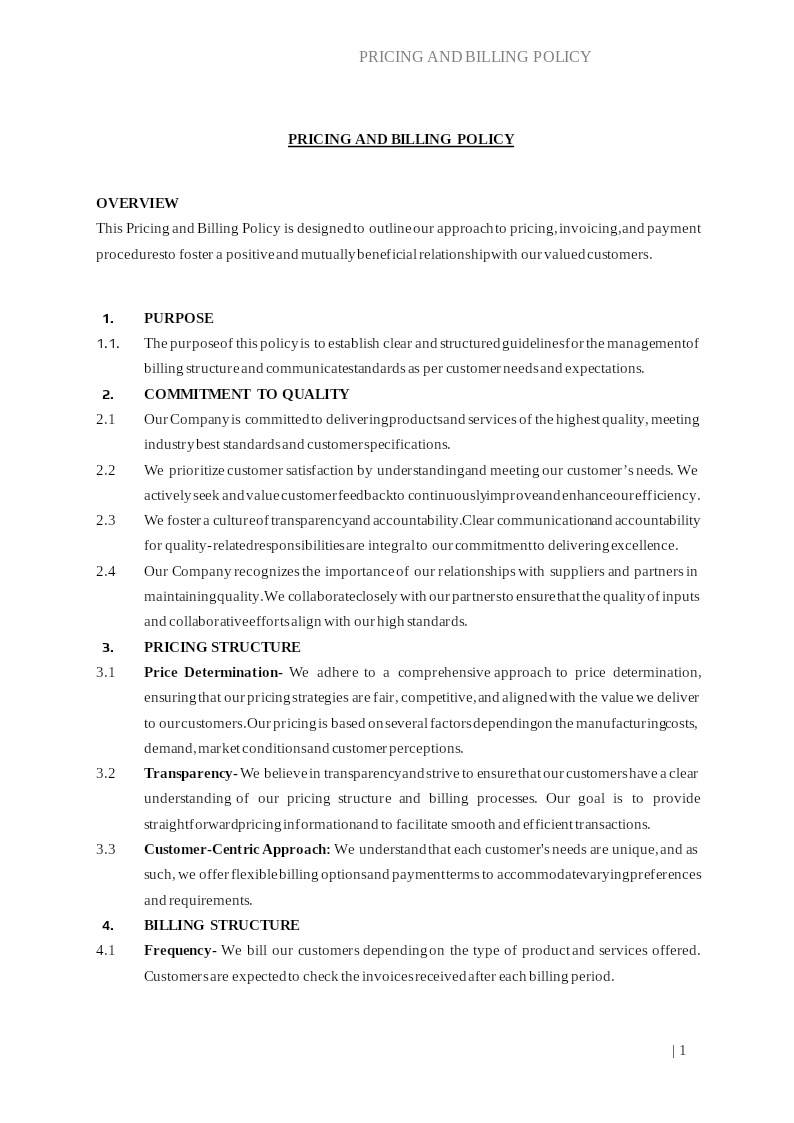
PRICING AND BILLING POLICY
How does it work?
1. Choose this template
Start by clicking on "Fill out the template"
2. Complete the document
Answer a few questions and your document is created automatically.
3. Save - Print
Your document is ready! You will receive it in Word and PDF formats. You will be able to modify it.
Understanding Pricing And Billing Policy in U.S.
A Pricing and Billing Policy is an essential business document that outlines how a company sets prices for its products or services and the procedures it follows to invoice customers and collect payments. It establishes clear standards for pricing, billing cycles, invoicing methods, payment options, refunds, and late-payment handling. In the United States, a well-structured Pricing and Billing Policy ensures compliance with federal and state regulations, prevents disputes, improves financial transparency, and builds customer trust. It also helps businesses maintain consistent billing practices, streamline operations, and strengthen overall financial management.
Where Pricing and Billing Policies Are Commonly Used
• E-commerce platforms
• Subscription and SaaS-based services
• Professional service firms (legal, consulting, marketing, etc.)
• Healthcare and wellness service providers
• Retail and wholesale businesses
• Telecommunications and utility providers
• Educational institutions and training providers
• Transportation, logistics, and delivery services
Any business that charges customers or bills for services can benefit from a clear Pricing and Billing Policy.
Different Types of Pricing and Billing Policies
- Standard Pricing Policy: Covers retail pricing, discounts, and promotional pricing structures.
- Subscription & Recurring Billing Policy: Defines monthly/annual billing cycles, renewals, and cancellations.
- Service-Based Billing Policy: Includes hourly rates, milestone-based billing, project fees, and additional charges.
- Refunds & Cancellations Policy: Explains rules for refunds, returns, cancellations, and credits.
- Late Payment & Collections Policy: Outlines penalties, grace periods, and collection procedures.
Why Legal Guidance May Be Necessary
Legal consultation becomes essential when:
• Your business operates across multiple U.S. states with differing consumer laws
• Your policy includes automatic renewals (subject to state “Auto-Renewal Laws”)
• You collect recurring payments, deposits, or advance fees
• You handle customer financial data (triggering compliance with PCI DSS and certain state privacy laws)
• You operate in regulated industries such as healthcare, finance, or insurance
• You want to include liability limitations, indemnities, or binding arbitration terms
• Your pricing involves complex licensing or IP-based fee structures
Legal review ensures the policy is enforceable, compliant, and tailored to your business.
How to Work With This Pricing and Billing Policy
• Clearly describe pricing structures, including any variables or additional fees
• Provide transparent invoicing procedures and accepted payment methods
• Specify due dates, late fees, grace periods, and collections processes
• Include rules for refunds, pro-rations, credits, or service cancellations
• Ensure compliance with FTC consumer protection rules and state billing laws
• Update the policy as pricing changes or new services are introduced
• Make the policy accessible and easy for customers to understand
• Obtain customer acknowledgment when required
These steps create a clear, fair, and legally compliant billing environment.
Frequently Asked Questions
Q1. Why is a Pricing and Billing Policy important for U.S. businesses?
A Pricing and Billing Policy ensures financial transparency and sets clear expectations for customers. It helps businesses comply with U.S. consumer protection laws, reduces disputes, and establishes consistent billing procedures. This builds stronger customer trust while safeguarding the company’s financial interests.
Q2. Does a Pricing and Billing Policy help prevent billing disputes?
Yes. A well-defined policy outlines pricing, invoicing timelines, late fees, refunds, and payment rules, leaving little room for misunderstanding. This documentation protects both the business and the customer by providing written standards that can be referenced if disagreements occur.
Q3. Are businesses legally required to maintain a Pricing and Billing Policy?
While not always mandatory, many U.S. industries must comply with transparency rules set by federal and state agencies. A formal policy helps businesses meet those legal obligations and ensures customers receive clear and accurate billing information, reducing compliance risks.
Q4. Can a Pricing and Billing Policy limit a company’s liability?
Yes, when drafted correctly. The policy can include disclaimers, billing limitations, and error-correction procedures that reduce exposure to claims. However, these clauses must be legally compliant and reasonable under U.S. consumer protection standards to be enforceable.
Q5. Should a lawyer review a Pricing and Billing Policy?
Legal review is highly recommended, especially for subscription models, automatic renewals, financial services, or businesses operating across multiple states. Lawyers ensure the policy meets U.S. regulatory requirements and includes enforceable terms that protect the business.
Q6. How often should a Pricing and Billing Policy be updated?
Businesses should update their policy whenever pricing changes, new services are added, or regulations evolve. Regular reviews, at least once per year, help maintain accuracy and compliance. Updates also ensure customers continue to receive current and transparent billing information.
Q7. Can a Pricing and Billing Policy include automatic renewals?
Yes, but automatic renewals must comply with state-specific Auto-Renewal Laws (ARLs) and FTC guidelines. These laws require clear disclosures, renewal notifications, and easy cancellation methods. A lawyer can help draft compliant renewal terms for subscriptions or memberships.
Q8. What should be included in a strong Pricing and Billing Policy?
A robust policy includes pricing details, invoicing schedules, payment options, late-payment rules, refund and cancellation procedures, tax guidelines, and dispute resolution methods. These elements help standardize billing practices and create a clear financial relationship between the business and its customers.