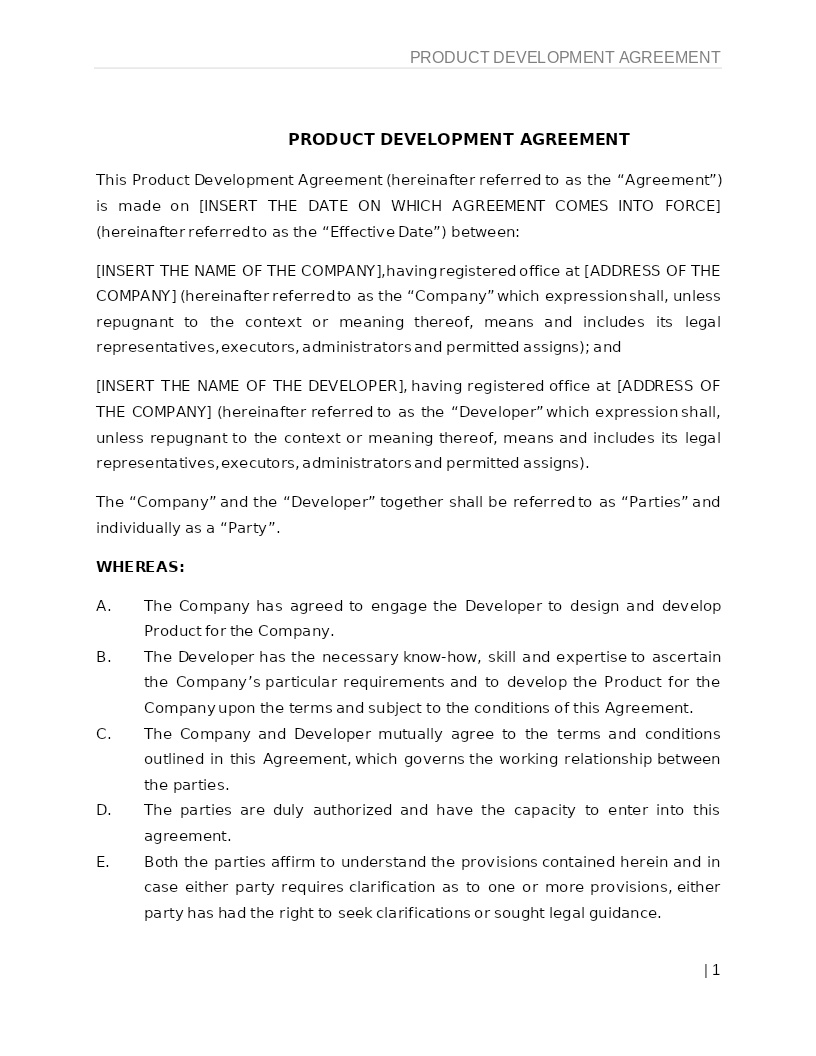
PRODUCT DEVELOPMENT AGREEMENT
How does it work?
1. Choose this template
Start by clicking on "Fill out the template"
2. Complete the document
Answer a few questions and your document is created automatically.
3. Save - Print
Your document is ready! You will receive it in Word and PDF formats. You will be able to modify it.
Facilitating Innovation and Contractual Clarity Through a Product Development Agreement
A Product Development Agreement is a legally binding contract that outlines the terms, obligations, and responsibilities associated with the collaborative creation, design, testing, and commercialization of a new product. Drafted in accordance with U.S. commercial-contract principles and intellectual property laws under the U.S. Copyright Act, Patent Act, and Lanham Act, and applicable confidentiality and data-security regulations, this agreement establishes the legal structure necessary to govern how parties work together to develop innovative technologies, consumer goods, software, or other proprietary deliverables. It defines ownership rights, development milestones, approval processes, payment structures, confidentiality obligations, warranties, and mechanisms for resolving disputes ensuring both parties understand their legal rights and obligations throughout the development lifecycle.
A comprehensive Product Development Agreement details every stage of the product-development process, including conceptualization, engineering, prototyping, testing, modification, and final delivery. It establishes performance standards, allocates responsibility for materials and labor, and specifies timelines, technical specifications, and quality-control requirements. It also outlines intellectual-property ownership and licensing arrangements, clarifies whether deliverables will be subject to “work-for-hire” principles, and identifies any pre-existing IP contributed by either party. The agreement further governs the handling of confidential information, security obligations for sensitive data, indemnification requirements, risk allocation, and regulatory compliance duties. By implementing this agreement, organizations protect their proprietary interests, ensure predictable development schedules, and minimize legal disputes during collaborative product creation.
Where Product Development Agreements Are Commonly Used
These agreements are widely used across industries that rely on innovation, creative work, or engineering, including:
- Technology startups developing software, applications, or digital tools
- Manufacturing companies creating physical products, components, or prototypes
- Medical-device developers subject to FDA regulatory pathways
- Consumer-goods companies launching branded merchandise or private-label items
- Engineering firms designing hardware, robotics, or industrial equipment
- Research institutions collaborating with commercial partners on scientific innovations
- Marketing or creative agencies producing proprietary products for clients
- E-commerce and retail businesses creating custom product lines
Any business involved in designing, improving, or producing new products benefits from a clearly drafted Product Development Agreement.
Different Types of Product Development Agreements
1. Software Development Agreements: Cover application development, coding, testing, updates, and licensing.
2. Hardware or Engineering Development Agreements: Address prototyping, manufacturing processes, structural engineering, and material sourcing.
3. Creative Product Development Agreements: Used for branding, packaging, design, and artistic contributions.
4. Research and Innovation Collaboration Agreements: Apply to scientific or academic partnerships requiring shared risk and joint ownership considerations.
5. OEM and Private-Label Development Agreements: Define rights and obligations for custom products manufactured under another brand’s name.
When Legal Guidance Becomes Helpful
Legal counsel should be consulted when:
- Intellectual property ownership or licensing arrangements require precise definition
- Development involves patented, trademarked, or proprietary technologies
- Parties are contributing pre-existing IP that must be protected
- Confidential information or trade secrets will be shared
- Regulations govern product testing, safety, labeling, or market claims
- Milestone-based payments, warranties, or liability provisions need customization
- Joint ownership, royalties, or revenue-sharing terms are negotiated
- The agreement must protect against infringement or misappropriation of IP
Legal review ensures the agreement complies with U.S. contract and IP laws while minimizing financial, operational, and legal risk.
How to Work with This Template
- Identify the scope of development, including technical requirements and functional objectives
- Define all phases of work design, prototyping, testing, revisions, and final delivery
- Allocate responsibilities for project management, communication, and resource contributions
- Establish timelines, deadlines, and milestone-based approval processes
- Include detailed IP provisions addressing ownership, licenses, work-for-hire status, and pre-existing materials
- Define confidentiality obligations and data-security requirements
- Outline warranties, performance guarantees, and compliance statements
- Specify payment terms, including retainer fees, milestone payments, and reimbursement rules
- Establish mechanisms for testing, inspection, acceptance, and revisions
- Include termination provisions and post-termination rights to materials and intellectual property
- Require signatures or digital acknowledgments to formalize acceptance of the agreement
This template reflects standard commercial practices for product development in the United States.
Frequently Asked Questions
Q1. What is a Product Development Agreement, and why is it important?
A Product Development Agreement is a contract that governs the creation, testing, and delivery of a new product. It is important because it establishes expectations, protects intellectual property, and prevents disputes by defining responsibilities and deliverables.
Q2. Who owns the intellectual property created under this agreement?
Ownership depends on contract terms. Many agreements classify deliverables as “work-for-hire,” making the client the owner, while others retain developer ownership with licensing rights. Clear IP clauses are essential.
Q3. Are product developers required to maintain confidentiality?
Yes. Most agreements include confidentiality provisions to protect trade secrets, proprietary information, and sensitive technical data.
Q4. Does this agreement cover prototypes and revisions?
Yes. Product Development Agreements generally include multiple development stages, such as conceptual design, prototyping, testing, and final adjustments.
Q5. Can the agreement include milestone-based payments?
Yes. Milestone payments are common and ensure that funds are tied to measurable progress.
Q6. What happens if the product does not meet specifications?
The agreement typically includes acceptance testing, revision procedures, and remedies if deliverables fail to meet agreed-upon requirements.
Q7. Can the agreement be used for software development?
Absolutely. Software development is one of the most common uses for Product Development Agreements.
Q8. What if pre-existing IP is used in the project?
The agreement must disclose all pre-existing IP and specify its ownership, permitted use, and any licensing restrictions.
Q9. Are warranties or guarantees typically included?
Yes. Agreements often include warranties related to originality, non-infringement, performance, and quality standards.
Q10. Should legal counsel review a Product Development Agreement?
Yes. Because these agreements involve intellectual property, complex deliverables, and financial commitments, legal review is strongly recommended.