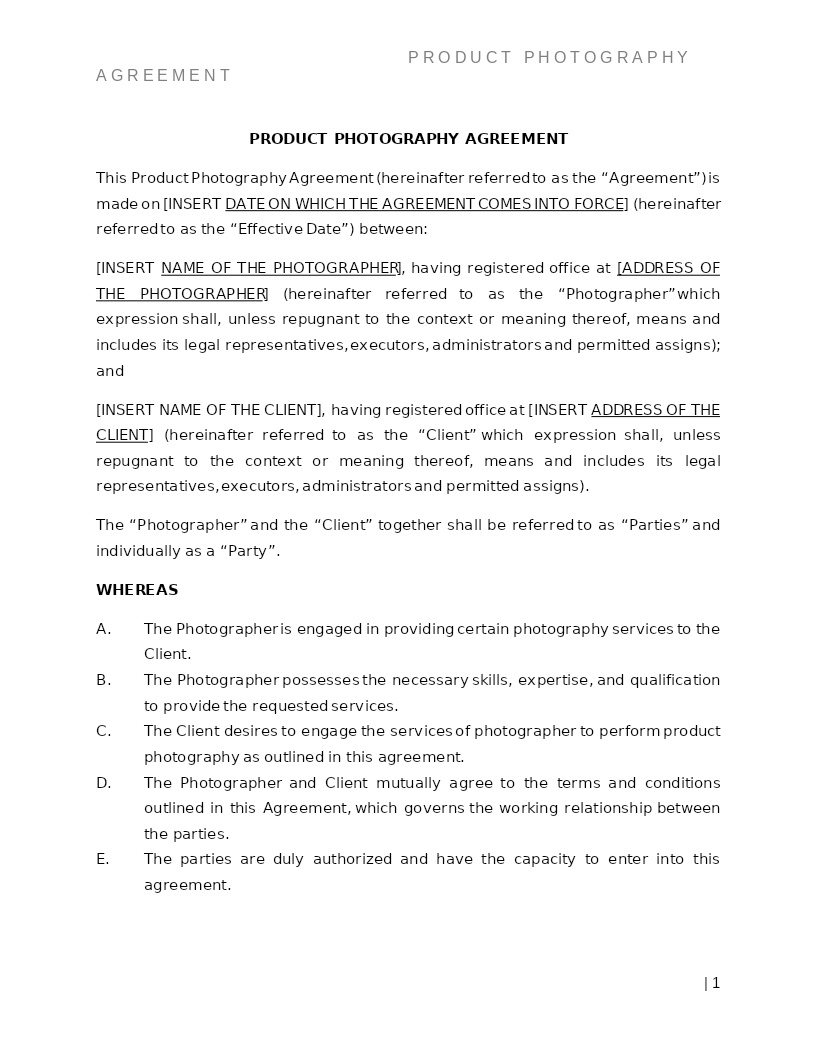
PRODUCT PHOTOGRAPHY AGREEMENT
How does it work?
1. Choose this template
Start by clicking on "Fill out the template"
2. Complete the document
Answer a few questions and your document is created automatically.
3. Save - Print
Your document is ready! You will receive it in Word and PDF formats. You will be able to modify it.
Understanding Product Photography Agreement in U.S.
A Product Photography Agreement is a legally binding contract between a photographer and a client that outlines the terms and conditions for creating professional product images. It defines the scope of services, number and type of products, style requirements, deadlines, and pricing. The agreement also addresses usage rights, copyright ownership, revisions, confidentiality, and any additional costs. A well-structured Product Photography Agreement protects both parties, ensures clear expectations, and helps avoid conflicts by establishing a transparent and legally compliant working relationship under U.S. commercial photography laws.
Where Product Photography Agreements Are Commonly Used
Product Photography Agreements are widely used in:
- E-commerce businesses and online stores
- Amazon, Etsy, Shopify, and marketplace sellers
- Branding and marketing agencies
- Consumer product manufacturers
- Fashion, beauty, electronics, and lifestyle brands
- Catalog, advertising, and promotional shoots
- Influencer, social media, and content production projects
Any business needing high-quality images for sales, marketing, or branding benefits from a formal Product Photography Agreement.
Different Types of Product Photography Agreements You May Encounter
- Standard Product Photography Agreement: Covers typical product shoots for catalogs, websites, or online listings.
- E-commerce Photography Agreement: Designed for online retail platforms with specific image requirements (e.g., Amazon).
- Lifestyle Product Photography Agreement: Covers styled shoots with models, props, or environments.
- Commercial Usage & Licensing Agreement: Focuses on copyright ownership, usage rights, and licensing fees.
- Retainer or Ongoing Content Agreement: Used when a brand requires constant product images each month.
When Legal Guidance Becomes Helpful
Legal consultation becomes important when:
- Complex licensing rights (exclusive, perpetual, commercial) are required
- Products involve regulated industries such as food, supplements, or cosmetics
- The photographer must access confidential product designs or prototypes
- Intellectual property ownership needs customized terms
- The shoot involves models, minors, or international usage rights
- The agreement involves large budgets, multi-stage campaigns, or risk of liability
- Images will be used across multiple jurisdictions or global markets
Lawyers ensure the agreement is enforceable, compliant, and tailored to industry needs.
How to Work With This Product Photography Agreement
- Define the scope clearly , number of items, backgrounds, editing style, and deliverables
- Set payment terms and additional charges like props, rentals, or rush fees
- Document usage rights (commercial, online, print, exclusive, or limited)
- Specify revisions, reshoots, and timelines
- Establish confidentiality and data-handling responsibilities
- Clarify cancellation, rescheduling, and liability measures
- Ensure both parties sign before work begins
Frequently Asked Questions
Q1. Why is a Product Photography Agreement important?
A Product Photography Agreement ensures both parties understand the scope of the project, payment terms, and usage rights. It helps prevent disputes by documenting responsibilities and expectations. The contract also provides legal protection under U.S. copyright and commercial photography laws.
Q2. Who owns the copyright to product photos under U.S. law?
In the U.S., the photographer automatically owns the copyright unless the agreement states otherwise. Most clients receive a license to use the images for commercial purposes. The agreement clearly defines whether usage rights are exclusive, perpetual, limited, or require additional fees.
Q3. What should be included in the scope of work for product photography?
The scope of work typically includes the number of products, desired style, backgrounds, angles, editing requirements, and final deliverables. Detailed scope descriptions help avoid misunderstandings and ensure the photographer produces images that align with the client’s branding and marketing needs.
Q4. How are payment terms handled in a Product Photography Agreement?
Payment terms may include a deposit, milestone payments, or full payment upon completion. The agreement also outlines additional charges such as props, rentals, travel, or rush fees. Documenting payment procedures helps avoid billing disputes and ensures smooth transactions.
Q5. Are usage rights and licensing included in the agreement?
Yes. The agreement specifies how the client may use the images, online, in print, on social media, or for advertising. This protects the photographer’s intellectual property while giving the client the appropriate commercial rights. Clear licensing prevents unauthorized or overextended usage.
Q6. What happens if the client needs revisions or reshoots?
Most agreements include a set number of revisions, with additional revisions billed separately. Reshoots may be required due to client changes, defects in products, or creative adjustments. Clearly defined revision policies help manage expectations and prevent delays.
Q7. Does the agreement cover confidentiality for unreleased products?
Yes. When photographing prototypes, new product launches, or proprietary designs, confidentiality clauses protect sensitive business information. This ensures images and product details are not shared publicly without authorization.
Q8. Can the agreement include cancellation or rescheduling terms?
Absolutely. Cancellation policies protect the photographer’s time and resources, while rescheduling terms help manage unexpected changes. These clauses outline fees, notice periods, and conditions under which the client may cancel or modify the project.