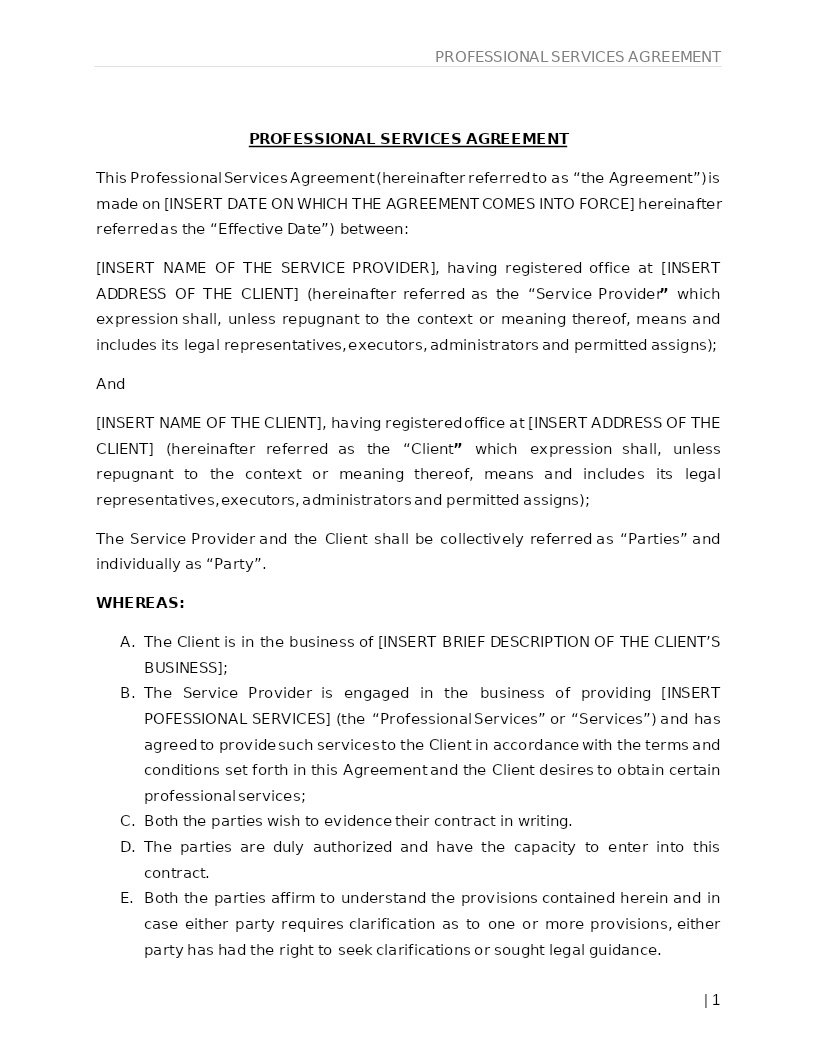
PROFESSIONAL SERVICES AGREEMENT
How does it work?
1. Choose this template
Start by clicking on "Fill out the template"
2. Complete the document
Answer a few questions and your document is created automatically.
3. Save - Print
Your document is ready! You will receive it in Word and PDF formats. You will be able to modify it.
Understanding Professional Services Agreement in U.S.
A Professional Services Agreement is a legally binding contract between a business and a service provider that outlines the terms under which professional services will be delivered. It defines the scope of work, compensation, deliverables, timelines, responsibilities, and legal protections for both parties. This Agreement ensures clarity, prevents scope creep, and provides a structured framework for resolving disputes. Commonly used by consultants, freelancers, agencies, and specialized service providers, the Agreement helps maintain transparency, professionalism, and compliance with U.S. contract and business laws.
Where Professional Services Agreements Are Commonly Used
Professional Services Agreements are widely used in:
- Consulting services (business, IT, HR, financial, marketing)
- Freelancers and independent contractors
- Creative professionals (designers, writers, videographers)
- Technical service providers (software developers, engineers)
- Agencies offering marketing, branding, or digital services
- Professional firms such as accountants, auditors, and analysts
Any business relationship requiring structured professional work benefits from a formal agreement.
Different Types of Professional Services Agreements You May Encounter
- Standard Professional Services Agreement: Used for general consulting and professional tasks.
- Independent Contractor Agreement: Specifically for freelancers working without employment status.
- Master Services Agreement (MSA): Long-term contract governing multiple projects or phases.
- Retainer-Based Services Agreement: Covers ongoing monthly professional work or support.
- Project-Based Services Agreement: Used for one-time or milestone-based deliverables.
When Legal Guidance Becomes Helpful
Legal consultation is recommended when:
- Confidential or sensitive business data is involved
- Intellectual property ownership or licensing needs clarification
- Payment structures, retainer terms, or milestone schedules are complex
- The services require compliance with industry regulations or state licensing laws
- Large budgets or long-term engagements increase financial risk
- The contract includes non-compete, non-solicitation, or indemnification clauses
Lawyers help ensure legally enforceable, customized, and industry-appropriate terms.
How to Work With This Professional Services Agreement
- Clearly define the scope of work, deliverables, and deadlines
- Set transparent payment terms, invoicing rules, and additional fee structures
- Establish confidentiality, data protection, and intellectual property rights
- Outline revision limits, approval timelines, and communication procedures
- Include liability limitations, warranties, and dispute resolution processes
- Ensure the Agreement is signed by both parties before work begins
Frequently Asked Questions
Q1. Why is a Professional Services Agreement important?
A Professional Services Agreement provides legal clarity and prevents misunderstandings by defining the project scope, responsibilities, payment terms, and deadlines. It protects both parties and ensures compliance with U.S. contract laws, reducing the likelihood of disputes.
Q2. What should be included in a Professional Services Agreement?
Key components include the scope of work, deliverables, timelines, payment terms, confidentiality, intellectual property ownership, revision policies, liability limitations, and dispute resolution procedures. These elements ensure the relationship is structured and transparent.
Q3. Does this Agreement protect intellectual property rights?
Yes. The Agreement clarifies whether the client or the service provider owns the final work product. It may grant the client full ownership, limited usage rights, or license-based access. Clear IP terms prevent future disputes over usage, distribution, or modification.
Q4. How are payments handled in a Professional Services Agreement?
Payment terms may include flat fees, hourly rates, milestone payments, or retainers. The Agreement establishes due dates, invoicing procedures, and late-fee policies, ensuring financial transparency and minimizing billing conflicts.
Q5. Does the Agreement cover confidentiality and data protection?
Absolutely. Most Professional Services Agreements include confidentiality and non-disclosure clauses that protect the client’s sensitive information, trade secrets, and proprietary data. These clauses help maintain trust and safeguard business operations.
Q6. Can the scope of services be changed after signing the Agreement?
Yes, but changes must be documented through written amendments, change orders, or additional agreements. This prevents scope creep and ensures that any expanded work includes proper approvals, adjusted timelines, and revised pricing.
Q7. What happens if one party breaches the Agreement?
The Agreement outlines remedies such as termination rights, penalties, and dispute resolution methods like mediation, arbitration, or court proceedings. These provisions ensure a structured and fair process for resolving breaches.
8. Are timelines and deliverables enforceable under this Agreement?
Yes. Timelines, milestones, and deliverables listed in the Agreement are legally enforceable. Both parties must meet their obligations unless delays occur due to force majeure or mutually agreed-upon changes.