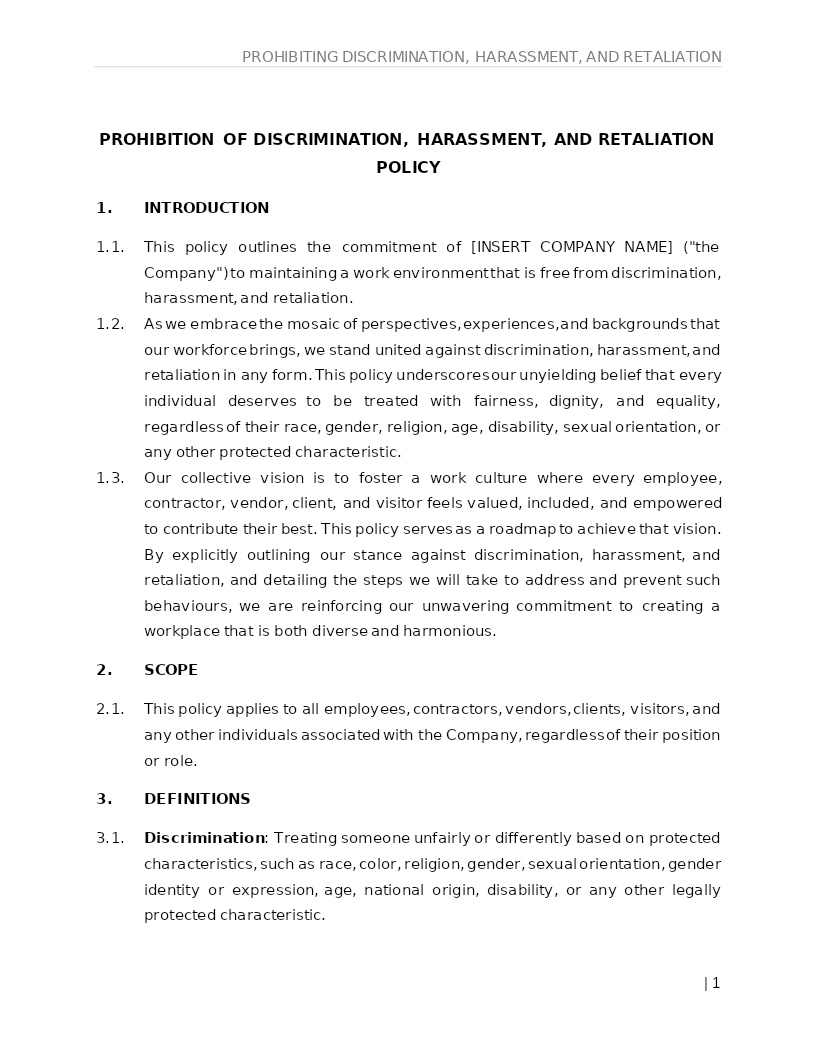
PROHIBITION OF DISCRIMINATION, HARASSMENT, AND RETALIATION POLICY
How does it work?
1. Choose this template
Start by clicking on "Fill out the template"
2. Complete the document
Answer a few questions and your document is created automatically.
3. Save - Print
Your document is ready! You will receive it in Word and PDF formats. You will be able to modify it.
Understanding Prohibition Of Discrimination, Harassment, and Retaliation Policy in U.S.
A Prohibition of Discrimination, Harassment, and Retaliation Policy establishes an organization’s commitment to maintaining a workplace where all employees are treated fairly, respectfully, and without bias. The policy defines unacceptable behaviors, such as discrimination, harassment, bullying, or retaliatory actions based on protected characteristics, and sets out procedures for reporting, investigating, and resolving complaints.
Aligned with U.S. federal, state, and local laws, this policy promotes an inclusive and safe work environment by protecting employee rights, encouraging accountability, and ensuring fair treatment across all levels of the organization.
Where Prohibition of Discrimination, Harassment, and Retaliation Policies Are Commonly Used
These policies are essential in workplaces across all industries, particularly environments where employee interaction, client engagement, or public service is central. They are widely implemented in:
• Corporate offices, retail, hospitality, and service-based industries
• Healthcare, education, and government institutions
• Technology, finance, and professional services
• Manufacturing, logistics, and field-based operations
• Non-profits, public organizations, and community service sectors
• Any workplace with diverse teams or public-facing roles
Any organization seeking to uphold fairness, legal compliance, and employee well-being benefits from this policy.
Different Types of Prohibited Conduct You May Encounter
- Discrimination: Unfair treatment based on protected characteristics such as race, color, gender, religion, age, national origin, disability, pregnancy, genetic information, sexual orientation, or veteran status.
- Harassment: Unwelcome conduct, including verbal, visual, or physical actions, that creates a hostile, intimidating, or offensive work environment. This includes sexual harassment as defined under Title VII and EEOC regulations.
- Retaliation: Any adverse action taken against an employee for reporting misconduct, participating in investigations, or exercising legal rights.
- Bullying or Abusive Conduct: Behavior that threatens, humiliates, or undermines an individual, even if not tied to a protected characteristic.
- Microaggressions or Bias-Related Conduct: Subtle but harmful actions or comments that reinforce stereotypes or unfair treatment.
When Legal Guidance Becomes Helpful
Legal counsel plays a vital role in drafting and customizing this policy because:
• U.S. laws, including Title VII, ADA, ADEA, FMLA, and state civil rights laws, set strict guidelines for employer obligations.
• Organizations must ensure their policies align with EEOC standards and local anti-discrimination requirements.
• Lawyers help define investigative procedures that protect both complainants and the organization.
• Multi-state employers must comply with varying state-specific harassment training and reporting laws.
• Legal experts ensure disciplinary actions and reporting systems are fair, consistent, and legally defensible.
• Proper legal guidance reduces risks of lawsuits, regulatory penalties, or reputational damage.
A legally compliant policy protects employees and helps organizations maintain an ethical and respectful workplace.
How to Work With This Policy Template
• Clearly define protected characteristics consistent with federal and state laws.
• Establish procedures for reporting, investigating, and resolving complaints.
• Outline consequences for violations and ensure consistent enforcement.
• Train employees and supervisors on recognizing and preventing discrimination and harassment.
• Ensure compliance with state-required harassment prevention training (e.g., California AB 1825, New York SHIELD Act).
• Maintain confidentiality throughout complaint-handling processes.
• Review and update the policy regularly based on legal updates or organizational changes.
Frequently Asked Questions
Q1. Why is a Prohibition of Discrimination, Harassment, and Retaliation Policy essential?
This policy helps create a safe, inclusive, and respectful workplace where employees feel valued and protected. It clearly states that discriminatory or harassing behaviors will not be tolerated. By outlining expectations and reporting procedures, the policy reduces risks and supports a healthy work culture.
Q2. How does this policy ensure compliance with U.S. laws?
The policy aligns with federal statutes such as Title VII, ADA, ADEA, and state/local civil rights laws. It ensures the organization follows EEOC guidelines and implements proper investigative procedures. Compliance reduces legal liabilities, promotes fairness, and supports ethical business practices.
Q3. What types of behaviors are prohibited under this policy?
The policy prohibits discrimination, harassment (including sexual harassment), bullying, microaggressions, and retaliatory actions. These behaviors are unacceptable regardless of intent and may violate workplace standards or legal protections. Employees are held accountable for maintaining professional conduct.
Q4. How is a complaint handled under this policy?
Complaints are handled promptly, confidentially, and impartially. The organization conducts a fair investigation, interviews relevant parties, and makes decisions based on facts. Employees are protected from retaliation throughout the process, ensuring a safe environment for reporting concerns.
Q5. Does this policy apply to all employees?
Yes. The policy applies to employees at all levels, full-time, part-time, temporary, interns, contractors, supervisors, and executives. It also covers interactions with clients, vendors, customers, and visitors to ensure comprehensive protection.
Q6. How does the organization prevent retaliation?
The policy explicitly prohibits retaliation against individuals who report concerns, participate in investigations, or exercise their rights. Any retaliatory behavior is subject to strict disciplinary action. This ensures employees feel secure and supported when raising concerns.
Q7. What are the benefits of implementing this policy?
Benefits include increased employee morale, reduced turnover, improved productivity, and enhanced workplace safety. It strengthens the organization’s reputation, supports diversity and inclusion efforts, and minimizes legal risks through proactive compliance.
Q8. Is this policy effective for remote or hybrid workplaces?
Absolutely. Discrimination and harassment can occur through digital communication as well. The policy applies to emails, chats, video conferences, and all virtual interactions. This ensures equal protection for employees working on-site, remotely, or in hybrid setups.