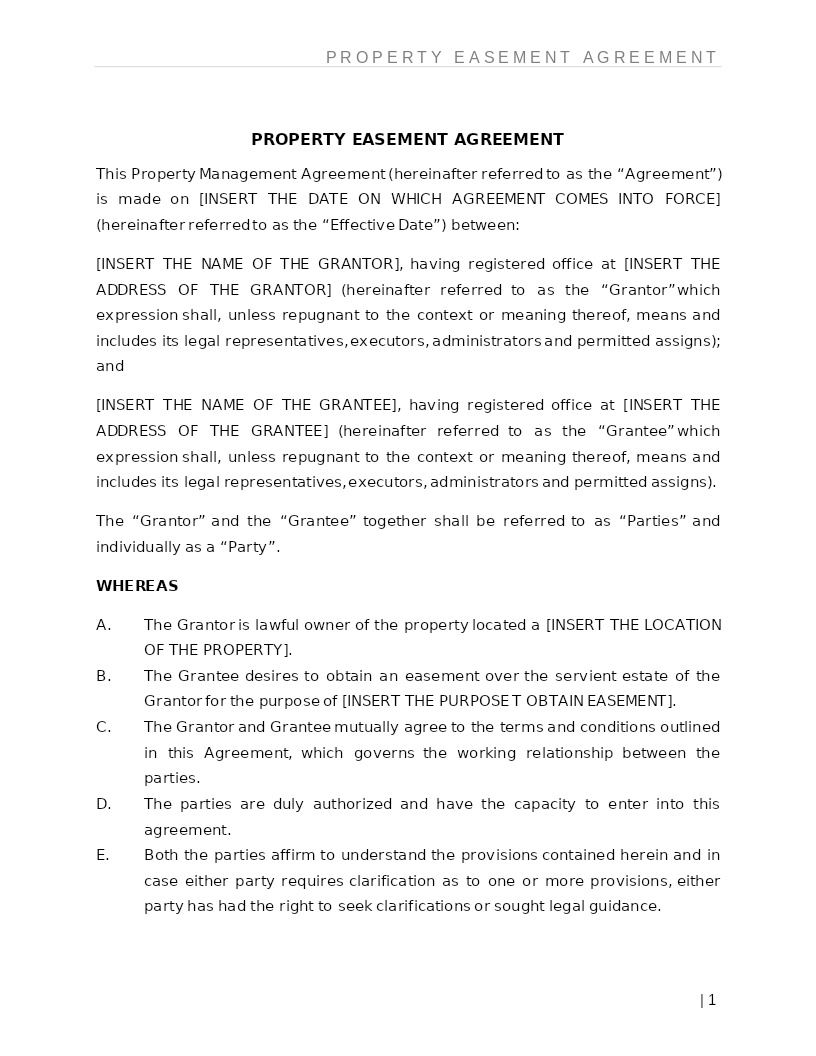
PROPERTY EASEMENT AGREEMENT
How does it work?
1. Choose this template
Start by clicking on "Fill out the template"
2. Complete the document
Answer a few questions and your document is created automatically.
3. Save - Print
Your document is ready! You will receive it in Word and PDF formats. You will be able to modify it.
Understanding Property Easement Agreement in U.S.
A Property Easement Agreement is a legally binding contract that allows one party (“the easement holder”) to use another party’s land for a specific and limited purpose, without transferring any form of property ownership. Common easements include rights of way, utility access, drainage systems, shared driveways, and maintenance pathways. The agreement clearly defines the scope, boundaries, responsibilities, and duration of the easement in compliance with U.S. property and land-use laws.
A well-drafted easement agreement helps prevent misunderstandings, provides legal protection to both parties, and ensures continued access or utility installation without disrupting ownership rights. This structure promotes transparency, preserves property value, and avoids future disputes rooted in unclear land-use expectations.
Where Easement Agreements Are Commonly Used
Property Easement Agreements are typically used in situations involving:
- Access roads, right-of-way permissions, and shared driveways
- Installation and maintenance of utility lines, pipelines, water lines, or electrical grids
- Stormwater drainage, environmental access, and land surveying
- Shared fences, boundary lines, and landscaping responsibilities
- Commercial, agricultural, or residential developments requiring shared entry points
- Construction access for heavy equipment
- Emergency access requirements mandated by local laws
Anytime land use extends beyond a property’s direct owner, an easement establishes clear, enforceable boundaries.
Different Types of Property Easements You May Encounter
- Utility Easement: Grants utility companies the right to install, repair, and maintain infrastructure such as power lines, gas pipes, or water lines.
- Right-of-Way Easement: Allows individuals or entities to pass through another person’s property for access purposes.
- Ingress and Egress Easement: Provides the legal right to enter and exit a property through another parcel.
- Drainage or Environmental Easement: Permits water flow, stormwater management, or environmental conservation activities.
- Private or Reciprocal Easement: Shared between two neighboring property owners for mutual benefit (e.g., shared driveway).
When Legal Guidance Becomes Helpful
Legal guidance becomes essential when:
- The easement affects property resale value or impacts existing mortgages
- Multiple landowners, government agencies, or utility providers are involved
- The easement must comply with state-specific property laws, zoning rules, or public-access regulations
- Compensation, tax implications, or maintenance responsibilities require negotiation
- The land use affects environmental protections, water rights, or long-term infrastructure
- You need support drafting enforceable restrictions or handling liability and insurance requirements
Professional review ensures that your easement is enforceable, compliant, and aligned with long-term land-use considerations.
How to Work With This Property Easement Agreement
- Identify both parties and describe the exact location of the easement area
- Define the purpose, limits, and scope of land use
- Specify maintenance responsibilities, access schedules, and restrictions
- Clarify compensation, if any, and outline terms for improvements or repairs
- Include duration, renewal options, and termination conditions
- Ensure the agreement complies with state and county land-use laws
- Record the easement with local authorities when required
- Review and sign electronically or in hard copy
Frequently Asked Questions
Q1. Why do property owners need a Property Easement Agreement?
A Property Easement Agreement helps prevent future conflicts by clearly defining how and why one party may access or use another’s land. It protects property rights while enabling practical uses like utility installation or shared access routes. This clarity is essential for long-term legal compliance, especially during property sales or land development activities.
Q2. Is an easement permanent, or can it be limited in duration?
Easements may be permanent, temporary, or tied to a specific event or project. The agreement can define a fixed term or allow the easement to continue indefinitely until revoked under agreed conditions. Clearly outlining the duration prevents future disputes and ensures both parties understand when and how the easement may end.
Q3. Does an easement affect property value or resale?
Yes, easements can influence value depending on their scope and limitations. Some improve accessibility or utility availability, increasing property value, while others may restrict construction or landscaping. Disclosing easements is legally required during real estate transactions, and a well-drafted agreement helps avoid complications during property sales.
Q4. Can an easement be changed or terminated?
Easements may be modified or terminated through mutual agreement, expiration of the term, abandonment, or legal action. Adjustments should be documented in writing and recorded if the original easement is on public record. Consulting legal professionals helps ensure changes comply with state property laws.
Q5. Who is responsible for maintaining the easement area?
Maintenance responsibilities differ based on the agreement. Some easements require the easement holder to manage upkeep, while others assign responsibility to the property owner. Defining these duties prevents misunderstandings related to damage, repairs, and general care of the easement area.
Q6. Can a property owner block access to an easement?
No. Once legally recorded, a valid easement grants the easement holder the right to access or use the land as outlined. Blocking or interfering with this access can result in legal penalties. Clear signage, access rules, and boundaries help ensure smooth coexistence between both parties.
Q7. Are easements required to be recorded with local authorities?
Many easements, especially those involving long-term or ongoing use, must be recorded with the county recorder’s office to be legally enforceable against future property owners. Recording ensures transparency during property transfers and protects both parties’ rights under local property laws.
Q8. What happens if the easement area is damaged during use?
If damage occurs during authorized use, responsibility typically falls on the easement holder, unless otherwise stated in the agreement. Repair terms, liability clauses, and insurance requirements should be clearly included to avoid disputes and ensure timely restoration of the affected area.