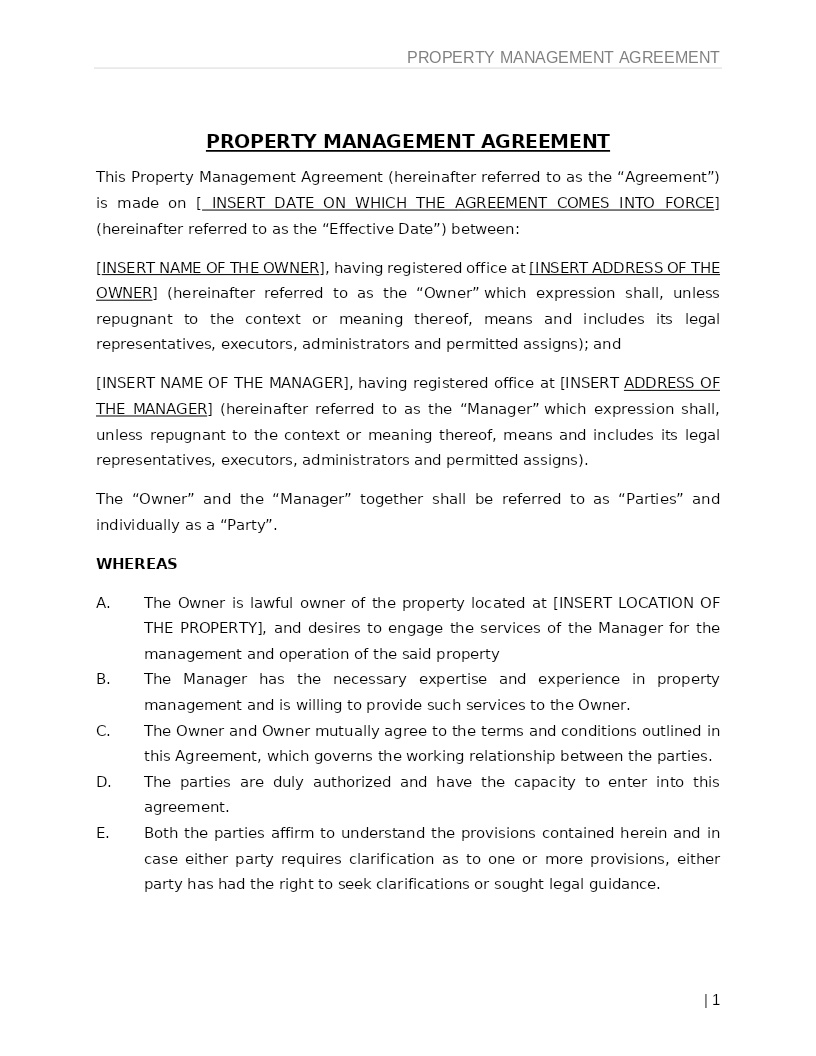
PROPERTY MANAGEMENT AGREEMENT
How does it work?
1. Choose this template
Start by clicking on "Fill out the template"
2. Complete the document
Answer a few questions and your document is created automatically.
3. Save - Print
Your document is ready! You will receive it in Word and PDF formats. You will be able to modify it.
Understanding Property Management Services in the United States
A Property Management Agreement is a legally binding contract between a property owner (landlord) and a property manager or management company. It outlines how the manager will oversee, maintain, lease, and operate a rental property on the owner’s behalf. This agreement typically defines essential responsibilities such as tenant screening, rent collection, handling repairs, financial reporting, enforcing lease terms, and responding to emergencies.
In the United States, property management arrangements must follow federal, state, and local housing laws, including landlord-tenant regulations, fair housing rules, habitability standards, and security deposit laws. A well-drafted Property Management Agreement protects both the owner’s investment and the manager’s role, ensuring a smooth, compliant, and professional property operation.
Where Property Management Agreements Are Commonly Used
Property Management Agreements are used for:
- Residential rental homes, apartments, and multi-family buildings
- Commercial properties such as retail spaces, offices, and warehouses
- Vacation rentals and short-term rental properties (Airbnb/VRBO)
- Mixed-use developments
- Condominiums and homeowner association (HOA) management
- Investment properties owned by out-of-state or absentee landlords
Any time a property owner hires a professional to manage daily operations, a written agreement establishes clear expectations and legal protection.
Different Types of Property Management Agreements You May Encounter
- Residential Property Management Agreement: Covers services for single-family homes, apartments, or multi-unit residential complexes.
- Commercial Property Management Agreement: Designed for offices, retail spaces, industrial units, or business properties requiring specialized oversight.
- Vacation/Short-Term Rental Management Agreement: Includes marketing, guest coordination, cleaning services, and turnover management for short-term rentals.
- Full-Service Management Agreement: Covers all aspects of property operation, from leasing to maintenance, financial administration, and tenant relations.
- Lease-Only or Tenant Placement Agreement: The manager is hired only to find tenants, screen applicants, and prepare lease documents; the owner handles ongoing management.
When Legal Guidance Becomes Helpful
Legal consultation is recommended when:
- The property spans multiple states or jurisdictions
- Complex rent structures, revenue sharing, or maintenance obligations are involved
- The property manager handles security deposits under state-specific rules
- There are commercial leases with custom terms
- Liability risks exist regarding injuries, habitability, or building code compliance
- Evictions, legal notices, and tenant disputes may arise
- The agreement includes marketing, advertising, or data-handling obligations
- Owners want strict oversight of financial reporting and accounting controls
Attorneys help ensure compliance with U.S. landlord-tenant laws, fair housing standards, and state licensing requirements for property managers.
How to Work With This Template
- Identify the property owner and management company with legal details
- Describe the property and the scope of management services
- Outline rent collection procedures, lease management, and tenant screening
- Define maintenance responsibilities, repair approval limits, and vendor coordination
- Include financial reporting requirements and management fee structures
- Add compliance obligations under state housing laws and tenant regulations
- Specify insurance requirements, liability protections, and indemnification
- Add termination rules, notice periods, and procedures for transferring documents
- Select governing U.S. state law and dispute resolution terms
- Review and finalize together (legal consultation recommended)
- Sign electronically or on paper
This template aligns with U.S. property management industry standards and is compatible with major e-signature platforms.
Frequently Asked Questions
Q1. Why is a Property Management Agreement important for landlords and managers?
A Property Management Agreement clearly outlines responsibilities, fees, authority, and operational boundaries. It prevents disputes by documenting how daily tasks, like rent collection, maintenance, and tenant communication, will be handled. This protects both the property owner’s investment and the manager’s professional role.
Q2. Does the agreement cover tenant screening and leasing duties?
Yes. Most agreements specify how tenants will be screened, approved, and managed. This includes background checks, rental applications, signing leases, and enforcing lease terms. Clear guidelines help ensure compliance with federal Fair Housing laws and reduce tenant-related issues.
Q3. How are maintenance and repair responsibilities handled?
The agreement outlines who handles repairs, spending limits for the manager, and what requires owner approval. It may also include procedures for emergency repairs. Clear instructions prevent overspending, delays, and misunderstandings regarding property upkeep.
Q4. How are management fees and financial reporting addressed?
The contract details monthly management fees, leasing fees, and any additional charges. It also explains accounting procedures, expense handling, and frequency of financial reports. Transparent fee and reporting structures help owners track income and property expenses accurately.
Q5. Does this agreement address liability and insurance requirements?
Yes. Most agreements include liability protections, indemnification clauses, and insurance requirements for both the owner and manager. These terms reduce the risk of financial loss due to property damage, tenant injuries, or operational mistakes.
Q6. Can the property owner terminate the agreement?
Yes. Termination clauses specify notice periods, grounds for termination, and handover procedures. This ensures a smooth transition of records, tenant information, and maintenance responsibilities if the relationship ends or the owner sells the property.
Q7. Does the agreement include compliance with state landlord-tenant laws?
Absolutely. Property management agreements must align with state housing rules, security deposit laws, habitability standards, and eviction procedures. Compliance reduces legal risk and ensures the property is managed ethically and lawfully.
Q8. Can the agreement be customized for short-term rentals or commercial properties?
Yes. These agreements are flexible and can be tailored to suit Airbnb-style rentals, multi-state portfolios, commercial leases, or mixed-use buildings. Customization ensures the contract matches the unique operational requirements of each property type.