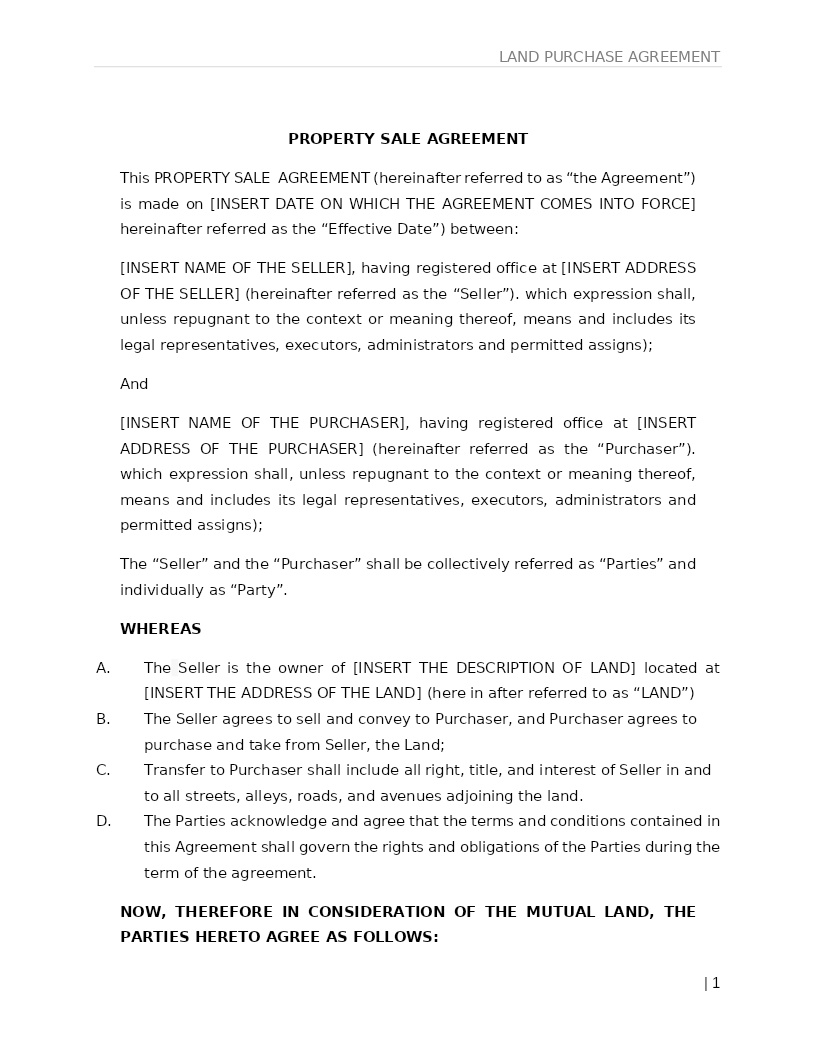
PROPERTY SALE AGREEMENT
How does it work?
1. Choose this template
Start by clicking on "Fill out the template"
2. Complete the document
Answer a few questions and your document is created automatically.
3. Save - Print
Your document is ready! You will receive it in Word and PDF formats. You will be able to modify it.
Understanding a Property Sale Agreement
Buying or selling real estate involves significant financial and legal commitments and having a well-structured Property Sale Agreement ensures the transaction moves forward smoothly and securely. This document outlines the terms under which the property will be transferred, including the sale price, disclosures, contingencies, closing process, and each party’s rights and responsibilities. It establishes a clear framework for negotiations, protects against misunderstandings, and ensures both buyer and seller are aligned on the conditions of the sale.
A Property Sale Agreement provides the structure necessary for open communication, due diligence, and a smooth transaction, giving both parties confidence as they proceed toward closing.
Where Property Sale Agreements Are Commonly Used
Property Sale Agreements are standard in a wide range of real estate transactions, including:
- Residential home purchases, including single-family homes, condos, and townhouses
- Commercial real estate sales, such as offices, retail units, and industrial properties
- Land sales, including plots intended for development or investment
- Sales involving investor partnerships or private buyers
- Transactions requiring financing, inspections, or regulatory approvals
- Sales of properties involving homeowners associations (HOAs), easements, or shared amenities
Any time real estate is being conveyed from one party to another, this agreement sets clear expectations and protects both sides’ interests.
Different Types of Property Sale Agreements You May Encounter
- Standard Residential Sale Agreement: A broadly used contract that outlines terms for the sale of a home, including inspections, repairs, contingencies, and financing.
- Commercial Property Sale Agreement: A more detailed contract covering zoning, lease assignments, environmental compliance, tenant obligations, and title matters.
- Land Purchase Agreement: Used for undeveloped land or vacant lots; includes terms related to boundaries, easements, access, and development limitations.
- Installment or Seller-Financed Agreements: Used when the seller finances part or all of the purchase price, outlining payment terms and ownership transfer conditions.
- As-Is Sale Agreement: Specifies that the buyer accepts the property in its current condition, often with limited seller obligations regarding repairs.
When Legal Guidance Becomes Helpful
Not every property transaction requires elaborate legal involvement, but professional guidance becomes valuable when:
- The property involves tenants, lease transfers, or revenue-producing operations
- There are boundary disputes, easements, or title issues
- The contract includes complex contingencies, seller financing, or multi-party ownership
- Environmental, zoning, or regulatory concerns are involved
- The sale is part of a larger business acquisition, merger, or estate plan
- Cross-state or cross-border parties are involved in the transaction
Legal review reduces risk by ensuring the agreement is enforceable, compliant with state laws, and aligned with the interests of both parties.
How to Work with This Template
- Identify the buyer and seller clearly
- Provide a detailed description of the property
- Specify the purchase price and payment structure
- Include contingencies such as inspections, financing, or appraisals
- Select the governing state law
- Set timelines for closing, possession, and document delivery
- Review rights, obligations, and remedies
- Sign electronically or in hard copy
This format is compatible with major e-signature platforms and follows real estate contract standards used across the United States.
Frequently Asked Questions
Q1. What should be included in a Property Sale Agreement?
A comprehensive agreement should outline the purchase price, deposit, property description, contingencies, closing date, and each party’s obligations. Including details like required inspections, disclosures, and financing terms reduces the risk of misunderstandings. It also provides a solid foundation for addressing disputes if issues arise before closing. Clear terms make the transaction predictable for both buyer and seller.
Q2. Is a Property Sale Agreement legally binding in the U.S.?
Yes. Once both parties sign, it becomes a legally enforceable contract governed by state real estate laws. These laws ensure that the parties fulfill their obligations as agreed, and failure to do so can lead to legal consequences. Courts often rely heavily on the written contract when resolving disputes. This is why accuracy and clarity are essential.
Q3. Can the buyer back out after signing the agreement?
Buyers may withdraw only under specific circumstances—usually those listed as contingencies, such as inspection failures or financing issues. If no contingency applies, backing out can lead to loss of the deposit or legal penalties. Reviewing contingencies thoroughly helps protect the buyer’s interests. A well-drafted contract ensures both parties clearly understand the conditions for withdrawal.
Q4. What happens if the seller wants to cancel the agreement?
Sellers can only cancel under limited conditions, often tied to contingencies or buyer breaches. Unauthorized cancellation may result in legal liability or damages owed to the buyer. The agreement outlines the seller’s responsibilities, so deviation without legal grounds can create significant risk. Legal counsel can guide sellers through proper procedures if complications arise.
Q5. Do I need a lawyer to draft or review a Property Sale Agreement?
While not legally required in most states, having a lawyer review the agreement reduces the chance of overlooking crucial terms. Attorneys help ensure compliance with state laws, disclosure requirements, and property-specific regulations. They can also identify risks related to title, zoning, or financing. Professional review is especially helpful for commercial or complex transactions.
Q6. Can a Property Sale Agreement be signed electronically?
Yes. Electronic signatures are valid and enforceable across the United States under federal and state law. E-signing speeds up transactions and allows parties to sign remotely without delays. Platforms like DocuSign or Adobe Sign maintain security and verification standards. Always ensure both parties consent to electronic execution.
Q7. What contingencies are typically included in a Property Sale Agreement?
Common contingencies include financing approval, inspections, appraisal results, and title clearance. These conditions protect both parties by allowing the sale to proceed only when key requirements are satisfied. Contingencies reduce the risk of unexpected obligations or losses. They also create structured checkpoints throughout the transaction.
Q8. Is the agreement still valid if new terms are discussed later?
Verbal discussions alone do not amend the contract. Any new terms must be added through a written amendment signed by both parties. This protects both sides from misunderstandings and ensures the updated terms are legally enforceable. Written changes also provide a clear record for future reference. Consistent documentation keeps the transaction organized and transparent.