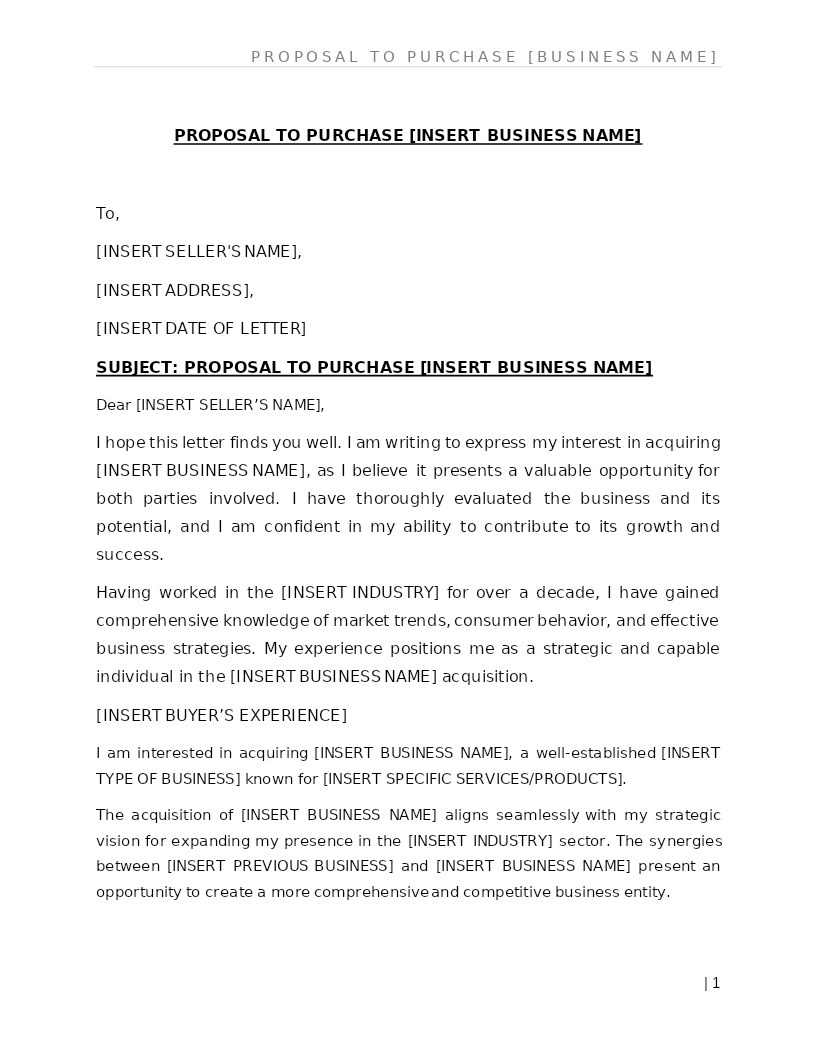
PROPOSAL TO PURCHASE
How does it work?
1. Choose this template
Start by clicking on "Fill out the template"
2. Complete the document
Answer a few questions and your document is created automatically.
3. Save - Print
Your document is ready! You will receive it in Word and PDF formats. You will be able to modify it.
Understanding Proposal to Purchase In U.S.
A Proposal to Purchase is a formal document prepared by a prospective buyer to express the intent to purchase a product, service, equipment, asset, or property under specific terms. It outlines key details such as the proposed purchase price, payment schedule, contingencies, inspection rights, and any conditions that must be met before the final agreement is executed. Aligned with U.S. commercial and contract laws, a Proposal to Purchase helps establish a clear framework for negotiations, ensures transparency, and minimizes misunderstandings. It acts as a preliminary step toward a binding contract while protecting the interests of both the buyer and the seller.
Where a Proposal to Purchase Is Generally Used
A Proposal to Purchase is commonly used in:
- Commercial transactions for goods, machinery, or equipment
- Real estate purchases and property acquisition
- Procurement of business assets and inventory
- Service-based contract offers
- Vendor and supplier negotiations
- Government or corporate bidding processes
- Strategic partnerships or business acquisitions
Different Types of Proposal to Purchase
- Equipment Purchase Proposal: Outlines pricing, specifications, warranties, and delivery terms for purchasing equipment.
- Property Purchase Proposal: Used in residential or commercial real estate transactions, including contingencies and closing conditions.
- Service Purchase Proposal: Details the scope, pricing, and expectations for service-based offerings.
- Asset Acquisition Proposal: Used during mergers, acquisitions, or purchase of business assets.
- Bulk or Wholesale Purchase Proposal: Covers large-volume commercial orders, discounts, and logistics terms.
When Legal Guidance Becomes Helpful
Legal advice is recommended when:
- The transaction involves large financial commitments
- There are complex contingencies or multi-party negotiations
- The purchase involves regulated industries (e.g., real estate, healthcare, technology)
- Intellectual property or proprietary rights are part of the deal
- Cross-state or cross-border purchases are involved
- You need enforceable terms reviewed under U.S. contract law
- The proposal will transition into a binding agreement
Real-time legal guidance ensures terms are compliant, enforceable, and customized to the buyer's and seller’s needs.
How to Work With This Proposal to Purchase
- Clearly define the offer price, payment plan, and all conditions
- Include contingencies such as inspections, financing approval, or due diligence
- Ensure all specifications, warranties, and service expectations are documented
- Review the terms for accuracy and fairness before submission
- Use the proposal as a negotiation tool or starting point for drafting the final contract
- Retain copies for compliance, recordkeeping, and future reference
Frequently Asked Questions
Q1. What should a Proposal to Purchase include?
A complete Proposal to Purchase should include the purchase price, payment terms, contingencies, description of the product or property, delivery expectations, and conditions required before finalizing the deal. Adding timelines, inspection rights, and responsibilities strengthens the clarity and enforceability of the proposal.
Q2. Is a Proposal to Purchase legally binding in the U.S.?
Typically, a Proposal to Purchase is not binding unless clearly stated otherwise. It serves as a preliminary document expressing intent and outlining the terms for negotiation. Once accepted and formalized into a purchase contract, it becomes binding under U.S. contract law.
Q3. Why is a Proposal to Purchase important in business transactions?
It provides clarity and transparency, helping both parties agree on essential terms before drafting a binding agreement. This reduces negotiation time, prevents misunderstandings, and ensures both sides are aligned before entering a full purchase contract.
Q4. Can a Proposal to Purchase include contingencies?
Yes. Common contingencies include financing approval, inspection results, due diligence, or regulatory compliance. These contingencies protect the buyer by ensuring the purchase proceeds only when certain conditions are met.
Q5. How does a Proposal to Purchase assist in negotiations?
It sets the foundation for structured discussions, giving the seller a clear idea of the buyer’s intentions. By documenting terms up front, both parties can negotiate efficiently and finalize a mutually acceptable agreement.
Q6. Is a Proposal to Purchase required for real estate transactions?
While not mandatory, it is commonly used in U.S. real estate to outline the buyer’s offer, contingencies, inspection requirements, and closing timeline. It helps organize the transaction before drafting a binding purchase agreement.
Q7. Can the terms in a Proposal to Purchase be modified?
Yes. Both parties can negotiate changes before the proposal is accepted or converted into a final purchase contract. Modifications must be agreed upon in writing to maintain transparency and legal accuracy.
Q8. What happens after the Proposal to Purchase is accepted?
Once accepted, the parties typically move to draft and sign a formal Purchase Agreement. The proposal may become part of the contractual record, guiding the terms of payment, timelines, obligations, and closing procedures.