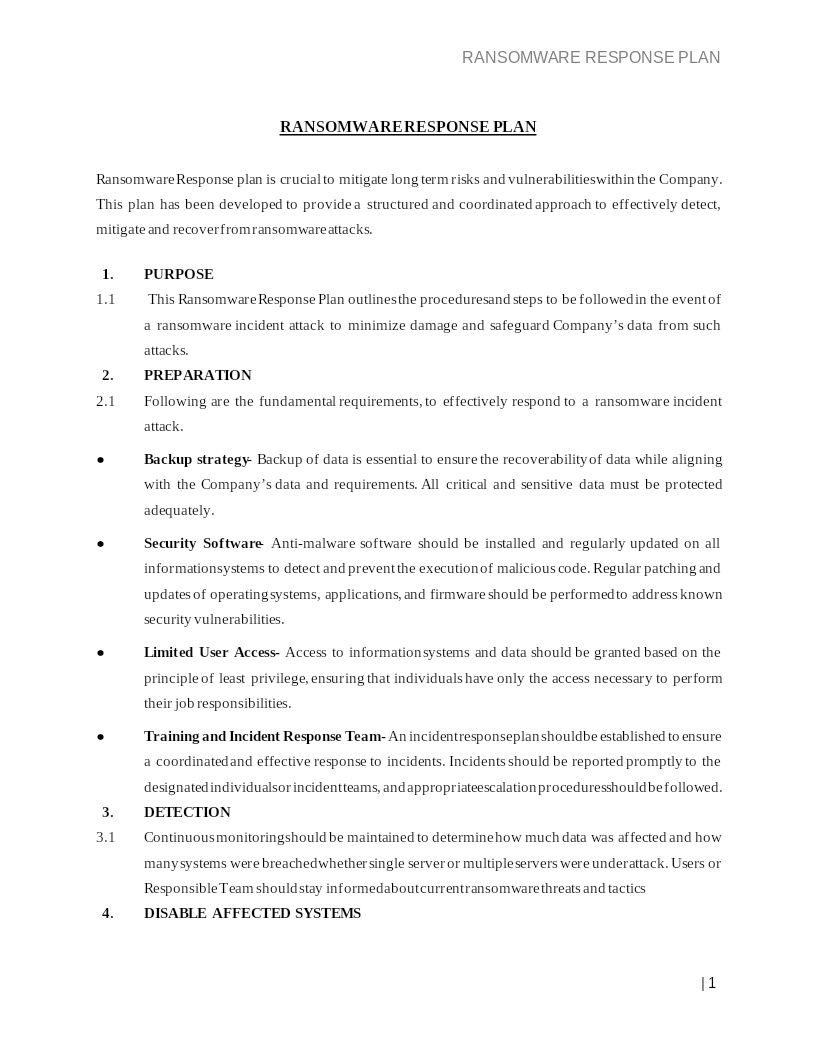
RANSOMWARE RESPONSE PLAN
How does it work?
1. Choose this template
Start by clicking on "Fill out the template"
2. Complete the document
Answer a few questions and your document is created automatically.
3. Save - Print
Your document is ready! You will receive it in Word and PDF formats. You will be able to modify it.
Understanding Ransomware Response Plan in U.S.
A Ransomware Response Plan is a comprehensive framework that outlines the procedures an organization follows when facing a ransomware attack. It defines the steps for detection, containment, eradication, recovery, and communication to minimize operational disruptions and financial losses. Aligned with U.S. cybersecurity regulations, including NIST standards, state data breach notification laws, HIPAA, GLBA, and CISA guidance, this plan ensures organizations respond effectively while maintaining compliance and safeguarding critical data.
Where Ransomware Response Plans Are Commonly Used
Ransomware Response Plans are essential across industries that manage sensitive or regulated data, including:
• Healthcare entities subject to the HIPAA Security & Breach Notification Rule
• Financial institutions following GLBA, PCI-DSS, and FFIEC cybersecurity guidance
• Government agencies aligned with NIST, CISA, and FISMA requirements
• Educational institutions governed by FERPA
• E-commerce, SaaS, and technology companies
• Corporate enterprises with large digital infrastructures
• Manufacturing, logistics, and critical infrastructure sectors
Any organization that relies on IT systems can benefit from a structured, legally compliant ransomware response framework.
Different Types of Ransomware Events You May Encounter
- Encryption-Based Ransomware: Malware that encrypts files and demands payment for a decryption key.
- Data Theft or Double Extortion Attacks: Threat actors steal data and demand ransom to avoid public disclosure.
- Locker Ransomware: Locks users out of systems or devices entirely, halting operations.
- Ransomware-as-a-Service (RaaS): Organized cybercriminal platforms that deploy ransomware through affiliates.
- Supply Chain Ransomware Attacks: Compromises occurring through third-party vendors or software providers.
When Legal Guidance Becomes Helpful
Real-time lawyers and in-house counsel play a critical role because:
• Breach notification requirements differ across U.S. states and must be followed precisely.
• Counsel identifies when ransomware events legally qualify as data breaches.
• Lawyers help draft regulator and consumer notifications compliant with HIPAA, CPRA/CCPA, GLBA, and other laws.
• They ensure communication with attackers, if any, is lawful and does not violate federal sanctions.
• Legal teams guide evidence handling to preserve admissibility and support cyber insurance claims.
• Attorneys assist in reviewing contracts with vendors and insurers for incident response obligations.
Legal consultation ensures your response is compliant, defensible, and aligned with regulatory expectations.
How to Work With This Policy Template
• Define ransomware detection, alerting, and escalation procedures.
• Establish containment strategies (e.g., isolating infected systems, disconnecting networks).
• Document backup and recovery steps aligned with U.S. standards such as NIST SP 800-61.
• Assign roles to IT teams, cybersecurity staff, legal counsel, management, and communication teams.
• Outline regulatory notification timelines and reporting obligations.
• Incorporate forensic investigation procedures and digital evidence preservation.
• Create communication templates for employees, customers, regulators, and media.
• Include post-incident review requirements to strengthen future defenses.
Frequently Asked Questions
Q1. What qualifies as a ransomware attack under this plan?
A ransomware attack involves malicious software that encrypts or locks access to systems or data and demands payment for restoration. It may also involve data theft or extortion. This plan identifies attack types and provides clear steps for responding quickly and effectively.
Q2. Should an organization ever pay the ransom?
U.S. agencies like CISA, FBI, and OFAC strongly discourage paying ransoms because it does not guarantee data recovery and may violate federal sanctions. A strong response plan helps organizations rely on backups and recovery procedures instead of ransom payments. Legal counsel should always be consulted before any action.
Q3. How quickly must a ransomware incident be reported?
Many U.S. regulations require notification “without unreasonable delay,” often within 24–72 hours of discovery. Laws like HIPAA, CPRA, and state breach notification statutes have strict timelines. This plan sets internal deadlines to ensure timely reporting and compliance.
Q4. What is the role of backups in a Ransomware Response Plan?
Backups are essential for restoring encrypted or damaged data without paying a ransom. This plan outlines backup frequency, storage requirements, and recovery testing procedures. Proper backup management significantly reduces downtime and financial impact.
Q5. Who is responsible for managing a ransomware incident?
Incident response teams typically include IT security staff, system administrators, forensic specialists, legal counsel, and executive leadership. Each team has defined responsibilities for containment, communication, investigation, and recovery, ensuring a coordinated and efficient response.
Q6. Does ransomware always result in a reportable data breach?
Not always. However, if sensitive data is accessed, stolen, or compromised, U.S. laws may require notification. This plan includes processes for assessing whether a ransomware event constitutes a breach under HIPAA, CPRA, GLBA, or state-specific laws. Legal review ensures full compliance.
Q7. What steps are taken immediately after detecting ransomware?
Immediate actions include isolating infected systems, disconnecting networks, preserving logs, blocking malicious communication, and notifying the incident response team. Quick containment prevents the spread of ransomware and reduces further damage.
Q8. How does this plan help prevent future ransomware attacks?
The plan requires post-incident reviews, updating security controls, enhancing employee training, and implementing stronger defenses such as multifactor authentication, patching, and network segmentation. Continuous improvement ensures long-term resilience and better protection against evolving threats.