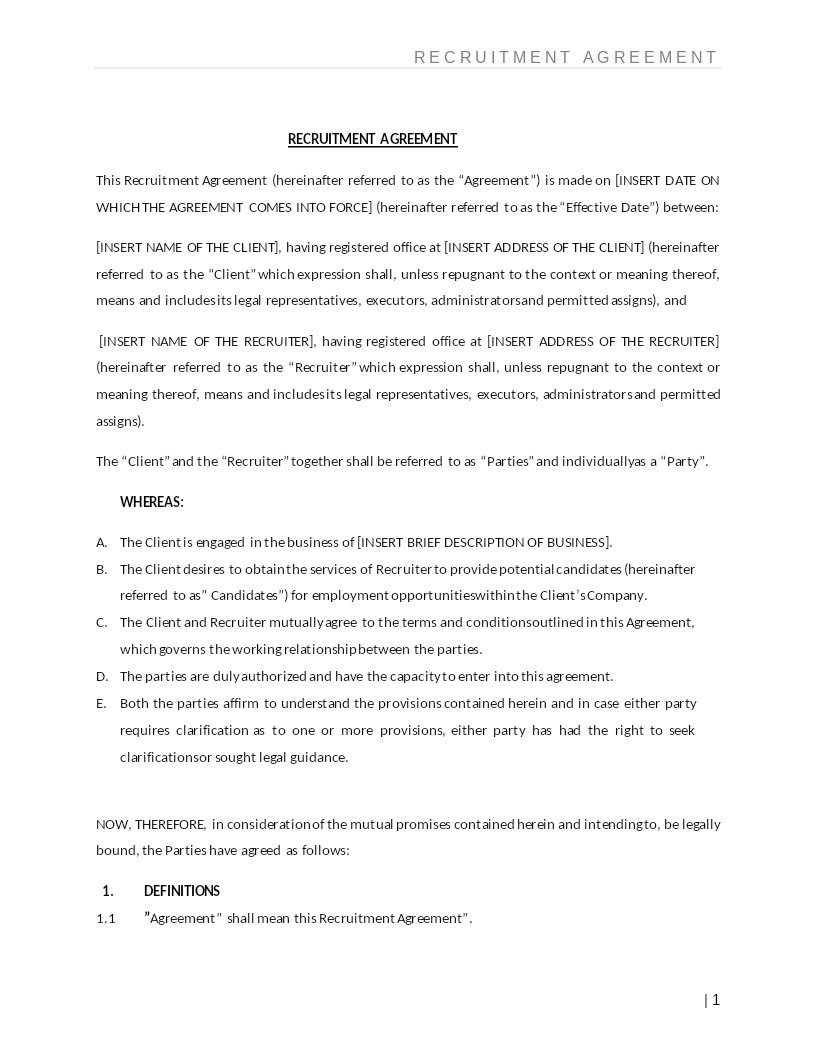
RECRUITMENT AGREEMENT
How does it work?
1. Choose this template
Start by clicking on "Fill out the template"
2. Complete the document
Answer a few questions and your document is created automatically.
3. Save - Print
Your document is ready! You will receive it in Word and PDF formats. You will be able to modify it.
Understanding Recruitment Agreement in U.S.
A Recruitment Agreement is a legally binding contract between an employer and a recruitment agency or independent recruiter that outlines the terms of sourcing, screening, and presenting qualified candidates for employment. It defines service expectations, fee structures, replacement guarantees, confidentiality obligations, and timelines for the hiring process. This agreement ensures transparency, protects both parties legally, and helps maintain a smooth, compliant hiring relationship under U.S. labor and employment laws.
A well-drafted Recruitment Agreement sets clear expectations, prevents misunderstandings, and ensures the employer and recruiter work together efficiently to identify and hire qualified talent.
Where Recruitment Agreements Are Commonly Used
Recruitment Agreements are frequently used for:
- Hiring full-time, part-time, or contract employees
- Executive search and senior-level hiring
- Bulk hiring or large recruitment drives
- Technical staffing, IT placements, and specialized roles
- Healthcare, finance, manufacturing, and other regulated industries
- Long-term staffing partnerships or retained search programs
- Recruitment Process Outsourcing (RPO) arrangements
Any employer seeking professional recruitment support can benefit from a formal Recruitment Agreement.
Different Types of Recruitment Agreements You May Encounter
- Contingency Recruitment Agreement: The recruiter is paid only if a candidate is successfully hired.
- Retained Search Agreement: The employer pays upfront fees for dedicated, high-level recruitment services.
- Temporary or Contract Staffing Agreement: Used for short-term or project-based staffing.
- Executive Search Agreement: Specialized for senior leadership or hard-to-fill roles.
- Recruitment Outsourcing Agreement: The recruiter manages a portion or all of the employer’s hiring process.
When Legal Guidance Becomes Helpful
Legal consultation becomes helpful when:
- The agreement involves industry-specific compliance or background-check obligations
- Candidates must undergo regulated screenings (e.g., healthcare, finance, childcare)
- The employer needs detailed indemnity, non-solicitation, or non-compete protections
- Recruiting spans multiple U.S. states with varying employment laws
- International recruitment or immigration sponsorship is involved
- Sensitivity around handling candidate data under U.S. privacy laws arises
- The fee structure includes refunds, replacements, or complex financial terms
Legal review ensures compliance and reduces risk for both parties.
How to Work With This Recruitment Agreement
- Clearly define the recruiting scope, job roles, and screening requirements
- Include fees, payment terms, replacement guarantees, and refund policies
- Set timelines for candidate submissions and communication expectations
- Establish confidentiality, non-solicitation, and data-handling responsibilities
- Specify legal compliance obligations, including labor and discrimination laws
- Ensure both parties sign the agreement before recruitment begins
Frequently Asked Questions
Q1. Why is a Recruitment Agreement important?
A Recruitment Agreement clarifies responsibilities, service expectations, and payment terms between the employer and recruiter. It helps avoid disputes by outlining the hiring process clearly and ensures compliance with U.S. employment and anti-discrimination laws. This protects both parties throughout the recruitment cycle.
Q2. How do recruiter fees typically work in the U.S.?
Recruitment fees are usually based on a percentage of the hired candidate’s annual salary, but flat-fee and hourly structures are also common. The agreement outlines when fees are due, any refund or replacement guarantees, and what happens if a candidate leaves early. Clear fee terms prevent billing disputes.
Q3. What is a replacement guarantee in recruitment contracts?
A replacement guarantee provides that if a hired candidate resigns or is terminated within a specified period, the recruiter must find a replacement at no additional cost. This clause protects employers and encourages recruiters to deliver high-quality candidates.
Q4. Does the agreement cover confidentiality and data protection?
Yes. Recruitment Agreements include confidentiality clauses to protect organizational information and sensitive candidate data. This ensures compliance with U.S. privacy standards and prevents unauthorized disclosure during the hiring process.
Q5. Who is responsible for background checks and compliance?
Responsibility varies by agreement. Some employers handle background screening directly, while others require the recruiter to conduct initial checks. U.S. laws, such as the FCRA, must be followed when conducting employment background screenings.
Q6. Can the employer work with multiple recruiters at the same time?
This depends on the contract. Contingency agreements often allow multiple recruiters, while retained search agreements typically grant exclusive rights to one recruiter. The agreement should clearly state exclusivity terms to avoid conflicts and duplicate submissions.
Q7. What happens if the employer hires a referred candidate later?
Many agreements include a “candidate ownership” or referral period clause. If the employer hires the referred candidate within this timeframe, the recruiter is still entitled to payment. This prevents disputes over candidate sourcing credit.
Q8. Are recruitment agreements enforceable across multiple states?
Yes, but each U.S. state may have different employment, privacy, and contract laws. When recruitment happens across state lines, the agreement should specify governing law and jurisdiction. This ensures clarity and legal enforceability for both parties.