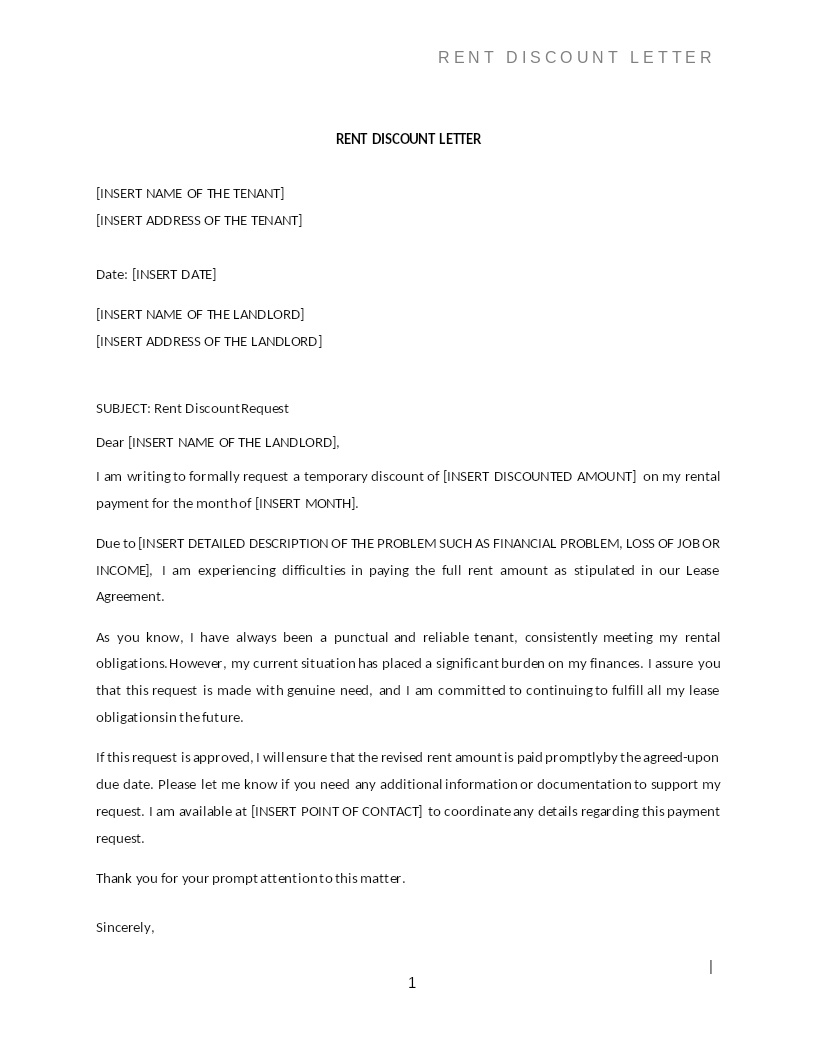
RENT DISCOUNT LETTER
How does it work?
1. Choose this template
Start by clicking on "Fill out the template"
2. Complete the document
Answer a few questions and your document is created automatically.
3. Save - Print
Your document is ready! You will receive it in Word and PDF formats. You will be able to modify it.
Understanding Rent Discount Letter in U.S
A Rent Discount Letter is a formal written document exchanged between a tenant and a landlord to request, approve, or confirm a temporary reduction in rent. It outlines the reason for the discount, such as financial hardship, property repairs, long-term tenancy incentives, or economic emergencies, along with the reduced rent amount and the discount duration. This letter acts as a clear written record to prevent misunderstandings and helps both parties maintain transparency and professionalism.
A well-structured Rent Discount Letter protects the rights of both the landlord and the tenant by documenting modified payment expectations, ensuring legal compliance, and providing a reliable reference for future financial or legal matters.
Where Rent Discount Letters Are Commonly Used
Rent Discount Letters are typically used in situations involving:
- Financial hardship due to job loss, medical emergencies, or economic downturns
- Temporary property repairs or maintenance that affect the tenant’s living conditions
- Rent incentives for long-term or renewal leases
- Situations where a tenant faces short-term financial instability
- Negotiated reductions during emergencies or natural disasters
- Landlords offering goodwill adjustments to maintain positive tenant relationships
Any rental arrangement may utilize such a letter when a temporary rent reduction is requested or approved.
Different Types of Rent Discount Letters You May Encounter
- Temporary Hardship Rent Discount Letter: Requested when a tenant faces short-term financial difficulties.
- Repair-Related Rent Discount Letter: Used when property conditions temporarily impact habitability.
- Long-Term Tenant Discount Letter: Offered as a benefit to loyal tenants renewing their lease.
- Mutual Agreement Rent Discount Confirmation: A landlord and tenant jointly document a voluntary reduction.
When Legal Guidance Becomes Helpful
Legal consultation may be necessary when:
- The discount affects lease obligations or requires amendment
- State-specific rental laws require special disclosure or approval
- The discount impacts rent control or subsidized housing requirements
- Rent reductions relate to habitability or landlord-repair responsibilities
- Tenants need documentation for government assistance or financial relief
- Landlords want to ensure the discount does not waive future rights
Legal review ensures compliance with U.S. landlord-tenant laws and prevents disputes.
How to Work With This Rent Discount Letter
- Identify the landlord, tenant, and rental property address
- Clearly state the discounted rent amount and the reason for the discount
- Specify the discount’s start date, end date, and payment expectations
- Confirm whether the discount affects late fees or other lease obligations
- Include signatures from both parties to validate the agreement
- Keep a copy for financial, tax, or legal documentation purposes
Frequently Asked Questions
Q1. Why is a Rent Discount Letter important?
A Rent Discount Letter creates a formal written record of the temporary rent reduction, preventing confusion or disputes. It ensures both parties agree on the reduced amount, the timeline, and the reasons for the change. This documentation protects the tenant and landlord under U.S. rental laws.
Q2. Is a Rent Discount Letter legally binding?
Yes. When signed by both parties, a Rent Discount Letter becomes part of the rental agreement and is legally enforceable. It may also serve as evidence in court or in landlord-tenant proceedings if disputes arise regarding rent obligations.
Q3. Can a landlord refuse a rent discount request?
Yes. Landlords are not legally required to approve discount requests unless required by state or local emergency laws. However, many landlords consider temporary reductions to maintain long-term tenants and avoid costly vacancy or eviction processes.
Q4. Does a rent discount affect the original lease?
A rent discount does not replace the original lease but temporarily modifies specific payment terms. The remaining lease terms, such as maintenance responsibilities and rules of conduct, still apply. A written letter helps clarify the temporary nature of the change.
Q5. What reasons can justify a rent discount request?
Common reasons include job loss, medical issues, temporary financial hardship, ongoing property repairs, or loyalty incentives for renewing tenants. Clearly stating the reason in the letter helps landlords evaluate and approve the request more effectively.
Q6. Will a rent discount impact eviction rights?
If a discount is documented properly, it helps prevent eviction for non-payment of the original rent amount. However, tenants must still pay the agreed reduced amount on time. A written letter ensures clarity on payment expectations and protects both parties.
Q7. Can a rent discount be extended or renewed?
Yes. If the tenant’s circumstances continue or the landlord agrees to extend the arrangement, the discount can be renewed through a new letter or an amendment. Clear written extensions help avoid misunderstandings about payment amounts and deadlines.
Q8. Is a Rent Discount Letter useful for government or financial assistance?
Yes. Many assistance programs require proof of rental adjustments. A documented Rent Discount Letter helps tenants qualify for hardship benefits, rental aid, or relief programs. It also supports accurate financial reporting for landlords.