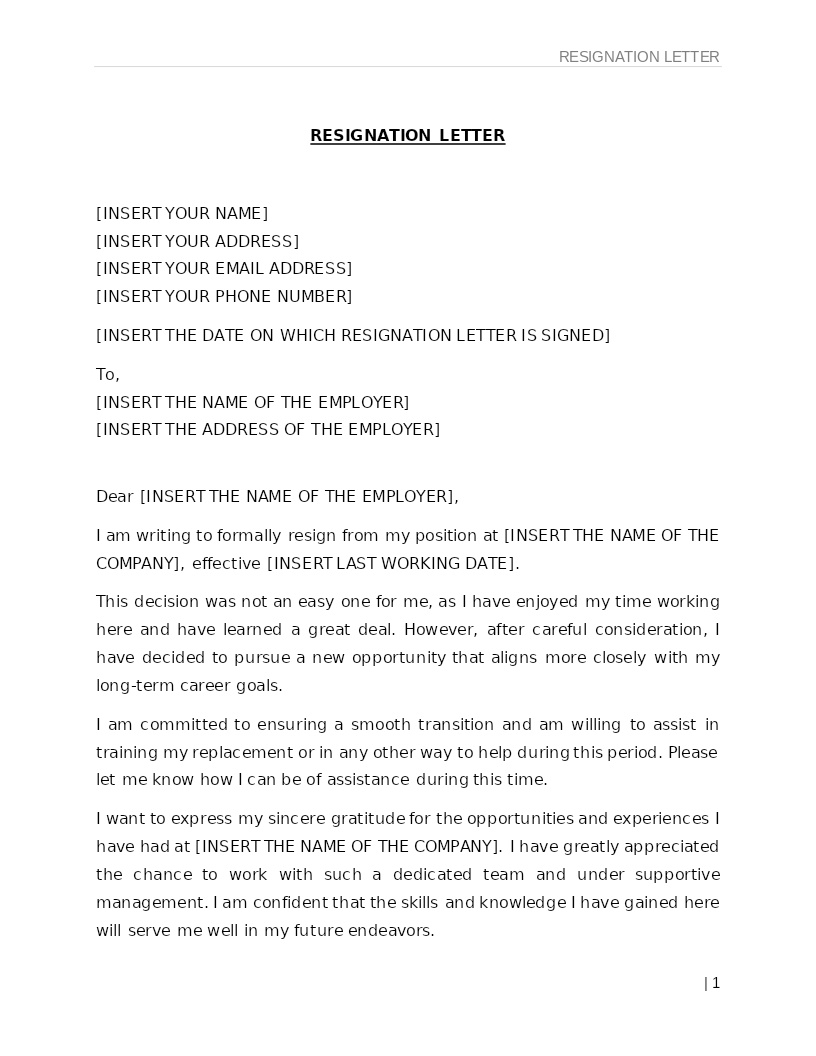
RESIGNATION LETTER
How does it work?
1. Choose this template
Start by clicking on "Fill out the template"
2. Complete the document
Answer a few questions and your document is created automatically.
3. Save - Print
Your document is ready! You will receive it in Word and PDF formats. You will be able to modify it.
Ensuring Professional and Transparent Communication When Resigning from a Job in the United States
When an employee decides to leave their position, it’s important to communicate that decision clearly and professionally. A Resignation Letter provides that structure. It formally notifies the employer of the employee’s intent to resign, states the final working date, and may include appreciation for the opportunity as well as willingness to support the transition.
Submitting a resignation letter promotes transparency, reduces misunderstandings, and helps both parties plan next steps. It also ensures proper documentation for HR, payroll, and compliance purposes while preserving a positive professional relationship.
Where Resignation Letters Are Commonly Used
Resignation letters are standard in a wide range of employment settings, including:
- Corporate offices, startups, and business organizations
- Hospitals, clinics, and healthcare organizations
- Schools, universities, and educational institutions
- Retail, hospitality, and service industries
- Government roles and public-sector workplaces
- Freelance, contract, or remote work engagements where documentation is required
Any time an employee voluntarily leaves a position, a resignation letter provides clear and reliable communication.
Different Types of Resignation Letters You May Encounter
- Standard Resignation Letter: A simple letter stating the intent to resign and the final working day.
- Two-Week Notice Resignation Letter: Common in U.S. employment, providing the customary notice period.
- Immediate Resignation Letter: Used when the employee leaves without notice due to urgent circumstances.
- Resignation with Transition Support: Includes an offer to assist with training, handover, or project completion.
When Legal Guidance Becomes Helpful
Most resignations do not require legal involvement, but professional advice can be valuable when:
- The employee is subject to non-compete, confidentiality, or restrictive covenants
- There are concerns about unpaid wages, commissions, or bonuses
- The resignation involves potential retaliation, discrimination, or harassment
- The employee holds a sensitive role with access to proprietary or regulated information
- Employment contracts require specific notice periods or exit procedures
- There are ongoing disputes or compliance obligations
Legal review ensures the resignation process follows employment laws and protects both parties’ rights.
How to Work with This Template
- Identify the employee and employer, including job title and department
- Clearly state the intent to resign and the final working date
- Optionally express appreciation for the role or provide a short explanation
- Include an offer to support transition or handover if appropriate
- Review company policies regarding notice periods, equipment returns, and final pay
- Sign electronically or in hard copy
- Submit through the employer’s HR channel or direct supervisor
This template aligns with professional standards widely used across the United States.
Frequently Asked Questions
Q1. Why is a Resignation Letter important for employees?
A resignation letter helps employees exit professionally by providing clear documentation of their final working date. It reduces misunderstandings and protects employees from disputes about notice periods or last-day obligations. The letter also preserves goodwill with the employer, which is valuable for future references. Formal communication shows respect and professionalism.
Q2. What should be included in a Resignation Letter?
A standard resignation letter includes the intention to resign, the final working day, and optionally gratitude or a brief reason. It may also include an offer to help with transition or handover. Keeping the letter concise while maintaining professionalism is key. The letter becomes part of the employee’s HR file.
Q3. Can an employee resign without giving notice?
Yes, but it depends on company policy and the employment agreement. While many U.S. jobs are at-will, immediate resignation may affect final pay, unused leave payouts, or professional relationships. Providing notice is recommended unless there are urgent personal or safety concerns. A resignation letter documents the employee’s intentions clearly.
Q4. Does an employer have to accept a resignation?
Generally, no acceptance is required. Once the employee submits written notice, the resignation is effective as stated. However, employers may request adjustments to the notice period or discuss transition needs. The resignation letter helps formalize the employee’s timeline and prevents disputes about departure terms.
Q5. Can a resignation letter include reasons for leaving?
Including a reason is optional. Some employees prefer to keep it general, while others share specific career or personal motivations. Honesty should be balanced with professionalism. The employer is primarily concerned with the effective date and transition plan, not detailed explanations.
Q6. How does a resignation letter help the employer?
It provides formal notice so the employer can plan staffing, recruitment, and workload distribution. HR can initiate exit procedures such as payroll updates, benefits termination, and equipment returns. Clear communication minimizes workplace disruption. Proper documentation also protects the employer from compliance issues.
Q7. Is email an acceptable format for submitting a resignation letter?
Yes, many U.S. workplaces accept resignation notices by email, especially in remote or hybrid roles. Email creates a timestamped record that can be referenced later. Employees should follow company policy and send the letter to both their supervisor and HR. Keeping a copy is recommended.
Q8. What happens if an employee wants to withdraw their resignation?
Withdrawal is possible only if the employer agrees. The employer is not required to accept the change, especially if hiring plans are underway. If allowed, the employee should confirm withdrawal in writing. Proper documentation avoids confusion regarding job status and future obligations.