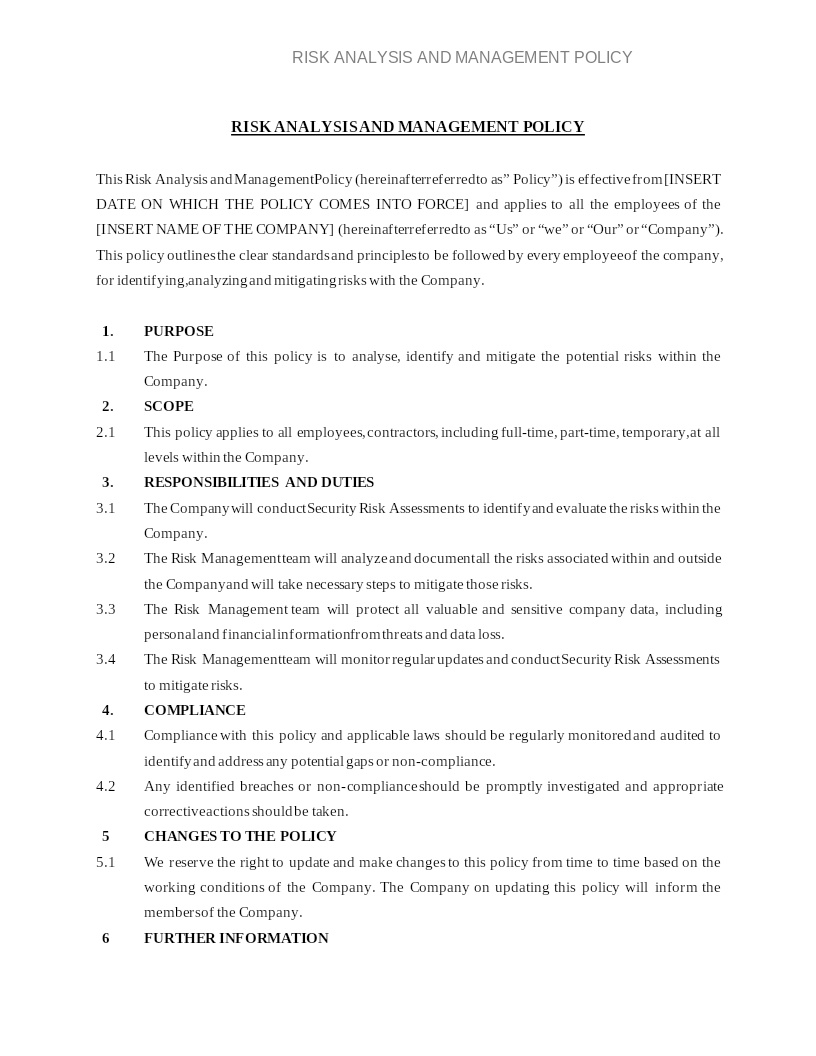
RISK ANALYSIS AND MANAGEMENT POLICY
How does it work?
1. Choose this template
Start by clicking on "Fill out the template"
2. Complete the document
Answer a few questions and your document is created automatically.
3. Save - Print
Your document is ready! You will receive it in Word and PDF formats. You will be able to modify it.
Understanding Risk Analysis And Management Policy in U.S.
A Risk Analysis and Management Policy outlines how an organization identifies, assesses, and manages risks that may affect its operations, assets, personnel, or strategic objectives. It provides a systematic framework for recognizing potential threats, evaluating their likelihood and impact, and implementing mitigation or response strategies. This policy strengthens business continuity, supports informed decision-making, and ensures organizational resilience.
By integrating risk management practices aligned with U.S. regulatory requirements and industry standards, the policy helps organizations protect resources, comply with legal obligations, and maintain stability during unexpected events.
Where Risk Analysis and Management Policies Are Commonly Used
These policies are widely implemented in any organization that needs to manage operational, financial, legal, technological, or environmental risks. They are commonly used in:
• Corporate offices, SMBs, and large enterprises
• Healthcare organizations governed by HIPAA and safety regulations
• Financial institutions complying with SOX, SEC, and FFIEC guidelines
• Government agencies and public-sector programs
• Technology, cybersecurity, and data-driven companies
• Manufacturing, logistics, utilities, and infrastructure sectors
• Organizations with ISO 27001, NIST, or other compliance frameworks
Any business that faces operational uncertainties benefits from a structured risk management policy.
Different Types of Risk Management Practices You May Encounter
- Operational Risk Management: Focuses on internal processes, workflows, and daily activities that could disrupt business operations.
- Compliance and Legal Risk Management: Ensures adherence to federal, state, and industry-specific regulations to avoid penalties or legal exposure.
- Cybersecurity and Data Protection Risk Management: Identifies digital threats and implements controls aligned with U.S. cybersecurity standards such as NIST, CISA, and ISO frameworks.
- Financial Risk Management: Addresses risks related to budgeting, revenue, investments, and financial obligations.
- Strategic and Reputational Risk Management: Monitors long-term business risks, competitive pressures, and public perception.
- Health, Safety, and Environmental Risk Management: Protects employees and assets while complying with OSHA and environmental regulations.
When Legal Guidance Becomes Helpful
Legal consultation becomes essential when customizing a Risk Analysis and Management Policy because:
• U.S. regulatory frameworks, such as HIPAA, SOX, OSHA, GLBA, CCPA/CPRA, and industry-specific laws, impose strict compliance requirements.
• Lawyers help organizations define liability limits, risk ownership, insurance requirements, and internal controls.
• Multi-state operations face variations in state regulations affecting data protection, workplace safety, and financial reporting.
• Counsel ensures risk assessments comply with client contracts, vendor agreements, and regulatory audit standards.
• Legal review strengthens the enforceability of risk-related procedures, reporting expectations, and escalation protocols.
Proper legal oversight ensures the policy supports compliance, reduces liability, and strengthens risk resilience.
How to Work With This Policy Template
• Identify key risk categories relevant to your business operations.
• Assign clear roles and responsibilities for conducting risk assessments and implementing controls.
• Establish standardized methods for identifying, evaluating, and rating risks.
• Define mitigation strategies, monitoring procedures, and incident-response plans.
• Ensure compliance with U.S. laws, industry frameworks, and internal governance standards.
• Maintain detailed documentation and conduct regular audits or updates of risk registers.
• Provide training for employees to foster a strong risk-aware culture across the organization.
Frequently Asked Questions
Q1. Why is a Risk Analysis and Management Policy important?
This policy helps organizations identify potential threats before they become major issues. It provides a structured approach to risk assessment, mitigation, and monitoring. By proactively managing risks, businesses can reduce disruptions, protect resources, and enhance operational stability.
Q2. Does this policy help organizations comply with U.S. laws and regulations?
Yes. The policy aligns with federal and state requirements such as HIPAA, SOX, OSHA, CCPA/CPRA, and other industry standards. Effective risk management helps prevent violations, minimize penalties, and maintain regulatory readiness during audits or inspections.
Q3. What types of risks does this policy address?
It covers operational, financial, legal, cybersecurity, safety, reputational, and strategic risks. The policy also supports disaster recovery, business continuity planning, and compliance risk assessments to protect the organization holistically.
Q4. How does this policy support business continuity?
By identifying potential disruptions early, the policy ensures organizations have strong contingency plans. It enhances preparedness for emergencies, reduces downtime, and improves recovery time after incidents, ensuring consistent service delivery and operations.
Q5. Who is responsible for managing risks within the organization?
Responsibilities typically fall on executive leadership, risk managers, department heads, and designated risk owners. The policy clearly defines each role to ensure accountability, transparency, and consistent application of risk management practices.
Q6. How does risk management improve strategic planning?
Risk insights help leaders make informed decisions about growth, investments, and long-term goals. By understanding uncertainties, organizations can avoid high-risk ventures, prioritize safe opportunities, and ensure alignment with overall business strategy.
Q7. What happens if risks are not properly managed?
Unmanaged risks can lead to financial losses, legal consequences, operational failures, cybersecurity breaches, and reputational damage. A comprehensive policy helps prevent such outcomes and ensures corrective actions are taken promptly.
Q8. Is a Risk Analysis and Management Policy helpful for small businesses?
Absolutely. Small businesses face many of the same risks as larger organizations but often have fewer resources to absorb disruptions. A structured risk management framework improves resilience, protects assets, and supports long-term growth and stability.