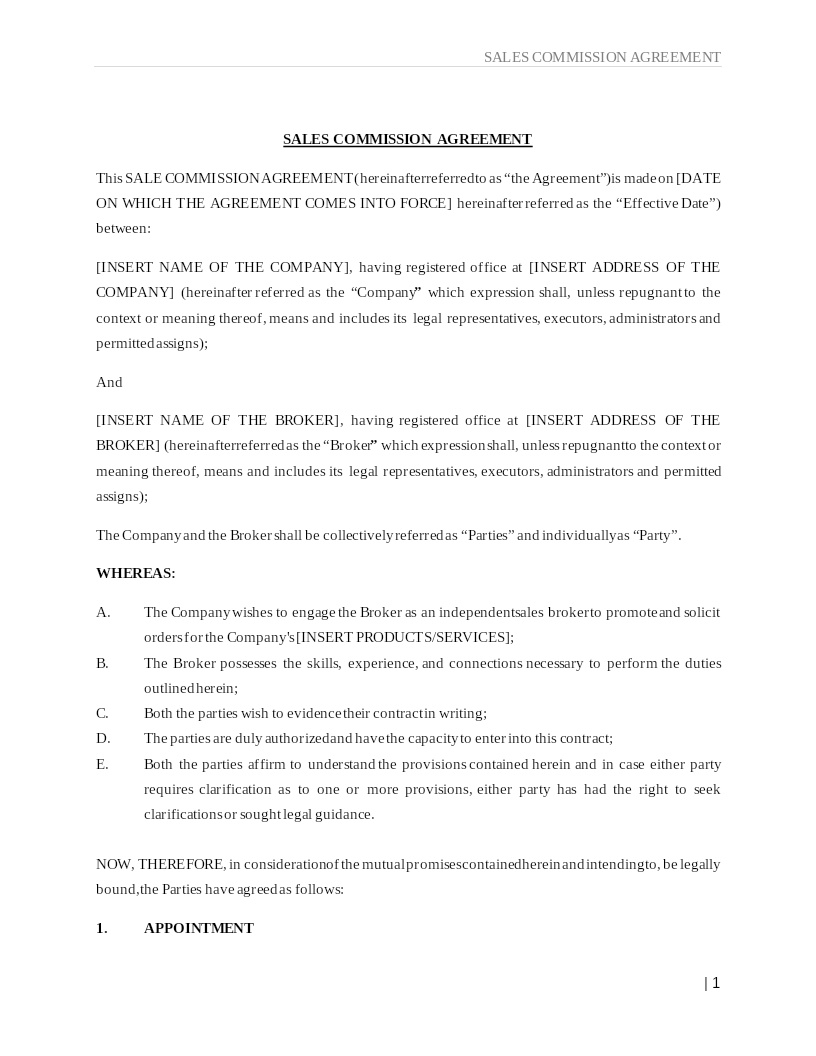
SALES COMMISSION AGREEMENT
How does it work?
1. Choose this template
Start by clicking on "Fill out the template"
2. Complete the document
Answer a few questions and your document is created automatically.
3. Save - Print
Your document is ready! You will receive it in Word and PDF formats. You will be able to modify it.
Defining Fair, Transparent, and Motivating Commission-Based Compensation
When a company relies on sales activities to grow revenue, it becomes essential to have a clear framework governing how commissions are earned and paid. A Sales Commission Agreement provides that structure. It outlines the calculation methods, payment schedules, eligibility criteria, and performance expectations tied to commission earnings.
Having a Sales Commission Agreement in place ensures transparency, reduces disputes, and helps both parties understand their rights and obligations. It promotes motivation, aligns efforts with company goals, and establishes predictable compensation practices.
Where Sales Commission Agreements Are Commonly Used
Commission contracts are widely implemented across many industries and business settings, including:
- Retail sales, business development, and field sales teams
- Real estate agencies, brokerage firms, and insurance providers
- Software, SaaS, and subscription-based product companies
- Marketing, advertising, and agency-driven lead generation
- Manufacturer representatives, wholesalers, and distributors
- Independent contractors and freelance sales representatives
- Telemarketing, call centers, and customer acquisition teams
Any time compensation is tied to sales performance, a structured agreement ensures fairness, clarity, and legal compliance.
Different Types of Commission Structures You May Encounter
- Flat-Rate Commission: A standard fixed percentage or amount earned per sale, offering straightforward calculations.
- Tiered Commission: Commission rates increase as sales volume grows, encouraging high performance and target achievement.
- Revenue-Based or Profit-Based Commission: Calculated on total revenue generated or profit margins, depending on company objectives.
- Residual or Recurring Commission: Common in SaaS and subscription models where ongoing revenue creates ongoing commission payouts.
- Draw Against Commission: Provides a guaranteed minimum draw amount, which is later reconciled against earned commissions.
When Legal or HR Guidance Becomes Helpful
While many commission arrangements can be simple, legal and HR support becomes useful when:
- Commission rules involve multi-tier bonuses or complex productivity metrics
- The salesperson is an independent contractor requiring IRS-compliant structures
- The company operates across multiple states with varying wage laws
- Non-solicitation, confidentiality, or exclusivity clauses are included
- Disputes may arise regarding canceled orders, refunds, or clawbacks
- High-value deals, long sales cycles, or shared commissions complicate calculations
- Termination or post-termination commission rights require clear boundaries
Legal review helps ensure compliance with U.S. labor, tax, and employment laws, protecting both parties.
How to Work with This Template
- Identify the salesperson’s role and whether they are an employee or contractor
- Clearly define the commission calculation method and eligible sales
- Specify the payment schedule, timelines, and required documentation
- Detail performance metrics, quotas, and expectations
- Include confidentiality and data-protection obligations
- Outline termination rules, final commission rights, and dispute processes
- Select governing state law and ensure compliance with wage regulations
- Review the contract jointly and complete execution via e-signature or hard copy
This structure follows widely accepted U.S. standards for compensation agreements.
Frequently Asked Questions
Q1. Why is a Sales Commission Agreement important for U.S. businesses?
A Sales Commission Agreement prevents misunderstandings by clearly defining how commissions are calculated, earned, and paid. It ensures transparency for both the company and the salesperson, helping avoid compensation disputes. The agreement also supports motivation by establishing defined targets and reward structures. It protects both parties by formalizing expectations and reducing legal risks. Companies benefit from organized and compliant compensation practices.
Q2. What types of commission structures are most common?
Common structures include flat-rate commissions, tiered percentages, residual commissions, and revenue- or profit-based payouts. Companies choose the structure that best aligns with their industry and sales goals. Each structure influences performance differently, making selection important. A clear definition ensures predictable payouts and better planning. Transparency in the chosen method reduces confusion and conflict.
Q3. When are commissions typically paid under this agreement?
Commissions may be paid weekly, bi-weekly, monthly, or upon completion of specified sales events. Some agreements require customer payment or contract execution before releasing commissions. The payment schedule is clearly outlined to avoid uncertainty. Consistent timing helps sales teams manage their income. Predictable payment cycles support stronger financial planning for both parties.
Q4. Does the agreement protect sensitive sales data?
Yes. Most commission agreements include confidentiality obligations requiring salespeople to safeguard customer information, pricing details, and proprietary sales strategies. These protections prevent misuse of business data during or after employment. Confidentiality rules also strengthen client trust. Clear guidelines help ensure compliance with company policies and privacy laws. This reduces risks related to data breaches and unfair competition.
Q5. How does the agreement address employment vs. contractor status?
The agreement clarifies whether the salesperson is an employee or an independent contractor, helping ensure compliance with tax and labor laws. Employee roles may include additional benefits and oversight, while contractors typically maintain autonomy. Proper classification avoids IRS and Department of Labor violations. Clear status definitions protect both parties from legal disputes. This also affects withholding, reporting, and commission payment rules.
Q6. What happens to unpaid commissions if the agreement ends?
Most agreements specify whether outstanding commissions will be paid for completed or pending sales after termination. Policies vary based on company rules and state law. Some contracts allow payment only for sales fully closed before termination, while others honor commissions for in-progress deals. Clear terms prevent disputes and ensure fairness. Documented rules protect both parties in case of disagreements.
Q7. Can disputes over commission calculations be resolved through this agreement?
Yes. The agreement typically includes dispute resolution mechanisms such as mediation, arbitration, or structured negotiation. These methods help resolve compensation disagreements without lengthy litigation. Clear procedures ensure both parties know where to escalate concerns. A defined process promotes fairness and transparency. It also minimizes business disruptions caused by unresolved conflicts.
Q8. Are commission agreements required to follow specific U.S. labor laws?
Absolutely. Companies must comply with federal and state wage laws, including rules on minimum wage, overtime, and timely payment. Some states impose strict requirements on written commission agreements. Legal compliance ensures enforceability and reduces liability. These protections safeguard both employers and sales personnel. Written agreements support clarity and legal alignment across jurisdictions.
Q9. Can a Sales Commission Agreement be customized?
Yes. Businesses can tailor commission plans to reflect their industry, product type, sales cycle, or compensation strategy. Customization may include bonuses, accelerators, shared commissions, or incentives for repeat business. Flexibility allows companies to build performance-based structures aligned with revenue goals. Personalized terms also help attract and retain top sales talent. Clarity in customized terms enhances fairness and motivation.
Q10. Does this agreement affect taxes for the salesperson?
Yes. Commission income is taxable, whether the salesperson is an employee or an independent contractor. Employees receive tax withholding, while contractors must manage their own tax filings. The agreement helps clarify reporting responsibilities. Clear guidance reduces tax-related misunderstandings. Compliance ensures smooth financial operations for both parties.