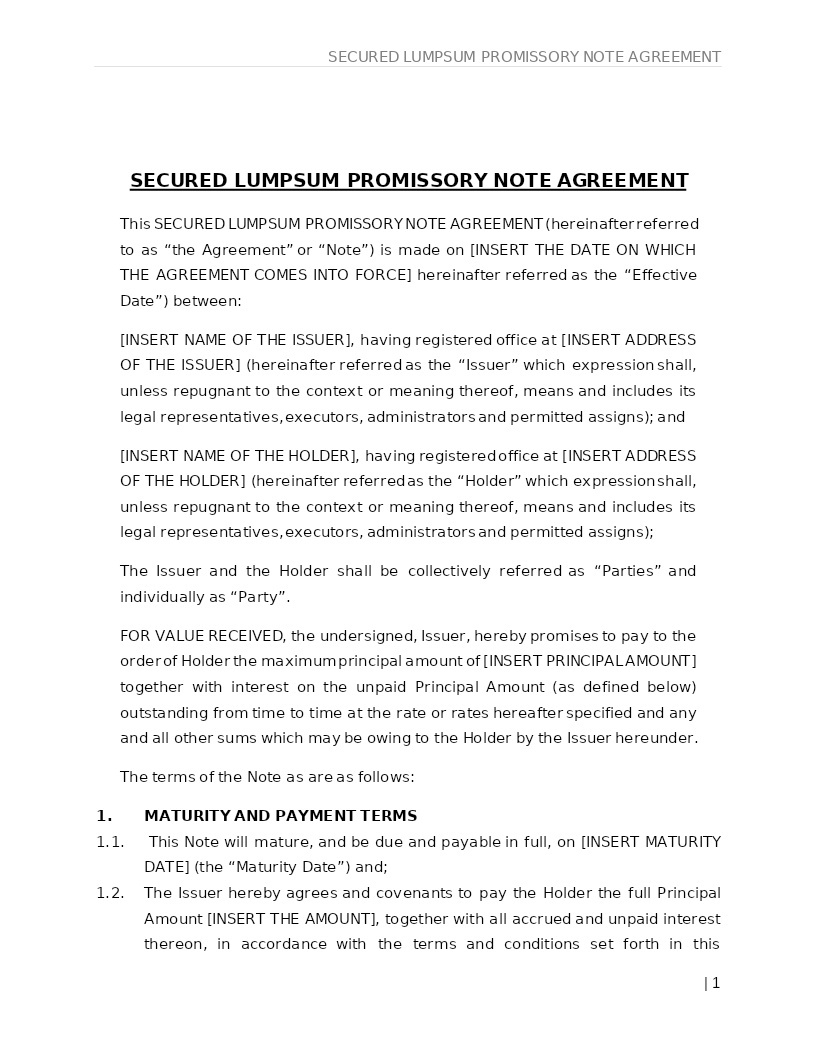
SECURED LUMPSUM PROMISSORY NOTE AGREEMENT
How does it work?
1. Choose this template
Start by clicking on "Fill out the template"
2. Complete the document
Answer a few questions and your document is created automatically.
3. Save - Print
Your document is ready! You will receive it in Word and PDF formats. You will be able to modify it.
Ensuring Secure, Transparent, and Legally Enforceable Lending Through Secured Lump Sum Promissory Note Agreements
A Secured Lump Sum Promissory Note Agreement is a legally binding contract where a borrower promises to repay a specific lump sum amount to a lender, typically on a fixed date or structured repayment schedule. Unlike an unsecured note, this type of agreement is backed by collateral, such as real estate, vehicles, inventory, equipment, or other valuable assets, giving the lender the legal right to claim the collateral if the borrower defaults.
In the United States, secured promissory notes are widely used to protect lenders, reduce financial risk, and create enforceable loan obligations for both personal and business financing. A clearly drafted agreement establishes the loan amount, repayment terms, interest rate, security interest, default consequences, and rights of both parties, ensuring transparency and legal protection.
Where Secured Promissory Note Agreements Are Commonly Used
Secured Lump Sum Promissory Note Agreements are widely used across personal, business, and commercial settings in the U.S., including:
- Personal loans between individuals backed by property or valuables
- Business loans secured by equipment, inventory, or business assets
- Real estate financing transactions involving property as collateral
- Short-term working capital loans for small businesses
- Loans between partners, investors, and startup founders
- Financing arrangements in mergers, acquisitions, or asset purchases
- Vehicle or machinery-backed financing arrangements
Any situation where a lender requires assurance and collateral to reduce risk benefits from a secured promissory note.
Different Types of Secured Promissory Notes You May Encounter
- Mortgage-Backed or Real Estate Secured Promissory Note: The loan is secured by a real property mortgage or deed of trust, allowing the lender to foreclose if the borrower defaults.
- Personal Property Secured Promissory Note (UCC-1 Secured Loan): The loan is secured by movable assets such as inventory, equipment, or receivables, typically perfected through a UCC-1 filing.
- Vehicle or Equipment-Secured Promissory Note: Used when a borrower pledges cars, trucks, machinery, or tools as collateral. The lender may hold the title until repayment.
- Investment or Business-Asset Secured Note: Backed by business interests, shares, or partnership assets, often used in investor, founder arrangements.
- Hybrid Secured Loan: Collateral includes a mix of property types, or multiple lenders share security interests according to priority rules.
Each type ensures enforceability, protects the lender’s interests, and clarifies what assets may be repossessed in case of default.
When Legal Guidance Becomes Helpful
Since secured loans involve property rights and enforceability across state lines, legal review is especially important when:
- The loan involves high-value collateral or real estate
- Multiple lenders or complex asset types are involved
- UCC filings, liens, or title transfers are necessary
- Interest rates must comply with state usury laws
- The borrower or lender operates across several states
- The loan is part of a business acquisition or investor financing
- There are concerns about default, bankruptcy, or asset ownership
Legal guidance ensures the agreement is enforceable under U.S. state law, protects collateral rights, and reduces long-term financial risk.
How to Work With This Template
- Identify borrower, lender, and collateral clearly
- Specify the loan amount, repayment schedule, and interest rate
- Describe collateral in detail and outline security interest rights
- Add default provisions, late charges, and remedies upon non-payment
- Include the lender’s rights to repossess or foreclose on collateral
- Ensure compliance with U.S. federal and state lending laws
- Add indemnities, warranties, and dispute resolution clauses
- Execute signatures electronically or in writing, both are enforceable under U.S. law
This template follows standard U.S. lending practices and supports secured financing for personal and business use.
Frequently Asked Questions
Q1. Why is a Secured Lump Sum Promissory Note Agreement important in the U.S.?
It provides legal certainty by documenting all loan terms and ensuring the loan is backed by collateral. This reduces the lender’s risk, protects against default, and creates a clear repayment obligation the courts can enforce.
Q2. What types of collateral can secure a promissory note?
Collateral may include real estate, vehicles, inventory, equipment, securities, or other valuable assets. The agreement describes the collateral and gives the lender legal rights to claim it if the borrower fails to repay.
Q3. Does this agreement protect both borrower and lender?
Yes. It protects the lender by securing repayment with collateral and protects the borrower by clearly outlining obligations, preventing unfair enforcement, and ensuring both parties agree to the same terms.
Q4. What happens if the borrower defaults on the loan?
The lender may enforce the security interest by repossessing the collateral, foreclosing on property, or pursuing legal remedies. The agreement outlines default triggers and the exact procedures for enforcement.
Q5. Are electronic signatures valid for promissory note agreements in the U.S.?
Absolutely. Under the ESIGN Act and UETA, electronic signatures are legally enforceable. Most modern secured loan transactions use digital signatures and electronic record-keeping.
Q6. Can a secured promissory note include penalties or late fees?
Yes, but they must comply with state lending and usury laws. The agreement may include late payment fees, default interest, or acceleration rights (requiring immediate repayment).
Q7. Does recording or filing the agreement strengthen legal protection?
Yes. Secured loans often require UCC-1 filings, title holds, or mortgage recordings to “perfect” the security interest, giving the lender priority over other creditors.