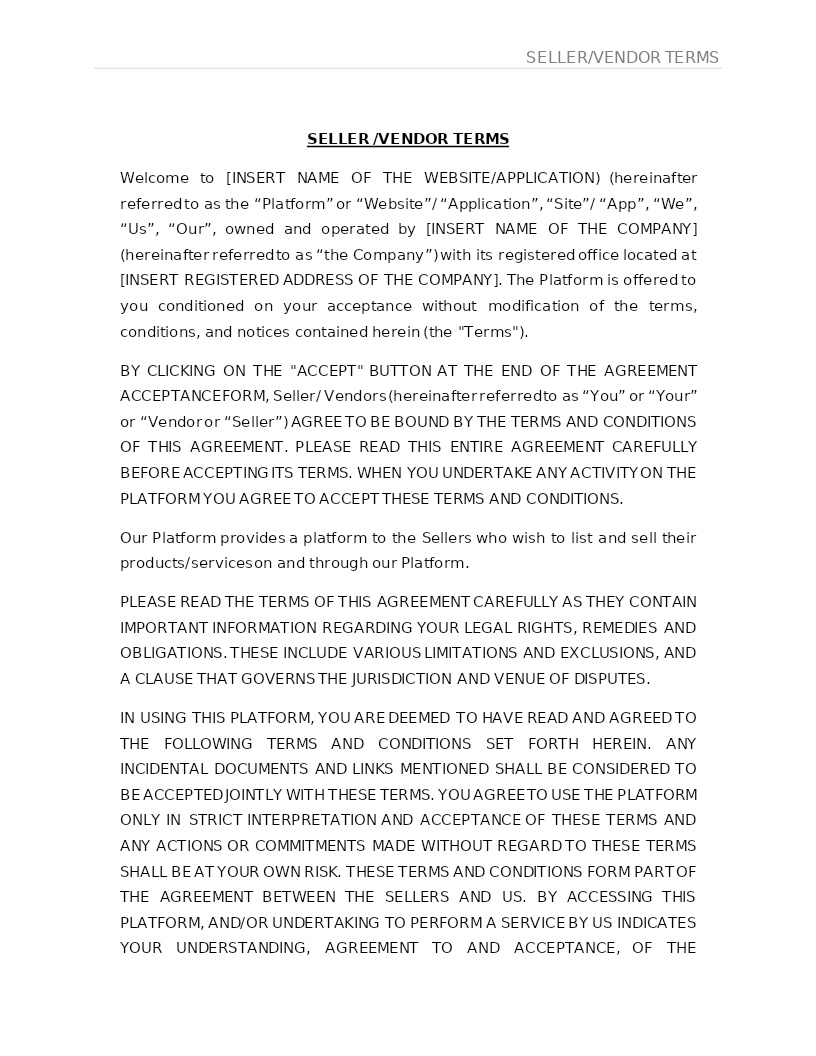
SELLER / VENDOR TERMS AND CONDITIONS FOR E-COMMERCE
How does it work?
1. Choose this template
Start by clicking on "Fill out the template"
2. Complete the document
Answer a few questions and your document is created automatically.
3. Save - Print
Your document is ready! You will receive it in Word and PDF formats. You will be able to modify it.
Understanding the Purpose and Use of Seller/Vendor Terms and Conditions for E-Commerce
When a seller lists products or services on an online marketplace, it becomes essential to establish clear rules that govern their conduct, responsibilities, and obligations. Seller/Vendor Terms and Conditions provide that framework. They outline how sellers may list products, manage orders, process payments, handle customer service, comply with platform rules, and resolve disputes. These terms protect both the platform and the seller by establishing transparent guidelines that support fair trading practices and operational efficiency.
Having structured seller terms helps ensure that marketplace operations remain consistent, disputes are minimized, and customer trust is upheld. It promotes accountability, sets clear expectations, and reduces legal risks for all parties involved in the e-commerce ecosystem.
Where Seller/Vendor Terms and Conditions Are Commonly Used
This type of policy is standard across U.S. e-commerce operations, including:
- Online marketplaces that host third-party sellers (e.g., Amazon, eBay, Etsy)
- Multi-vendor platforms and SaaS-based e-commerce solutions
- Dropshipping platforms requiring compliance with product accuracy and fulfillment rules
- Niche marketplaces for digital goods, artisan products, or subscription-based items
- Retail chains offering online storefronts to external brand partners
- Social commerce platforms enabling seller listings and transactions
Any platform allowing external sellers to operate within its ecosystem needs clear seller terms to maintain fair, compliant, and efficient operations.
Different Types of Seller Terms You May Encounter
- General Marketplace Seller Terms: Cover product listings, seller conduct, payments, and return procedures.
- Category-Specific Seller Policies: Apply additional rules for regulated products such as cosmetics, electronics, or wellness goods.
- Fulfillment and Shipping Policies: Specify delivery timelines, packaging standards, and carrier requirements.
- Fee and Commission Schedules: Detail listing fees, transaction charges, commissions, and penalties.
- Data and Privacy Terms: Explain seller access to buyer data and restrictions on its use.
When Legal Guidance Becomes Helpful
While many sellers can follow standard platform policies, legal and in-house counsel support becomes valuable when:
- Sellers offer regulated or restricted products subject to U.S. safety, labeling, or licensing laws.
- The platform requires complex agreements involving commissions, exclusivity, or brand partnerships.
- Data privacy laws (CCPA, GDPR equivalents, or state-specific rules) apply to seller data handling.
- Cross-border sellers need compliance with import/export laws or international tax rules.
- Intellectual property concerns arise involving trademarks, copyrighted content, or product designs.
- The seller needs customized contractual terms for large-scale or high-value marketplace operations.
Legal review ensures compliance, reduces liability, and protects the seller’s commercial interests.
How to Work with This Template
- Identify the platform and the scope of goods/services the seller intends to offer.
- Define listing rules, seller obligations, payment structures, and dispute processes.
- Outline compliance requirements related to product safety, authenticity, and consumer protection.
- Select governing state laws and incorporate platform-specific guidelines.
- Review internally or with legal counsel if unique business needs or regulatory issues apply.
- Implement, communicate, and update terms as needed to align with platform operations and U.S. law.
These terms follow widely recognized standards for e-commerce operations across the United States.
Frequently Asked Questions
Q1. Why are Seller/Vendor Terms and Conditions important for e-commerce platforms?
They create a clear and structured environment where sellers understand their responsibilities, obligations, and operational expectations. This reduces confusion, promotes fairness, and supports smooth marketplace functioning. The terms also protect the platform legally and help maintain consistent service standards. Ultimately, they build trust among buyers, sellers, and platform administrators.
Q2. How do these terms support compliance with U.S. laws and regulations?
Seller terms ensure that all products and transactions meet federal and state e-commerce regulations, including consumer protection, labeling, taxation, and data privacy laws. They require sellers to follow safety standards, avoid counterfeit goods, and comply with shipping and refund requirements. This framework protects both sellers and the platform from potential legal liability.
Q3. Do these terms help reduce disputes between sellers and buyers?
Yes. By clearly describing rules related to order handling, cancellations, refunds, and returns, the terms reduce misunderstandings that commonly lead to disputes. They provide a structured resolution process that promotes fair outcomes. This helps maintain platform credibility and ensures buyer satisfaction.
Q4. How do Seller Terms protect both the platform and the seller?
They set expectations around product quality, accuracy, fulfillment, and customer service, which shields the platform from reputational harm. At the same time, they protect sellers by ensuring timely payments, outlining dispute procedures, and providing transparency regarding fees and penalties. Both parties benefit from defined rights and responsibilities.
Q5. Are these terms important for marketplace transparency?
Absolutely. The terms inform sellers about pricing rules, commission structures, listing standards, and conduct expectations. This transparency avoids favoritism, prevents unfair practices, and ensures that all sellers operate under the same guidelines. A transparent environment fosters long-term trust and platform stability.
Q6. Do these terms enhance the buyer experience on the platform?
Yes. When sellers follow consistent rules regarding product accuracy, shipping, and customer service, buyers receive more reliable experiences. High-quality service builds customer trust and contributes to repeat business. This benefits the platform’s overall reputation and marketplace growth.
Q7. Can sellers customize these terms for their own operations?
Basic terms usually apply uniformly to all sellers, but large sellers or brand partners may negotiate custom terms depending on platform policies. Legal counsel helps sellers understand which portions can be negotiated and how to ensure compliance with all mandatory restrictions. Customization may apply to payment schedules, branding rules, or fulfillment arrangements.
Q8. Are these terms useful for small or new sellers?
Definitely. Smaller sellers benefit from clear rules that guide how they list, price, package, and deliver products. Terms help avoid costly mistakes and ensure that newcomers understand compliance requirements early on. This reduces operational risks and helps new sellers grow sustainably on the platform.