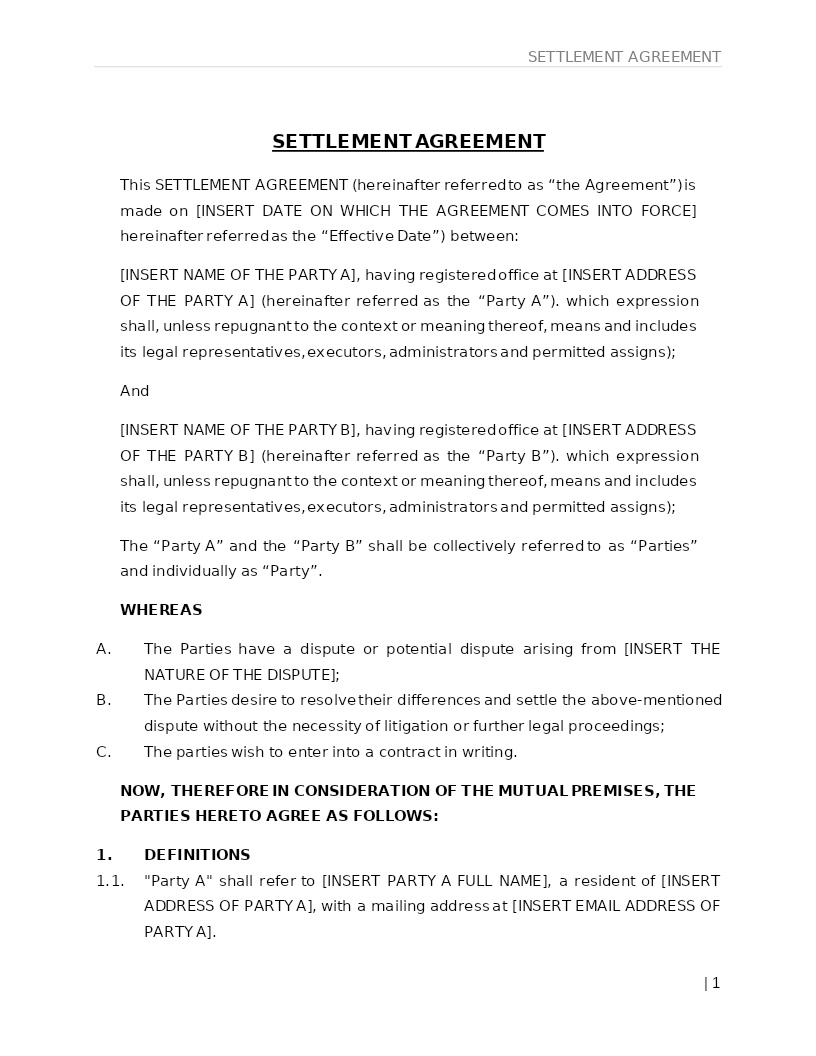
SETTLEMENT AGREEMENT
How does it work?
1. Choose this template
Start by clicking on "Fill out the template"
2. Complete the document
Answer a few questions and your document is created automatically.
3. Save - Print
Your document is ready! You will receive it in Word and PDF formats. You will be able to modify it.
Achieving Finality, Clarity, and Legal Protection Through Settlement Agreements
A Settlement Agreement is a legally binding contract used to resolve disputes between parties without pursuing litigation or continuing an existing legal case. In the United States, settlement agreements are widely used to bring clear, enforceable resolution to civil disputes, employment claims, business disagreements, contract breaches, and personal conflicts. This agreement outlines the obligations of each party, the settlement amount (if applicable), releases of claims, confidentiality terms, and enforcement mechanisms.
By formally documenting the terms of resolution, a Settlement Agreement prevents further disputes, minimizes financial and legal risks, and ensures both parties can move forward without uncertainty. It provides closure while safeguarding legal rights and ensuring compliance with U.S. federal and state laws governing settlement procedures.
Where Settlement Agreements Are Commonly Used
Settlement agreements are frequently used across various U.S. legal and business situations, including:
- Employment disputes, wrongful termination claims, or workplace conflicts
- Contract disputes between businesses or independent contractors
- Partnership or shareholder disagreements
- Personal injury cases, accident claims, or insurance disputes
- Intellectual property conflicts and infringement claims
- Consumer complaints or service-related disputes
- Family or civil disputes settled outside court
- Mediation or arbitration outcomes requiring written finalization
Any dispute that parties prefer to resolve privately and efficiently can be addressed through a settlement agreement.
Different Types of Settlement Agreements You May Encounter
- General Settlement Agreement: Used for resolving standard business, civil, or financial disputes without ongoing litigation.
- Employment Settlement & Release Agreement: Resolves workplace-related claims and includes a release of employment law rights such as discrimination or wrongful termination claims.
- Litigation Settlement Agreement: Finalizes disputes during or after court proceedings and may require court approval or filing.
- Pre-Litigation Settlement Agreement: Used before a lawsuit is filed, helping parties settle early and avoid legal fees.
- Mutual Release Agreement: Both parties release each other from all claims, providing complete finality and closure.
- Confidential Settlement Agreement: Keeps the dispute and terms private, commonly used in sensitive or reputation-related matters.
Each type supports a different level of legal protection depending on the nature of the dispute and the level of confidentiality required.
When Legal Guidance Becomes Helpful
Legal counsel is essential when:
- The dispute involves significant financial claims
- State or federal laws impose specific release requirements (e.g., employment claims)
- One or both parties are represented by attorneys
- Complex business, IP, or contractual rights are involved
- There are minors, deceased persons, or protected classes involved
- Court approval is required for certain settlements
- Confidentiality or non-disparagement terms must be enforceable
An attorney ensures the agreement is valid, enforceable, and compliant with U.S. legal standards, reducing future liability.
How to Work With This Template
- Identify the parties, dispute background, and purpose of settlement
- Outline payment terms, obligations, and performance deadlines
- Include a release of claims, indemnities, and waivers
- Add confidentiality, non-disparagement, and non-admission clauses
- Provide dispute resolution mechanisms (mediation, arbitration, jurisdiction)
- Specify governing law and compliance with U.S. requirements
- Confirm the agreement is voluntary and signed knowingly
- Ensure digital or written signatures follow U.S. ESIGN and state laws
This template aligns with common U.S. settlement practices and supports enforceable, mutually beneficial resolutions.
Frequently Asked Questions
Q1. Why is a Settlement Agreement important in resolving disputes in the U.S.?
A Settlement Agreement provides a legally binding framework to resolve conflicts without litigation, saving time, legal fees, and emotional strain. It documents terms clearly, protects each party’s rights, and ensures finality through mutual releases. This helps avoid future lawsuits and promotes a peaceful, private resolution.
Q2. What types of disputes can be settled through a Settlement Agreement?
Settlement agreements can resolve employment disputes, business conflicts, personal injury claims, contract breaches, intellectual property issues, consumer complaints, and civil disputes. Whether parties are individuals, companies, or organizations, settlements allow them to resolve issues privately and efficiently outside court.
Q3. Does signing a Settlement Agreement prevent future lawsuits?
Yes, most settlement agreements include a “release of claims” clause that prevents either party from bringing future legal claims related to the dispute. This ensures complete closure and minimizes legal risk, though certain claims (like future unknown violations or criminal matters) may not be waivable under law.
Q4. Are settlement agreements confidential in the United States?
They can be. Many include confidentiality clauses that restrict parties from discussing the dispute or settlement terms. This protects sensitive information, preserves reputations, and prevents public disclosure. However, some states limit confidentiality in specific cases (e.g., harassment or discrimination settlements).
Q5. What happens if one party violates the agreement?
If a party breaches the agreement, the other may pursue enforcement through court action, mediation, or arbitration, depending on the agreement’s terms. Remedies may include damages, injunctions, or reinstatement of claims that were previously released. A strong enforcement clause ensures compliance.
Q6. Can a Settlement Agreement include non-disparagement terms?
Yes. Non-disparagement clauses prevent parties from making negative public statements about each other. These are common in employment and business settlements to protect reputation and maintain professionalism. Proper drafting ensures the clause is enforceable under U.S. law.
Q7. Are electronic signatures valid for Settlement Agreements in the U.S.?
Absolutely. Under the ESIGN Act and UETA, electronic signatures are legally binding in all states. This allows parties to finalize settlements remotely, ensuring faster resolution and secure digital documentation.
Q8. Can parties negotiate or modify a Settlement Agreement before signing?
Yes, settlements are highly negotiable. Parties may request changes to payment terms, confidentiality, releases, or obligations. Legal review ensures modifications protect both parties and align with state and federal laws. The agreement becomes binding only once all parties sign voluntarily.