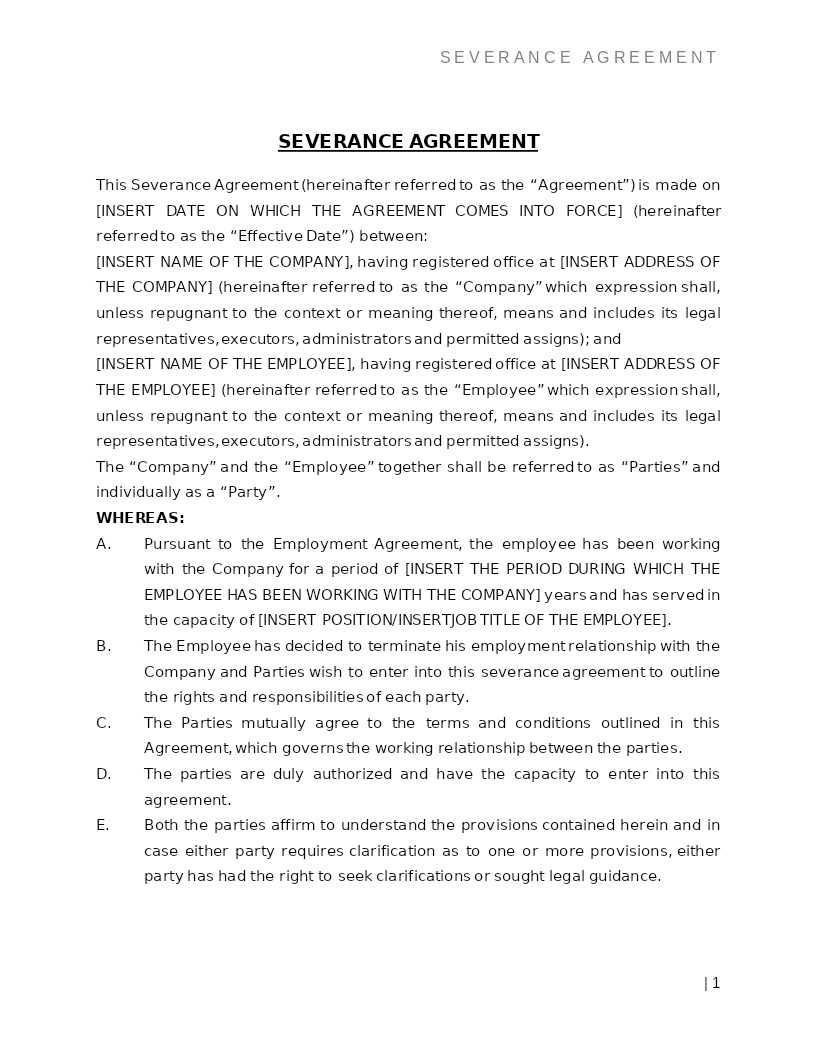
SEVERANCE AGREEMENT
How does it work?
1. Choose this template
Start by clicking on "Fill out the template"
2. Complete the document
Answer a few questions and your document is created automatically.
3. Save - Print
Your document is ready! You will receive it in Word and PDF formats. You will be able to modify it.
Providing Legal Protection and a Smooth Transition Through Severance Agreements
A Severance Agreement is a legally binding contract between an employer and an employee that outlines the terms governing the employee’s separation from the company. In the United States, severance agreements are commonly used to provide compensation, continuation of certain benefits, and post-employment obligations in exchange for the employee waiving potential legal claims against the employer.
This agreement helps both parties navigate the transition respectfully and lawfully. It specifies severance pay, healthcare extensions, confidentiality duties, non-disparagement requirements, and sometimes non-compete restrictions. By documenting these terms clearly, employers protect themselves from future disputes while employees receive financial security and clarity during their departure.
Where Severance Agreements Are Commonly Used
U.S. employers frequently use severance agreements in situations such as:
- Layoffs, workforce reductions, or restructuring
- Termination without cause
- Executive or senior-level departures
- Mutual separation agreements
- Risk mitigation following sensitive workplace disputes
- Company acquisitions or mergers involving employee transitions
- Separation involving access to confidential or proprietary information
Any circumstance requiring a structured exit and reduced legal exposure benefits from a formal severance agreement.
Different Types of Severance Agreements You May Encounter
- Standard Severance Agreement: Provides basic severance pay and benefits in exchange for a general release of claims, typically used for non-executive employees.
- Executive Severance Agreement: More complex and customized, including enhanced compensation, equity treatment, bonus payouts, confidentiality obligations, and post-employment restrictions.
- Severance as Part of a Reduction in Force (RIF): Used during layoffs or large-scale restructuring, these agreements ensure consistent treatment and compliance with federal and state laws.
- Mutual Separation Agreement: A voluntary, negotiated agreement between employer and employee allowing both parties to end the relationship on agreed terms.
- Severance Linked to Settlement or Dispute Resolution: Used when resolving workplace disputes such as discrimination or harassment claims, providing settlement compensation in exchange for a release of all claims.
Each type offers different protections and considerations depending on the nature of the employee’s role and circumstances of termination.
When Legal Guidance Becomes Helpful
Legal support is strongly recommended when severance agreements involve:
- Employees over 40 (requiring compliance with the Older Workers Benefit Protection Act)
- Claims involving discrimination, harassment, or retaliation
- Confidential company information, trade secrets, or IP
- Stock options, RSUs, or complex executive compensation
- Multi-state employees subject to varying labor laws
- Non-compete or restrictive covenant enforcement
- Workforce reductions or layoffs affecting multiple employees
Attorney involvement ensures the agreement complies with federal and state law, prevents unenforceable terms, and protects employer and employee interests.
How to Work With This Template
- Identify the employer and employee, and summarize the reason for separation
- Outline severance pay, benefits continuation, and final compensation
- Include release and waiver of claims language
- Add confidentiality, non-disparagement, or restrictive covenants as needed
- Present return-of-property and post-employment obligations
- Specify tax treatment, payment timing, and relevant state or federal compliance requirements
- Choose governing law and preferred dispute resolution method
- Ensure signatures follow federal compliance requirements (especially OWBPA)
This template follows U.S. employment law practices and supports compliant and transparent employee separations.
Frequently Asked Questions
Q1. Why is a Severance Agreement important for employers and employees?
A Severance Agreement protects employers by limiting future legal claims and provides employees with compensation and benefits during the transition. It brings clarity, fairness, and closure to the separation process.
Q2. What key terms should a U.S. Severance Agreement include?
Core terms typically include severance pay, benefit continuation, release of claims, confidentiality, non-disparagement, restrictive covenants, and obligations regarding company property. These terms ensure a smooth, dispute-free exit.
Q3. Is a severance agreement required by law in the United States?
No. U.S. employers are not legally obligated to offer severance. However, it is often provided to reduce risk, maintain goodwill, protect company information, and ensure a lawful, stable transition.
Q4. Can an employee negotiate severance terms?
Yes. Employees, especially executives, often negotiate pay amounts, benefits, references, or restrictions. Legal counsel may assist to ensure fairness and compliance.
Q5. Are severance agreements enforceable?
Yes, if they meet federal and state legal standards. Agreements must be clear, voluntary, and compliant with laws such as the Older Workers Benefit Protection Act when applicable.
Q6. Does signing a severance agreement waive the employee’s right to sue?
Generally, yes. Most agreements include a “release of claims,” preventing the employee from filing future legal complaints related to their employment or termination.
Q7. Are electronic signatures valid for severance agreements?
Absolutely. Under the ESIGN Act and UETA, digital signatures are legally binding and widely accepted for employment-related agreements.