SHARES TRANSFER AGREEMENT
How does it work?
1. Choose this template
Start by clicking on "Fill out the template"
2. Complete the document
Answer a few questions and your document is created automatically.
3. Save - Print
Your document is ready! You will receive it in Word and PDF formats. You will be able to modify it.
Understanding Shares Transfers Agreement in U.S.
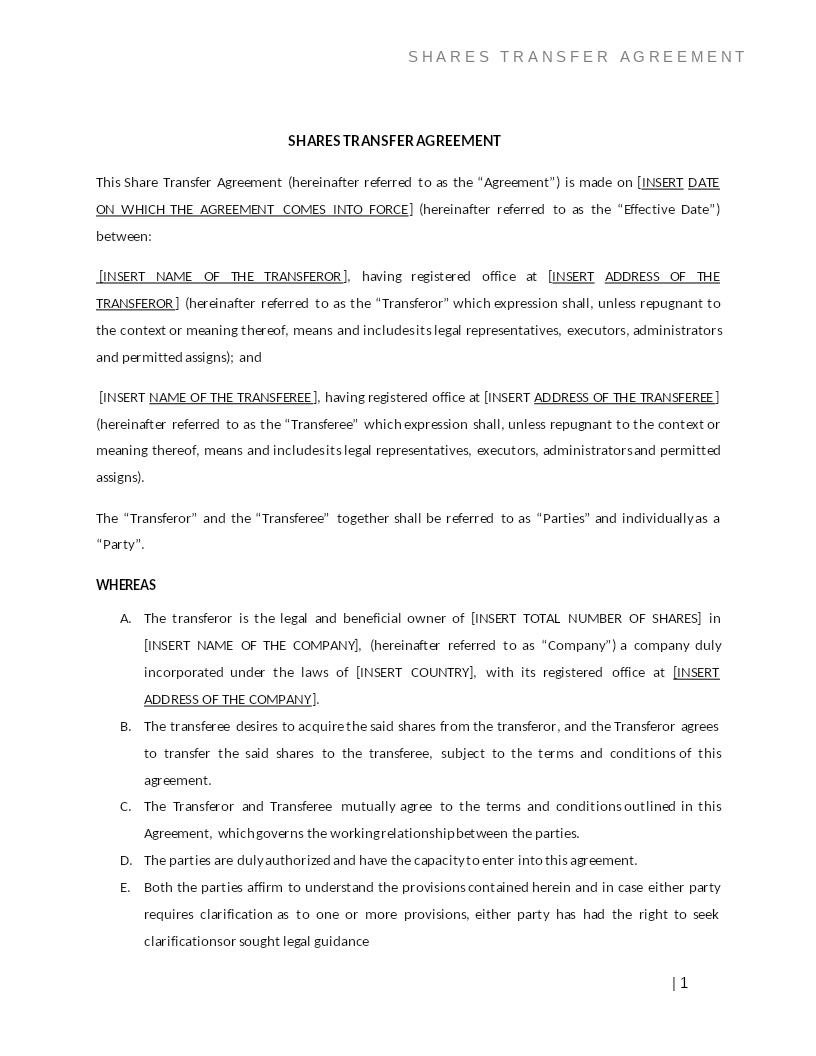
A Shares Transfer Agreement is a legally binding contract between a seller and a buyer that sets out the terms for transferring ownership of shares in a company. It outlines the purchase price, number of shares, representations and warranties, and the responsibilities of both parties. This agreement ensures that the share transfer complies with U.S. corporate laws, company bylaws, and regulatory requirements, providing clear documentation and transparency throughout the process.
A well-drafted Shares Transfer Agreement protects both parties from legal risks, prevents future disputes, and confirms that the buyer receives clean and valid title to the shares being transferred. It serves as an essential legal safeguard for any equity transaction.
Where Shares Transfer Agreements Are Commonly Used
Shares Transfer Agreements are typically used in:
- Private company share sales between shareholders
- Founders transferring equity to new partners or investors
- Transfers resulting from mergers, acquisitions, or restructuring
- Employee stock option or equity compensation assignments
- Estate planning transfers, gifting, or family share redistribution
- Venture capital and angel investment transactions
- Buyout, exit, and redemption scenarios under shareholder agreements
Any situation where shares change legal ownership requires a clear and enforceable Shares Transfer Agreement.
Different Types of Shares Transfers You May Encounter
- Voluntary Share Transfers: Transfers made willingly between a seller and buyer, often approved by the company’s board.
- Involuntary Transfers: Transfers required due to legal obligations such as divorce settlements, bankruptcy, or court orders.
- Internal Corporate Transfers: Transfers between founders, employees, or existing shareholders under company bylaws.
- Third-Party Transfers: Transfers to outside investors or new shareholders subject to restrictions and approvals.
When Legal Guidance Becomes Helpful
Legal guidance is particularly valuable when:
- The company has transfer restrictions, ROFR (Right of First Refusal), or approval requirements
- Securities laws under the SEC or state Blue Sky laws apply
- The transfer includes warranties related to debts, liens, or undisclosed liabilities
- Tax implications need consultation for capital gains or corporate compliance
- Multiple shareholders or investor groups are involved
- The shares being transferred affect control, voting rights, or management
- You need to draft escrow, indemnity, or post-transfer obligations
Professional review ensures your agreement remains enforceable, compliant, and risk-free.
How to Work With This Shares Transfer Agreement
- Identify both parties and specify the number and class of shares being transferred
- Clearly outline the purchase price, payment terms, and effective transfer date
- Include representations and warranties from both seller and buyer
- Specify corporate approvals, regulatory requirements, and transfer restrictions
- Clarify tax responsibilities, liabilities, and post-transfer obligations
- Attach supporting documents such as share certificates or board resolutions
- Review and execute in hard copy or electronically for legal validity
Frequently Asked Questions
Q1. Why is a Shares Transfer Agreement necessary?
A Shares Transfer Agreement provides written proof of the transfer and protects both parties from disputes regarding ownership, valuation, or payment terms. It ensures the transaction complies with corporate laws and internal company rules. Without this agreement, misunderstandings or legal challenges may easily arise.
Q2. Are share transfers legally enforceable in the U.S.?
Yes. Share transfers are enforceable when they meet corporate bylaws, state corporate laws, and any applicable securities regulations. The agreement documents the buyer’s new ownership rights and helps facilitate updates in the company’s shareholder register or cap table.
Q3. Does the company need to approve the transfer?
Many U.S. companies, especially private corporations, require board or shareholder approval before shares can be transferred. This prevents unauthorized or improper transfers. The agreement often includes a clause confirming that all necessary approvals have been obtained.
Q4. What happens if the seller fails to disclose liabilities attached to the shares?
The seller may be held legally responsible for misrepresentation or breach of warranty. Shares Transfer Agreements include protections ensuring the buyer receives shares free of undisclosed liens or obligations. These clauses help prevent financial and legal consequences after the transaction.
Q5. Can shares be transferred to an outside third party?
Yes, but many companies restrict external transfers through ROFR or approval clauses. The agreement ensures compliance with internal corporate rules before allowing a transfer to outside investors or new shareholders. This prevents conflicts and protects ownership structure.
Q6. Are there tax implications for transferring shares?
Share transfers may involve capital gains tax, gift tax, or other tax obligations under U.S. federal and state laws. The agreement can outline which party is responsible for specific tax liabilities. Professional tax advice is recommended to avoid penalties or improper filings.
Q7. What documents are required along with the agreement?
Common supporting documents include share certificates, corporate resolutions, consents, updated cap tables, and proof of payment. These documents ensure the transfer is properly recorded and legally recognized. Accurate documentation prevents issues during audits or future transactions.
Q8. Is a Shares Transfer Agreement suitable for startups and small businesses?
Absolutely. Startups and small businesses often rely on such agreements to manage investor onboarding, founder changes, or equity restructuring. A written agreement establishes transparency, protects ownership rights, and supports compliance with corporate governance standards.