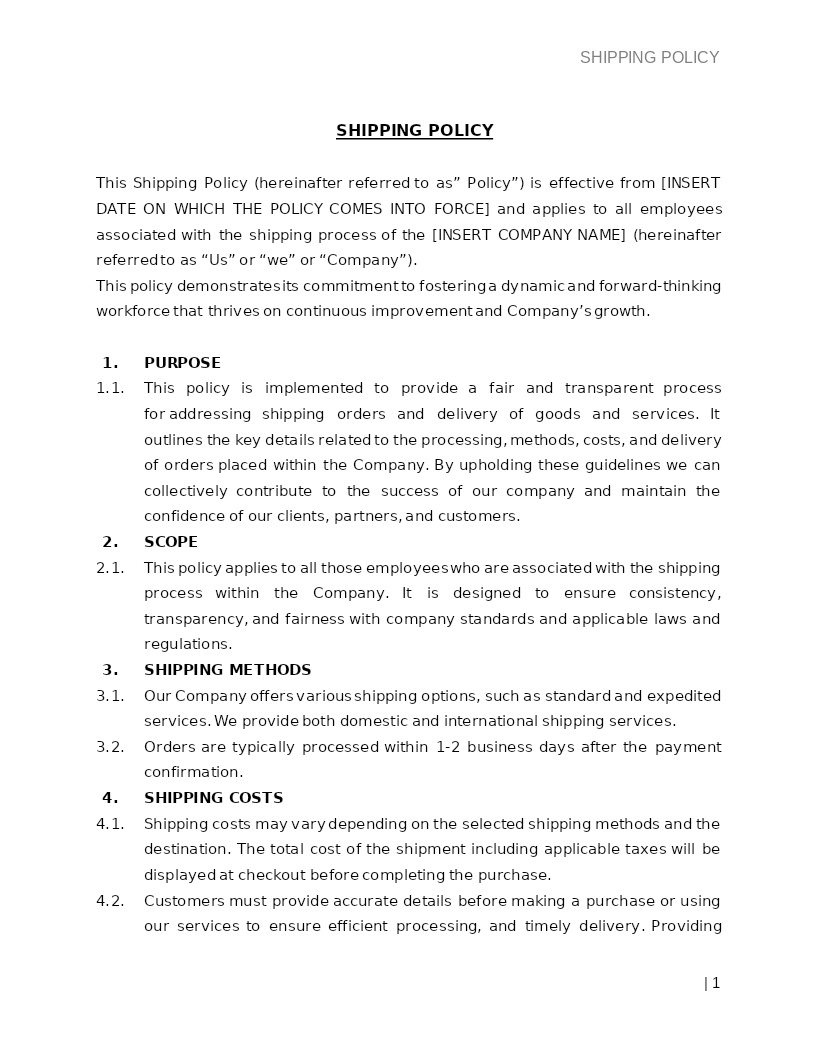
SHIPPING POLICY
How does it work?
1. Choose this template
Start by clicking on "Fill out the template"
2. Complete the document
Answer a few questions and your document is created automatically.
3. Save - Print
Your document is ready! You will receive it in Word and PDF formats. You will be able to modify it.
Ensuring Transparency and Consumer Compliance Through a Shipping Policy
A Shipping Policy is a formal organizational statement that outlines the rules, conditions, timelines, and operational standards governing the shipment and delivery of goods to customers within the United States and internationally. Developed in accordance with U.S. federal consumer-protection regulations, including the Federal Trade Commission’s Mail, Internet, or Telephone Order Merchandise Rule (the “Mail Order Rule”), transportation and carrier regulations, state e-commerce requirements, and applicable customs laws, this policy provides clarity and consistency regarding the company’s shipping practices. It ensures that customers have accurate information regarding delivery timeframes, shipping methods, associated costs, handling procedures, and the company’s obligations in instances of delay, loss, or damage.
A comprehensive Shipping Policy articulates all aspects of the shipment process—from order processing and packaging to carrier selection and delivery confirmation—and establishes the rights and responsibilities of both the seller and the customer. It describes how orders are handled during weekends or holidays, explains international customs procedures and duties, outlines the company’s practices for tracking shipments, and specifies conditions for refused, undeliverable, or returned packages. By implementing this policy, the organization promotes legal compliance, enhances consumer trust, reduces disputes, and ensures that its shipping standards meet both operational needs and regulatory expectations. The policy also serves as a binding reference document that supports customer service operations and reduces ambiguity.
Where Shipping Policies Are Commonly Used
Shipping Policies are widely adopted throughout e-commerce and retail sectors, including:
- Online retailers offering physical goods nationwide or globally
- Subscription businesses shipping recurring products
- Small businesses utilizing USPS, UPS, FedEx, or DHL for order fulfillment
- Manufacturers and wholesalers dealing with direct-to-consumer shipments
- Specialty goods sellers handling temperature-controlled or fragile materials
- International retailers shipping cross-border goods subject to customs laws
- Marketplace vendors operating on platforms such as Amazon, Etsy, or eBay
- Companies offering expedited shipping or guaranteed delivery services
Any business involved in the sale and delivery of physical products benefits from a structured, legally compliant Shipping Policy.
Different Types of Shipping Policies You May Encounter
1. Standard Domestic Shipping Policies: Address routine delivery times, carrier options, and domestic shipment costs.
2. International Shipping Policies: Cover customs procedures, duties, import taxes, prohibited items, and extended delivery timelines.
3. Expedited or Priority Shipping Policies: Detail guaranteed delivery windows and additional charges for faster service.
4. Freight or Bulk Shipping Policies: Outline pallet shipments, freight scheduling, and carrier-specific requirements.
5. Return Shipping and Exchange Policies: Integrate with return procedures to govern who pays for return shipping and under what conditions.
When Legal Guidance Becomes Helpful
Legal counsel should be consulted when:
- Shipping promises or delivery guarantees may trigger FTC enforcement under the Mail Order Rule
- The company expands internationally and must comply with customs declarations and import restrictions
- The organization ships hazardous, regulated, or temperature-sensitive goods
- Delivery delays risk violating consumer-protection laws or contractual obligations
- The business must draft limitations-of-liability provisions or disclaimers
- The entity processes personal data related to shipments governed by privacy laws
- Carrier contracts, freight agreements, or vendor arrangements require legal review
Legal oversight ensures that the Shipping Policy complies with U.S. consumer law, transportation regulations, and cross-border shipping requirements, thereby reducing exposure to disputes or penalties.
How to Work with This Template
- Clearly define processing times, cutoff hours, and fulfillment procedures
- Identify all carriers used and outline shipping methods, delivery windows, and associated fees
- Provide accurate estimates for domestic and international delivery timelines
- Clarify responsibilities for customs duties, import taxes, and international restrictions
- Establish procedures for damaged, lost, delayed, or misdelivered shipments
- Include instructions for tracking, delivery signatures, or special handling needs
- Describe holiday schedules, warehouse closures, or weather-related delays
- Define limitations or exclusions related to specific regions or PO boxes
- Provide transparent communication channels for customer inquiries
- Update the policy routinely to reflect carrier changes, rate adjustments, or legal developments
This template reflects widely accepted U.S. e-commerce and shipping-compliance standards.
Frequently Asked Questions
Q1. What is a Shipping Policy, and why is it important?
A Shipping Policy is a formal document that explains how a business processes, ships, and delivers orders. It is important because it ensures consumer transparency, meets FTC compliance obligations, and reduces shipping-related disputes.
Q2. How long does it take for orders to ship?
Processing and shipping times vary by business, but policies must provide accurate estimates under U.S. consumer-protection laws. Companies must notify customers if delays occur.
Q3. Do you offer international shipping?
Many businesses do. International shipments may involve customs duties, import taxes, and extended delivery timelines, all of which should be disclosed in the policy.
Q4. What carriers are used for shipping?
Common carriers include USPS, UPS, FedEx, DHL, and other certified logistics providers. The policy should specify which carriers are used for various shipping tiers.
Q5. Who pays for customs duties or import taxes?
In most cases, the customer is responsible, but the policy should clearly state who bears these costs to avoid misunderstandings.
Q6. How do customers track their shipments?
Tracking numbers are typically provided upon shipment. The policy should explain when and how tracking information is issued.
Q7. What happens if a package is lost or damaged?
The policy should outline procedures for filing claims, replacements, or refunds, consistent with carrier rules and consumer-protection standards.
Q8. Do you ship to PO boxes or APO/FPO addresses?
Some carriers restrict delivery to certain addresses. The policy must disclose these limitations.
Q9. How do you handle delayed shipments?
Under the FTC Mail Order Rule, businesses must notify customers of delays and offer the option to cancel the order.
Q10. Should legal counsel review the Shipping Policy?
Yes. Legal review ensures compliance with FTC regulations, customs laws, carrier agreements, and advertising standards.